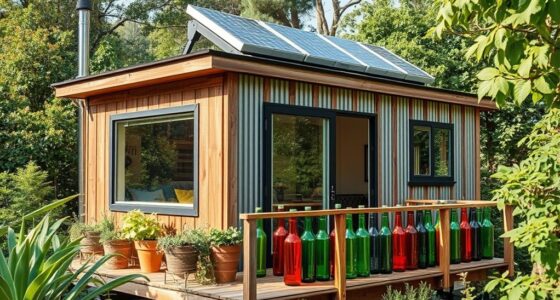
When choosing sustainable roof materials for your tiny home, consider options like solar roofing panels and green roof systems. Solar panels convert sunlight into clean energy and blend seamlessly with modern designs. Green roofs add natural insulation, absorb rainwater, and support biodiversity, making your home more eco-friendly. Combining these materials maximizes benefits like energy efficiency and environmental impact. Keep exploring to find the perfect sustainable roofing solutions tailored to your tiny home needs.
Key Takeaways
- Use integrated solar roofing panels that are sleek, durable, and compatible with tiny home aesthetics for renewable energy generation.
- Incorporate green roof systems with vegetation layers to improve insulation, stormwater management, and biodiversity.
- Select eco-friendly roofing materials such as recycled metal, clay tiles, or sustainable membranes to reduce environmental impact.
- Combine solar and green roofing options to maximize energy efficiency, insulation, and ecological benefits in small spaces.
- Prioritize lightweight, durable materials that enhance energy independence while minimizing structural load on tiny homes.
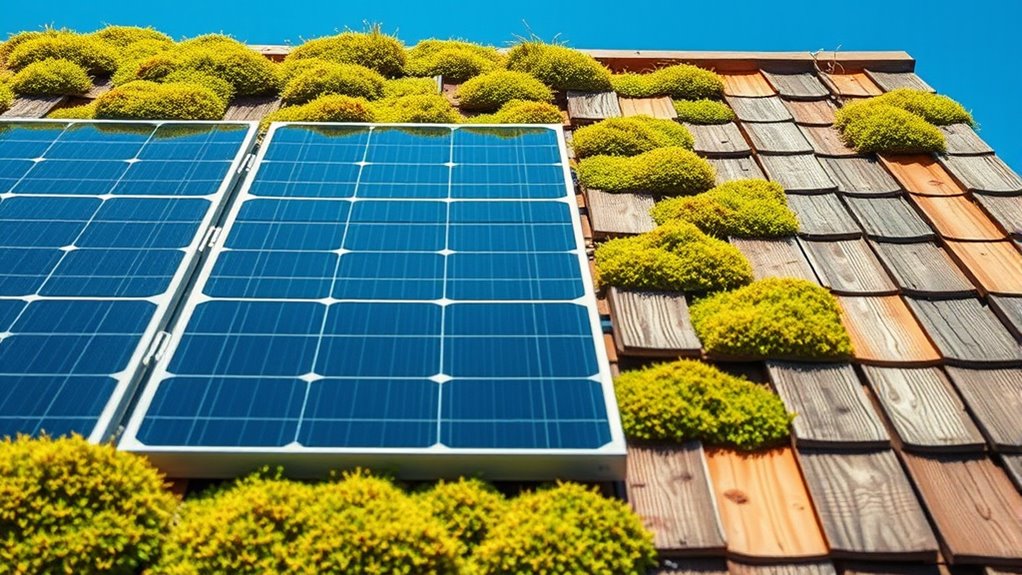
Have you ever wondered how your choice of roof materials can impact the environment? When it comes to tiny homes, your roofing decisions can make a significant difference in sustainability and energy efficiency. Two popular options that stand out are solar roofing and green roof systems. Solar roofing involves installing solar panels directly onto your roof, transforming sunlight into electricity. It’s a smart choice because it reduces your reliance on fossil fuels, lowers your energy bills, and minimizes your carbon footprint. Modern solar roofing options are sleek, durable, and designed to blend seamlessly with various tiny home styles. By choosing solar roofing, you’re harnessing renewable energy, which helps cut down greenhouse gas emissions and promotes a cleaner environment. Plus, some solar roofing systems are integrated into the roofing material itself, making them less obtrusive and more aesthetically appealing. When selecting sustainable roof materials, consider how solar roofing can be combined with other eco-friendly features for maximum impact.
Green roof systems are another sustainable option that can enhance your tiny home’s environmental footprint. These roofs incorporate layers of vegetation, which provide natural insulation, absorb rainwater, and improve air quality. Green roofs help regulate indoor temperatures, reducing the need for heating and cooling, which in turn decreases energy consumption. They also support biodiversity by creating habitats for insects and birds, contributing positively to local ecosystems. Installing a green roof system might seem like a sizable investment initially, but the long-term benefits — including lower energy costs and a smaller environmental impact — make it worthwhile. Plus, green roofs help manage stormwater more effectively, preventing runoff that can pollute local waterways. Both solar roofing and green roof systems demonstrate how sustainable materials can work together to make tiny homes more eco-friendly. Solar roofing reduces your energy reliance, while green roofs contribute to better insulation and environmental health. These options also promote self-sufficiency, allowing you to lessen your dependence on external energy sources and urban infrastructure. As you consider the eco-friendly potential of your tiny home, remember that integrating these sustainable roof materials aligns with a broader commitment to environmental responsibility. They not only benefit the planet but can also improve your quality of life by creating healthier living conditions and reducing your ecological footprint. Choosing sustainable roof materials like solar roofing and green roof systems reflects a conscious effort to live more harmoniously with nature, proving that even small spaces can have a big positive impact on the environment.
Frequently Asked Questions
How Do Solar Panels Integrate With Sustainable Roofing Options?
You can seamlessly integrate solar panels with sustainable roofing options by choosing roofing materials compatible with solar panel installation, like metal or certain composite options. This boosts solar panel efficiency since proper alignment and support are essential. Confirm the roof’s durability and angle optimize sunlight exposure, maximizing energy production. Combining sustainable roofing with solar panels creates an eco-friendly, energy-efficient tiny home that reduces your carbon footprint and saves you money in the long run.
What Is the Lifespan of Eco-Friendly Roofing Materials?
Think of your eco-friendly roof as a wise old tree, standing strong through seasons. Its durability varies with the material, typically lasting 20-50 years. For example, metal roofs often outlive asphalt, offering impressive material longevity. You’ll want to choose options known for their resilience, ensuring your tiny home stays protected and beautiful over time. Regular maintenance can also extend the lifespan, making your sustainable choice a lasting one.
Are There Tax Incentives for Installing Sustainable Roofs on Tiny Homes?
Yes, you can often benefit from tax incentives when installing sustainable roofs on tiny homes. Many states and federal programs offer tax credits and incentive programs that reduce your costs. These incentives encourage eco-friendly choices and can substantially lower your upfront expenses. Be sure to check local regulations and eligibility requirements to maximize your benefits, and keep documentation of your installation for easy claim submission.
How Do Maintenance Costs Compare for Different Sustainable Roof Types?
You might worry about higher maintenance costs, but durable materials actually lower long-term expenses. Metal roofs, for example, need minimal upkeep and resist weather damage, reducing maintenance costs considerably. Conversely, eco-friendly options like living roofs require more care and specialized maintenance, which can be costly over time. By choosing a material with high durability, you guarantee your tiny home’s roof stays reliable while keeping maintenance manageable and expenses predictable.
Can Sustainable Roofs Be Installed on Existing Tiny Homes Easily?
Yes, you can install sustainable roofs on existing tiny homes, but it requires a proper roof retrofit that considers material compatibility. You’ll need to assess your current roof structure and select eco-friendly materials that fit well with the existing setup. Hiring a professional ensures the retrofit is done correctly, minimizing compatibility issues and making the shift smoother. This way, you enjoy the benefits of sustainability without extensive modifications.
Conclusion
Choosing sustainable roof materials for your tiny home not only benefits the environment but also saves you money long-term. By making eco-friendly choices, you’re investing in a greener future and a more resilient home. Remember, “A stitch in time saves nine”—addressing small upgrades now prevents bigger problems later. So, pick wisely, and your tiny home will stand strong and sustainable for years to come.