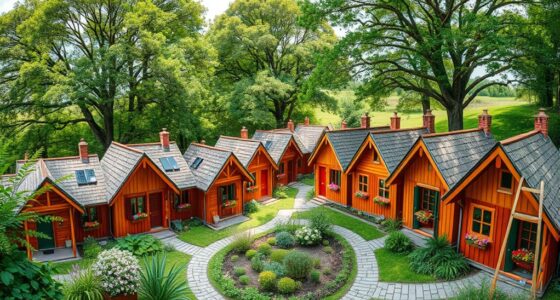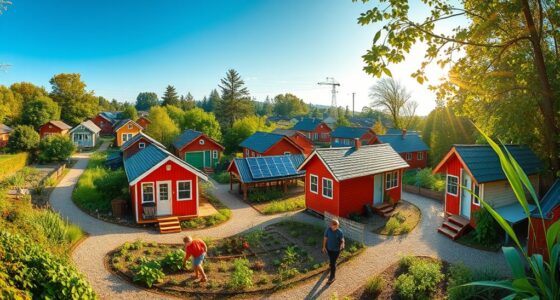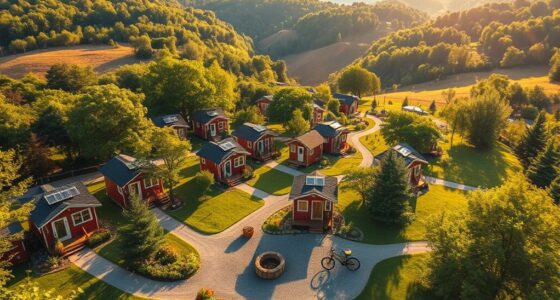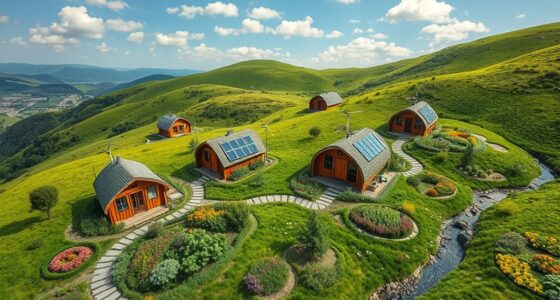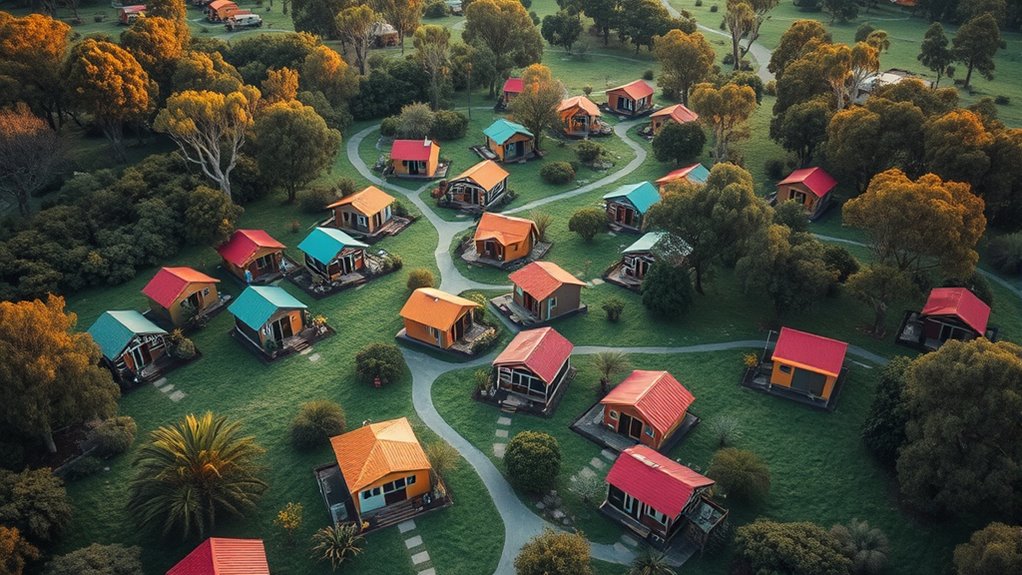

Tiny house communities are becoming popular across Australia and New Zealand as affordable, eco-friendly living options. These communities encourage minimalist lifestyles, focusing on sustainability with solar power, rainwater harvesting, and shared green spaces. They foster a strong sense of community where residents collaborate on maintenance and eco-initiatives. If you’re interested in exploring how these innovative living solutions can benefit you and the environment, there’s much more to discover ahead.
Key Takeaways
- Tiny house communities are increasingly popular in Australia and New Zealand, offering affordable and sustainable housing options.
- These communities emphasize eco-friendly features like solar power, rainwater harvesting, and shared green spaces.
- They promote minimalist lifestyles and foster social connections through community events and shared amenities.
- Residents benefit from lower living costs, reduced environmental impact, and a supportive, collaborative environment.
- Tiny house communities support a movement toward greener, more affordable living aligned with sustainable development goals.

Tiny house communities are gaining popularity across Australia and New Zealand as people seek affordable, eco-friendly living options. If you’re exploring ways to reduce living costs while making a positive environmental impact, these communities could be just what you’re looking for. They offer a practical solution to the rising housing prices in many cities and suburbs, making affordable housing more accessible for a diverse range of individuals. By choosing to live in a tiny house community, you can considerably lower your expenses on rent or mortgage payments, utilities, and maintenance. Smaller homes mean less energy consumption, which aligns perfectly with sustainable living principles. This setup allows you to minimize your carbon footprint while still enjoying the comforts of home.
In these communities, you’ll find a strong emphasis on sustainability. Many tiny house residents prioritize eco-friendly practices, such as solar power, rainwater harvesting, and composting toilets. These features help reduce reliance on fossil fuels and lessen waste, contributing to a healthier planet. Living in a tiny house encourages you to adopt a minimalist lifestyle, focusing on what’s truly essential and eliminating unnecessary possessions. This mindset not only supports sustainable living but also promotes a sense of community and shared responsibility among neighbors. In many cases, tiny house communities are designed with eco-conscious principles, incorporating green spaces, community gardens, and shared amenities that foster environmental awareness and cooperation.
One of the key advantages of being part of a tiny house community is the opportunity to connect with like-minded individuals committed to sustainability and affordability. You’ll find that these communities often organize events, workshops, and group projects centered around eco-friendly living and resource sharing. This sense of belonging can make your lifestyle more fulfilling while helping you learn new skills and adopt greener habits. Furthermore, these communities often provide a sense of security, as residents collaborate on maintenance and safety, creating a supportive environment that’s hard to find in traditional housing settings. Additionally, incorporating market trend analysis into community planning can help ensure these developments remain aligned with evolving environmental and social priorities.
Choosing a tiny house community also means you’re contributing to a more sustainable future. By reducing your overall footprint and promoting eco-conscious living, you become part of a movement that challenges conventional housing models. Whether you’re seeking a simpler lifestyle, aiming to save money, or wanting to lessen your environmental impact, tiny house communities in Australia and New Zealand offer a compelling option. They represent a practical, affordable approach to sustainable living, giving you the chance to enjoy modern comforts while actively participating in a greener way of life.
Frequently Asked Questions
What Are the Zoning Laws Affecting Tiny House Communities?
You need to understand that zoning restrictions and building codes heavily influence tiny house communities. Local zoning laws may limit where you can place tiny homes, often requiring compliance with specific land-use rules. Building codes dictate safety standards and construction requirements, which can vary widely. To successfully establish a tiny house community, you must navigate these regulations, get necessary permits, and make sure your development aligns with local zoning restrictions and building codes.
How Do Residents Handle Shared Amenities and Responsibilities?
Like a well-oiled clock, residents manage shared amenities through community governance, ensuring everyone pitches in. You take part in decisions about resource management, from water to common spaces, fostering cooperation. Responsibilities are often delegated or rotated, keeping the process fair. This teamwork creates a sense of ownership and accountability, making the tiny house community feel like a close-knit family where everyone actively contributes to the shared well-being.
Are There Financial Assistance Options for Tiny House Community Residents?
You can explore financial assistance options like grants or specific mortgage options tailored for tiny house community residents. Some local governments or organizations offer financial grants to support affordable housing initiatives, which you might qualify for. Additionally, lenders are increasingly offering flexible mortgage options designed for tiny homes, making it easier to finance your tiny house. Be sure to research programs available in your area to find the best fit for your needs.
What Are the Environmental Impacts of These Communities?
You’ll find that tiny house communities have positive environmental impacts by promoting sustainable building practices and reducing resource consumption. They often utilize renewable energy sources like solar panels, minimizing reliance on non-renewable power. These communities decrease waste and lower carbon footprints, helping to protect the environment. By embracing eco-friendly materials and energy solutions, you contribute to a more sustainable future while enjoying affordable, efficient living spaces.
How Do Tiny House Communities Influence Local Property Values?
You’ll find that tiny house communities can boost local property values by enhancing community aesthetics and attracting new residents. These innovative neighborhoods often create a unique charm that appeals to buyers, increasing demand. Plus, they positively impact local businesses by bringing in more foot traffic and customers. Overall, your community’s aesthetic appeal and thriving local economy can lead to higher property values, making it a win-win situation.
Conclusion
As you explore tiny house communities across Australia and New Zealand, you’ll discover delightful diversity and dynamic development. These daring designs demonstrate dedication to sustainability, simplicity, and social connection. By embracing these innovative initiatives, you’re embracing a brighter, smaller, and more sustainable future. So, step confidently into this community-conscious movement, where creativity, compassion, and a commitment to change converge, crafting a compelling, conscious, and enthralling chapter in tiny living’s tale.