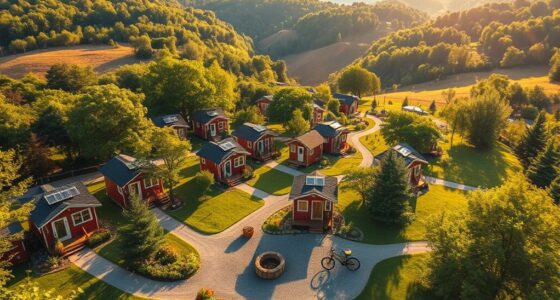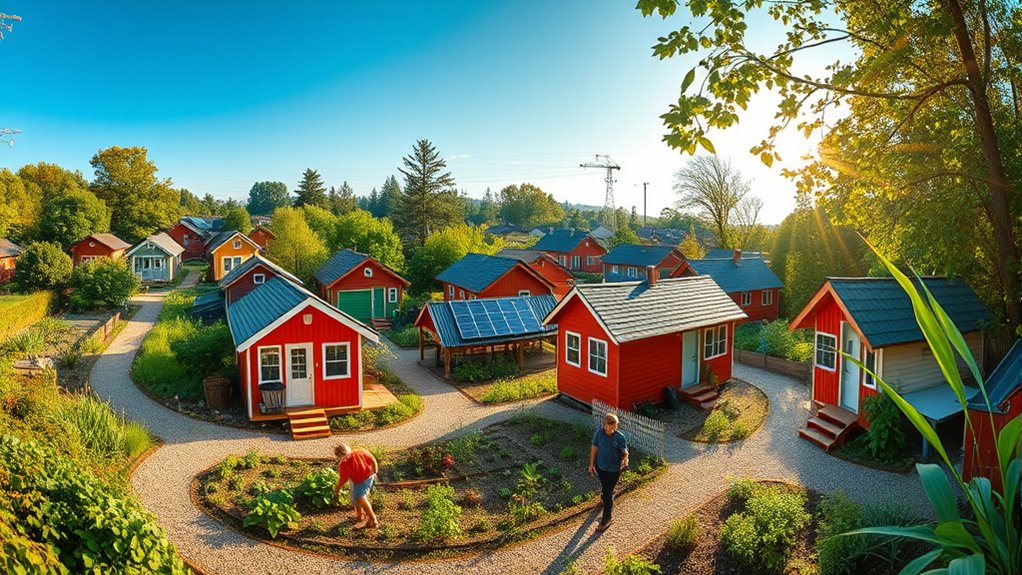

Tiny house communities promote sustainability by encouraging eco-friendly habits, resource sharing, and collective effort. You’ll see homes built with sustainable materials and features like solar panels and rainwater harvesting, which reduce your environmental impact. Sharing amenities like gardens and tools helps cut down waste and energy use. The community-focused approach fosters accountability and motivates everyone to live more consciously. Keep exploring to discover how these communities create lasting positive change for the environment.
Key Takeaways
- Tiny house communities utilize sustainable materials and energy-efficient features to minimize environmental impact.
- Shared resources and amenities promote resource conservation and reduce waste.
- Community collaboration encourages eco-friendly habits and collective efforts toward sustainability goals.
- Smaller homes require less energy for heating, cooling, and maintenance, lowering overall utility consumption.
- These communities serve as models demonstrating sustainable living through collective responsibility and eco-conscious design.
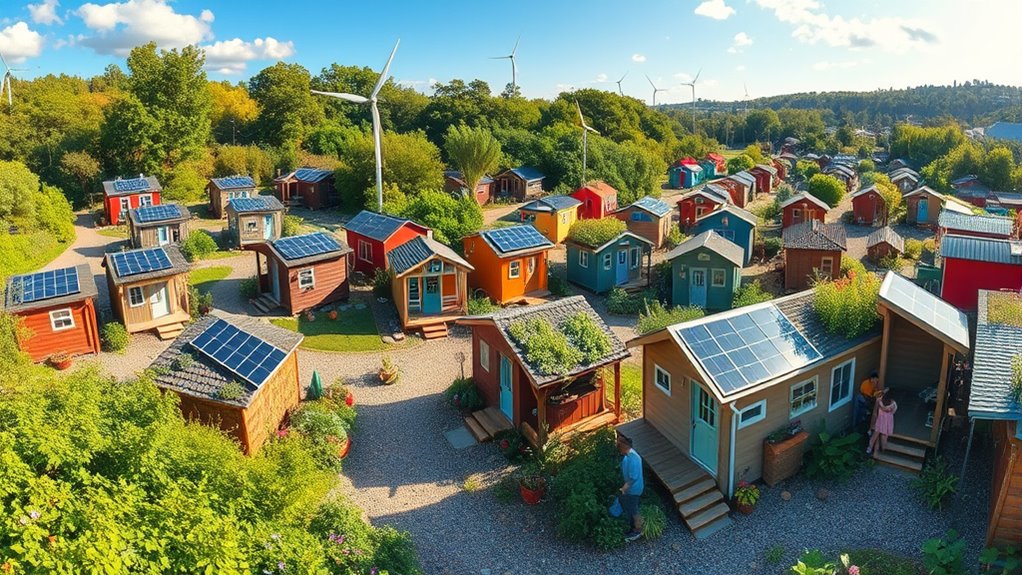
Tiny house communities are gaining popularity as a sustainable alternative to traditional living. These neighborhoods focus on reducing environmental impact while creating a vibrant, connected lifestyle. One of the key ways they do this is through eco-friendly design. When you live in a tiny house community, you often find homes built with sustainable materials, such as reclaimed wood or recycled metal, which minimize waste and reduce the demand for new resources. Many tiny homes incorporate energy-efficient features like solar panels, composting toilets, and rainwater harvesting systems. These elements not only lower your carbon footprint but also help you save money on utilities. The compact size of tiny homes means less energy is needed to heat, cool, and maintain them, making your lifestyle more sustainable on a daily basis. This thoughtful approach to design supports the broader goal of reducing environmental impact without sacrificing comfort. Additionally, ongoing education about self-understanding and mindfulness can help residents make more conscious eco-friendly choices in their daily routines.
Community engagement plays a crucial role in promoting sustainability within these neighborhoods. As you become part of a tiny house community, you’re encouraged to share resources and responsibilities, fostering a collective effort to live more sustainably. For example, residents often collaborate on communal gardens, where food is grown locally, reducing reliance on store-bought produce that comes with significant transportation emissions. Shared amenities like tool libraries, workshops, and laundry facilities mean fewer individual appliances are needed, which conserves energy and materials. Community events centered around sustainability practices—such as workshops on composting or renewable energy—encourage everyone to adopt eco-friendly habits. This sense of shared purpose makes it easier for you to stay committed to sustainable living, knowing that your neighbors are equally invested. The community setting also promotes social sustainability, strengthening bonds among residents and creating a support network for eco-conscious choices.
Living in a tiny house community makes sustainability more accessible and practical. It’s not just about individual eco-friendly features; it’s about the collective effort to reduce waste, conserve resources, and nurture a healthier environment. The close-knit nature of these communities fosters a culture of accountability and shared responsibility, making it easier for you to adopt environmentally friendly habits. You’re not alone in your journey towards sustainability—your neighbors are there to motivate, educate, and support each other. This collaborative approach amplifies the positive impact on the environment and creates a more resilient, connected way of living. Overall, tiny house communities demonstrate that sustainable living isn’t just a personal choice but a communal effort that benefits everyone involved.
Frequently Asked Questions
How Do Tiny House Communities Impact Local Ecosystems?
You impact local ecosystems by fostering land preservation and supporting urban wildlife. Tiny house communities use less land, reducing habitat disruption and helping protect native plants and animals. With smaller footprints, you minimize environmental strain, allowing ecosystems to thrive. Your choices encourage sustainable development, creating more space for urban wildlife and maintaining natural balance. This approach promotes healthier, more resilient ecosystems while accommodating your housing needs efficiently.
What Are Residents’ Common Attitudes Toward Shared Resources?
Imagine a garden where neighbors enthusiastically exchange seeds and tools, symbolizing shared resource perceptions. You’ll find that residents generally embrace community cooperation attitudes, valuing collaboration over individual ownership. Many see shared resources as an opportunity to foster trust, reduce waste, and strengthen bonds. While some might have reservations, most recognize that working together makes the community more sustainable, harmonious, and resilient. This collective mindset fuels the tiny house community’s success.
How Do Tiny Communities Handle Waste and Recycling?
You’ll find tiny communities often prioritize composting practices and waste reduction strategies to manage waste responsibly. Residents actively separate recyclables, compost organics, and minimize single-use items. Many communities share tools and resources to reduce waste generation altogether. By embracing these sustainable habits, you help lower landfill contributions and promote environmental health, creating a cleaner, greener living environment for everyone.
Are Tiny House Communities Economically Accessible for All?
You might wonder if tiny house communities are truly accessible to everyone. The truth is, affordability barriers and zoning restrictions can make it challenging for some to join. While these communities often offer lower costs, local regulations sometimes limit where you can build or live. So, despite their potential, accessibility depends on overcoming these hurdles, leaving you to ask—are tiny communities really within everyone’s reach?
What Policies Support the Growth of Tiny House Communities?
You’ll find that supportive policies like flexible zoning regulations and updated building codes make it easier for tiny house communities to grow. Local governments that adapt zoning laws to allow tiny homes on wheels or small lots encourage development. Streamlined building codes also help residents and builders meet safety standards without unnecessary barriers. When policies favor tiny living, it becomes much simpler for communities to expand and thrive sustainably.
Conclusion
By choosing to live in tiny house communities, you’re planting seeds of sustainability that grow stronger each day. These communities are like delicate ecosystems, where every small action contributes to a healthier planet. Your decision to embrace minimalist living not only reduces waste but also fosters a sense of connection and purpose. Ultimately, tiny house communities show that even the tiniest changes can create a ripple effect, leading to a more sustainable and mindful future for everyone.