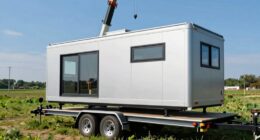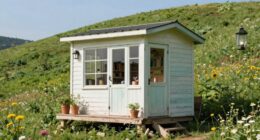
To budget for your DIY tiny home build, break down each phase—planning, foundation, framing, exterior, interior, utilities—and assign realistic costs. Research current prices for materials, tools, and permits, and gather multiple quotes to stay accurate. Balance durability with cost by choosing materials wisely, considering reclaimed options, and factoring in long-term maintenance. Keep detailed lists and include a buffer for unexpected expenses. If you want more tips on staying on budget, keep exploring further.
Key Takeaways
- Break down the build into phases and assign realistic costs to each for accurate budgeting.
- Research current prices for materials, tools, and permits, and gather multiple quotes for comparison.
- Balance material durability, aesthetics, and cost, considering reclaimed options to reduce expenses.
- Track all materials and costs meticulously to identify savings opportunities and monitor budget adherence.
- Include a contingency buffer to cover unexpected expenses and regularly update costs based on market fluctuations.
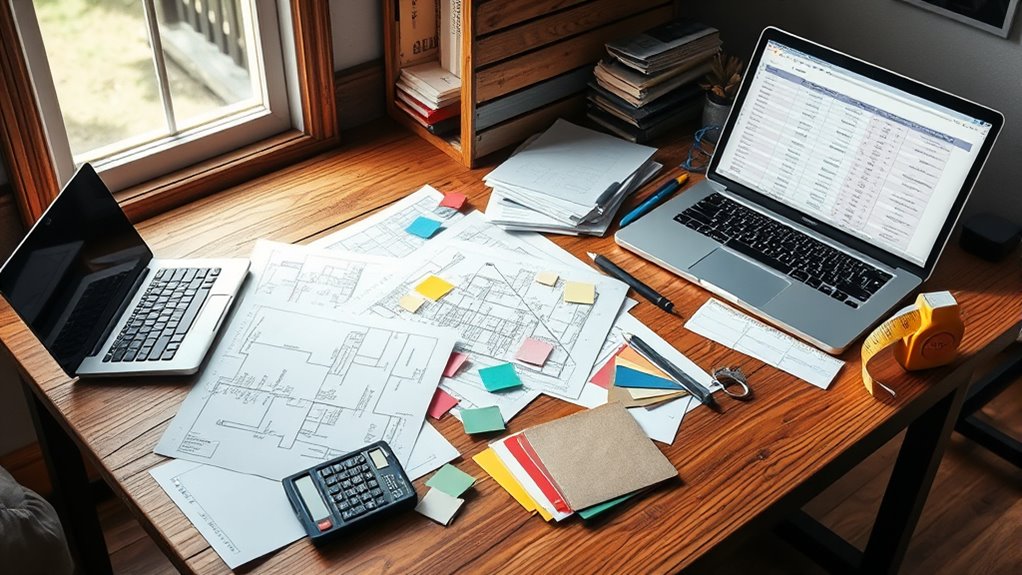
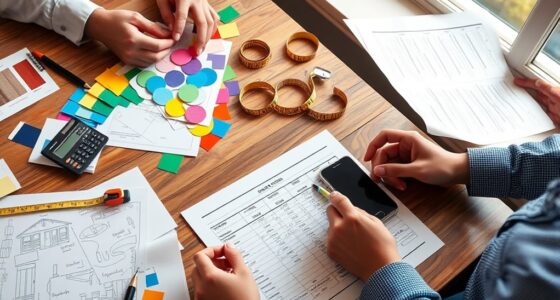
Building a tiny home yourself can be an affordable way to create a custom living space, but effective budgeting is essential to keep costs under control. The first step in managing your budget is accurate cost estimation. You need to break down every phase of the build—planning, foundation, framing, exterior, interior, and utilities—and assign realistic costs to each. Research prices for materials, tools, and permits, and add a buffer for unexpected expenses. Being thorough at this stage helps prevent surprises that could blow your budget later. Keep in mind that prices fluctuate depending on your location and the quality of materials you choose, so it’s wise to check current prices and gather multiple quotes. Additionally, understanding the cost of materials is crucial for realistic budgeting, as it directly impacts your overall expenses.
Material selection plays a pivotal role in controlling expenses. When choosing materials, balance durability, aesthetics, and cost. For example, opting for reclaimed wood or recycled materials can markedly cut costs while adding character to your tiny home. However, it’s essential to verify the condition and safety of these materials before incorporating them into your build. For structural elements like framing, consider cost-effective options such as standard lumber, but don’t skimp on quality where safety is concerned. For insulation, compare prices of spray foam, fiberglass, and rigid foam boards, choosing the best fit for your climate and budget. For exterior siding, vinyl may be cheaper and easier to install than wood or metal, but weigh the long-term maintenance costs and appearance.
As you select materials, think about their longevity and how they might impact your overall budget over time. Cheaper materials might save money upfront but could require more frequent repairs or replacements, which adds to your expenses. Conversely, investing in higher-quality materials can reduce ongoing costs and improve your tiny home’s value. Keep a detailed list of all materials needed, including quantities and prices, to stay on top of your budget. This meticulous approach allows you to identify areas where you might cut costs or need to allocate more funds.
Top picks for "budget tiny home"
Open Amazon search results for this keyword.
As an affiliate, we earn on qualifying purchases.
Frequently Asked Questions
How Do I Estimate Costs for Custom Features?
To estimate costs for custom features, start by researching material costs for your chosen design considerations. List each feature you want, then find prices for materials like cabinetry, flooring, and fixtures. Add labor costs if you’re hiring help. Don’t forget to include potential extra expenses for custom work. This way, you’ll get a clearer picture of your total budget and can adjust your plans as needed.
What Unexpected Expenses Should I Anticipate?
You should anticipate unexpected expenses like upgrading to energy-efficient appliances if initial choices don’t meet your needs. Permitting and regulatory costs can also catch you off guard, especially if you need special permits or inspections. Additionally, unforeseen issues like structural adjustments or material upgrades often arise during construction. Budget extra for these surprises to avoid stress. Planning ahead ensures you stay on track financially and avoid costly delays.
How Can I Save Money During Construction?
Did you know that over 30% of tiny home costs come from materials? To save money during construction, focus on material sourcing—buy second-hand or bulk, and repurpose items when possible. Be strategic with tool selection; rent expensive tools instead of buying. Planning ahead helps you avoid last-minute purchases, and DIY skills reduce labor costs, making your tiny home more affordable without sacrificing quality.
What Financing Options Are Available for Tiny Homes?
You can explore financing options like personal loans, RV loans, or specialized tiny home loans. Keep in mind, you’ll need to take into account tiny home insurance, which varies by provider, and make certain your build complies with zoning regulations. These factors influence your financing eligibility and costs. Research lenders familiar with tiny homes, and confirm your location’s rules before securing funding, so your project stays on track without surprises.
How Do I Budget for Future Maintenance and Upgrades?
Think of your tiny home as a garden that needs ongoing care. To budget for future maintenance and upgrades, set aside a dedicated fund regularly. Invest in durable insulation materials to reduce future heating or cooling costs, and consider solar energy systems for long-term savings. By planning for these, you nurture your home’s health, ensuring it remains a cozy, efficient sanctuary that grows with you over time.
Conclusion
Budgeting carefully for your DIY tiny home is essential to turn your dream into reality without breaking the bank. Did you know that most tiny home builds cost between $10,000 and $30,000? Staying within your budget not only keeps stress at bay but also ensures you enjoy the process. With smart planning and a clear financial plan, you’ll create a cozy, affordable home tailored just for you. Your tiny home journey starts with a solid budget—happy building!