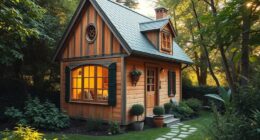
Many assume that tiny homes face uniform regulations across the country, but that’s not the case. Building codes and permitting processes vary markedly from state to state, affecting how easily you can start your tiny living project. Some states streamline approvals, while others impose strict standards that can slow down your plans. To find the best location for your tiny home, you’ll need to understand these differences—and that’s just the beginning.
Key Takeaways
- States like Texas and Florida have straightforward permitting processes, making tiny home approvals easier.
- Regions with relaxed energy standards, such as some southern states, offer more design flexibility.
- States with streamlined permitting, fewer documentation requirements, and faster approval times simplify tiny living projects.
- California and similar states enforce stricter energy and building codes, increasing compliance efforts but offering incentives.
- Early research into state-specific regulations helps optimize project planning and avoid delays in tiny home development.
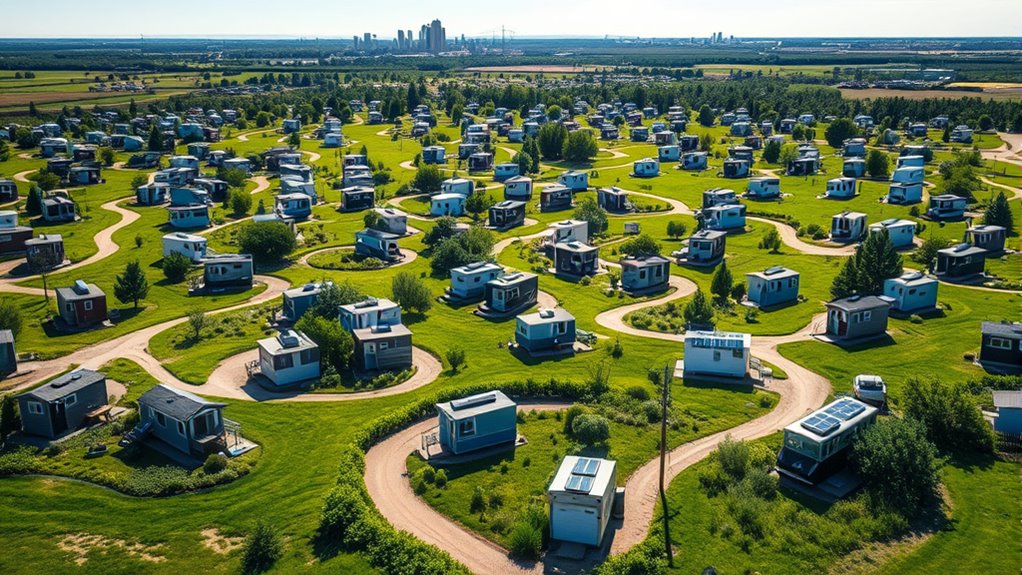
Building codes vary markedly from state to state, reflecting local building practices, climate conditions, and safety priorities. When it comes to tiny living, understanding these differences is vital. Many states have streamlined permitting processes that make it easier to approve small-scale dwellings, but the ease of approval can still differ markedly. Some states have simplified procedures, allowing you to navigate permits quickly, especially if your tiny home meets specific design and safety standards. Others might require more extensive documentation or inspections, which can slow down your project. It’s imperative to research your state’s permitting process early to avoid surprises and delays. Knowing what documentation is needed and how long approval might take helps you plan effectively. Additionally, the adoption of innovative AI technology in building inspections is beginning to influence permitting procedures, potentially streamlining approval processes further in some regions. Energy efficiency standards are another fundamental aspect of building codes that impact tiny homes. States with aggressive energy standards often impose specific requirements on insulation, heating, cooling, and electrical systems. In some regions, these standards are integrated into the permitting process, meaning you’ll need to demonstrate compliance before getting final approval. Conversely, states with more relaxed standards might offer greater flexibility, allowing you to design a tiny home that maximizes energy efficiency without cumbersome regulations. This flexibility can save you time and money, especially if you’re aiming for a minimalist, eco-friendly lifestyle. In states where energy standards are strict, you might find it beneficial to incorporate features like solar panels or advanced insulation techniques to meet code requirements. However, these features can also qualify you for incentives or tax credits, offsetting some costs. On the other hand, states with less rigorous standards might not require such upgrades, but you should still prioritize energy efficiency to keep utility costs low and reduce environmental impact. Ultimately, your choice of where to build depends on how these factors align with your goals. If you want a hassle-free permitting process and minimal energy regulation hurdles, states like Texas or Florida might be appealing. They tend to have more straightforward rules for tiny homes. Conversely, if you’re interested in maximizing energy efficiency and are willing to navigate stricter codes, states like California could be a good fit. In any case, understanding your state’s specific building codes, permitting process, and energy standards will help you move forward confidently in creating your ideal tiny living space in 2025.
Conclusion
If you’re considering a tiny home in 2025, choose states like Texas or Florida for smoother approval processes. For instance, imagine building a minimalist retreat in Texas—your permit could be approved in weeks, not months. By researching regional codes early and prioritizing flexible regulations, you’ll save time and money. Ultimately, selecting the right state can turn your tiny living dream into reality with less hassle and more freedom to customize your space.