
Tiny house liability insurance is tailored for portable structures, unlike traditional homeowners policies that mainly cover fixed homes on a foundation. It protects you against damages or injuries during transit or when parked temporarily, which standard policies often exclude. Since tiny houses on wheels are considered mobile, you need specialized coverage to avoid gaps. Understanding these differences helps guarantee you’re properly protected wherever your tiny house is. If you’re curious about how to get the right coverage, keep exploring your options.

Get compact home essentials delivered free with Prime
- Fast, free delivery on millions of items
- Prime Video, Amazon Music and more included
- Member-only deals all year
Key Takeaways
- Tiny house liability insurance specifically covers incidents during transit and temporary parking, unlike standard homeowners policies.
- Homeowners coverage typically does not insure portable or mobile structures like tiny houses on wheels.
- Liability policies for tiny houses address damages or injuries related to the structure, visitors, or during transportation.
- Zoning laws and classification as portable structures influence the type of liability insurance needed.
- Specialized tiny house liability insurance provides protection for unique risks not covered by traditional homeowners policies.
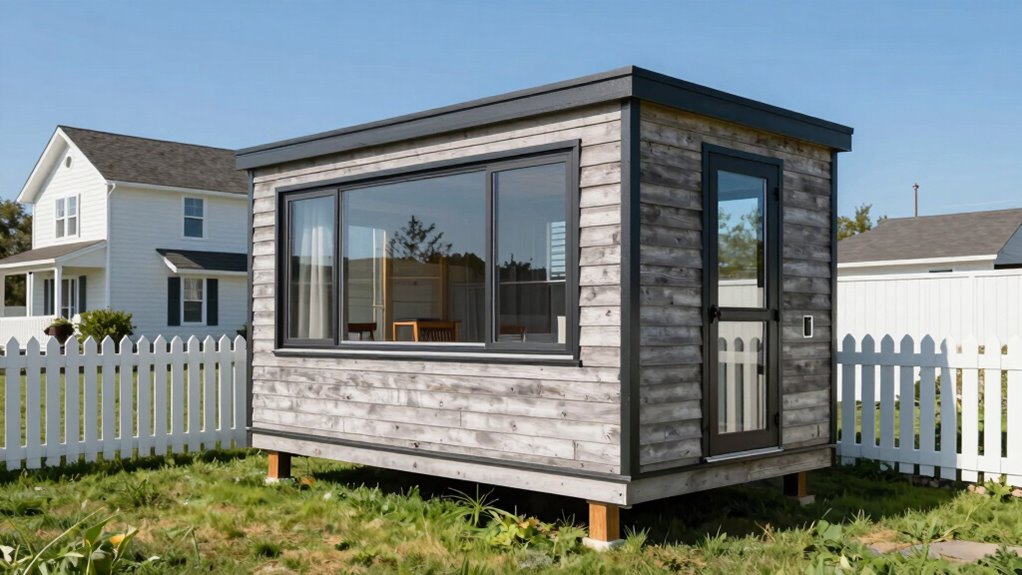
Are you considering a tiny house as your next home, but unsure about how to protect yourself legally? When it comes to liability insurance, tiny houses differ considerably from traditional homeowners coverage. Unlike standard houses, tiny homes are often classified as portable structures, which means they can be moved from one location to another. This mobility can complicate insurance needs because typical homeowners policies are designed for permanent structures. Many insurance providers don’t automatically cover tiny houses unless they’re fixed to a foundation, so you need to explore specialized policies that recognize the unique nature of portable structures.
Zoning regulations also play a vital role here. Local rules can restrict where you can place your tiny house, whether on a permanent foundation or as a portable structure on wheels. Some areas might not recognize tiny houses as legal dwellings, making it essential to understand the zoning laws that apply to your intended location. Failing to comply with zoning regulations can jeopardize your insurance coverage or even lead to legal issues if your tiny house is considered an unpermitted structure. Because of these complexities, your liability insurance must be tailored to your specific situation, accounting for whether your tiny house is parked on private property, in a tiny house community, or on a temporary basis.
Liability insurance for tiny houses often differs because it’s not just about protecting your structure but also about covering potential damages or injuries that could occur in the context of a portable structure. For example, if your tiny house is on wheels and you’re traveling, your coverage needs to extend to incidents that happen while it’s in transit or parked temporarily. Standard homeowners policies don’t typically cover these scenarios, which means you’ll need a policy that explicitly covers mobile or portable structures. This kind of coverage can include protection against accidents, property damage, or injuries involving visitors or passersby, depending on your circumstances. Additionally, understanding the classification of tiny houses as portable structures is crucial for ensuring you select the right insurance coverage. It’s also important to consider how your insurance policy addresses liability during transportation, especially if you frequently move your tiny house between locations. Being aware of fire safety measures and proper precautions can further safeguard your investment when on the move or set up in different locations. Moreover, staying informed about insurance requirements specific to portable dwellings can help prevent coverage gaps and ensure comprehensive protection.
As an affiliate, we earn on qualifying purchases.
Frequently Asked Questions
Do Tiny House Liability Policies Cover Personal Belongings?
Yes, tiny house liability policies typically cover personal property, but coverage limits vary. You’re protected if someone’s injured on your property or if your belongings are damaged or stolen. However, it’s essential to review your policy carefully to understand what’s included and the coverage limits. Consider supplementing your policy if you have valuable personal property, ensuring you’re fully protected against potential risks.
Are Tiny House Insurance Policies Valid in Multiple States?
It’s true that many tiny house insurance policies are designed to be valid across multiple states, though this largely depends on your insurer and their policies. You should check local tiny house zoning laws, as restrictions vary. Insurance affordability also plays a role; some providers offer flexible coverage options for different states. Confirm with your insurer to verify your policy covers multiple states without issues, and always stay informed about regional regulations.
How Does Liability Coverage Differ for Stationary vs. Mobile Tiny Houses?
Liability coverage for stationary tiny houses often focuses on property damage and personal injury on fixed sites, considering construction details and local zoning restrictions. For mobile tiny houses, coverage must account for travel risks, accidents during movement, and legal issues across jurisdictions. You need to understand how construction considerations and zoning restrictions impact your liability, especially if your tiny house moves or is permanently fixed, ensuring you’re protected regardless of its status.
Can Tiny House Liability Insurance Be Bundled With Other Policies?
Yes, you can bundle tiny house liability insurance with other policies. Because tiny house portability varies—whether stationary or mobile—bundling offers customizable coverage to suit your needs. Combining your tiny house liability with auto or renters insurance ensures complete protection. This approach simplifies payments and provides peace of mind, especially if your tiny house doubles as a mobile residence. Always check with providers to tailor bundles that match your specific lifestyle.
What Exclusions Are Common in Tiny House Liability Insurance?
You might be surprised to learn that common policy exclusions in tiny house liability insurance include intentional damage, certain natural disasters, and damages caused while using the tiny house for commercial purposes. Liability limits also vary, so make sure your coverage adequately protects you. Always review your policy carefully, as exclusions can greatly impact your protection, and understanding these limits helps guarantee you’re prepared for unexpected incidents.
Conclusion
Understanding the difference between tiny house liability insurance and homeowners coverage is like choosing the right pair of shoes for a hike—you need the proper fit to protect yourself. Liability insurance for your tiny house shields you from unexpected accidents, while homeowners coverage offers broader protection for your property. Knowing which one suits your needs guarantees you’re prepared for the unpredictable, just as a good pair of shoes keeps you steady on uneven ground. Stay informed and protect your tiny home journey.
Halloween Picks
halloween
As an affiliate, we earn on qualifying purchases.