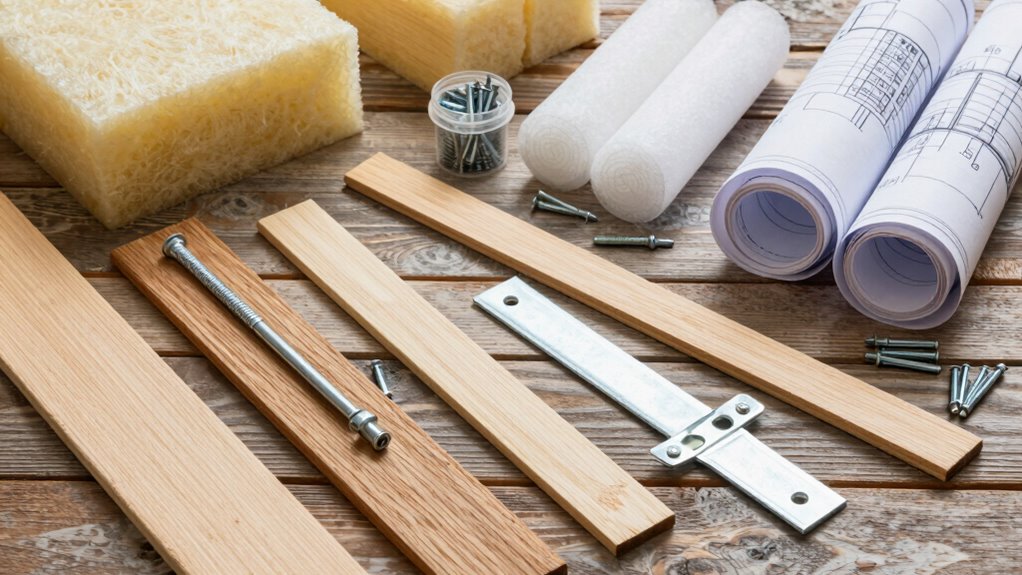

To build a tiny house materials checklist by phase, start by outlining each construction stage — from foundation to interior finishes — and identify eco-friendly, cost-effective materials for each step. Research local suppliers that prioritize sustainability to stay within budget. Organize your list to include framing, insulation, utilities, and finishes, ensuring you don’t overlook essentials. By planning carefully, you’ll keep your project on track. Keep going for detailed tips to help you succeed.

Get compact home essentials delivered free — and shop member deals
- Fast, free delivery on millions of items
- Access to Prime Big Deal Days deals on October 6–7
- Prime Video, Amazon Music and more included
Key Takeaways
- Develop a phase-by-phase list covering materials for foundation, framing, utilities, and finishes, emphasizing sustainability.
- Prioritize eco-friendly, recycled, and locally sourced materials for each build stage to stay eco-conscious and cost-effective.
- Include detailed specifications and quantities for each phase to prevent shortages and manage budgets effectively.
- Incorporate energy-efficient and renewable options, like solar panels and natural insulation, into relevant phases.
- Create a comprehensive timeline and checklist to track material procurement, delivery, and installation across all phases.
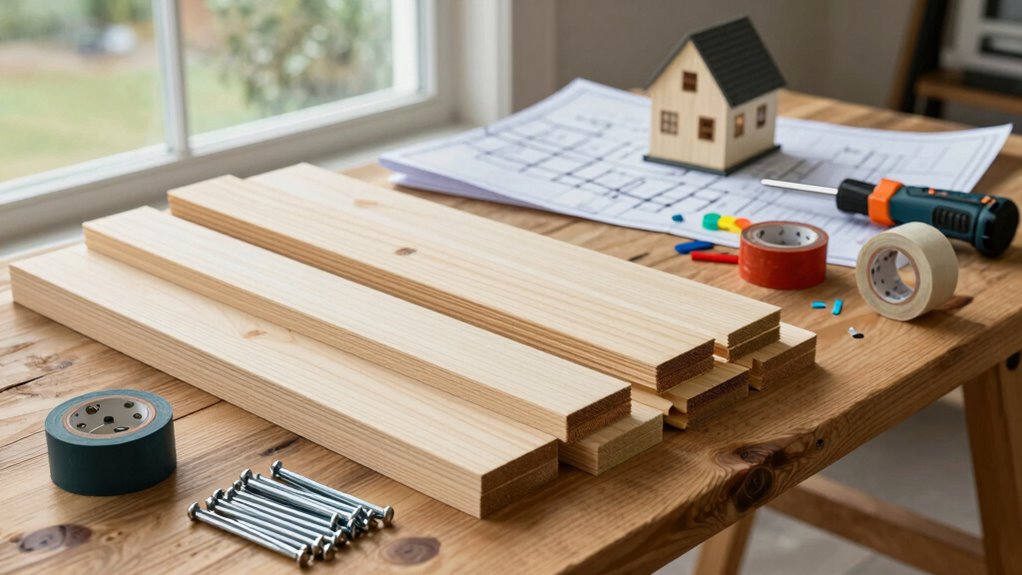
Starting a tiny house project can feel overwhelming, but having a clear materials checklist makes the process much smoother. When you’re planning each phase of construction, it’s essential to focus on sustainable sourcing and budget planning to keep things manageable. Early on, determine what materials align with your eco-friendly goals, such as reclaimed wood, recycled metal, or eco-conscious insulation. This not only supports sustainability but can also help you find cost-effective options. Research suppliers who prioritize environmentally friendly products, and compare prices to stay within your budget. Creating a detailed list of what you need for framing, insulation, flooring, and exterior finishes ensures you don’t overlook critical items and helps prevent last-minute purchases that could blow your budget.
As you move into the foundation and framing phase, your checklist should include durable, sustainable materials that offer strength without excess environmental impact. For example, choose sustainably harvested lumber or bamboo where possible. Keep your budget in mind by sourcing bulk or discounted materials, and consider local suppliers to cut transportation costs. During this phase, verify availability and delivery timelines to avoid delays, which can inflate costs. Staying organized with a detailed list helps you compare prices and make informed decisions that balance sustainability and affordability. Incorporating eco-friendly materials into your planning can significantly reduce your project’s environmental footprint. Additionally, considering natural insulation options can improve energy efficiency and indoor air quality.
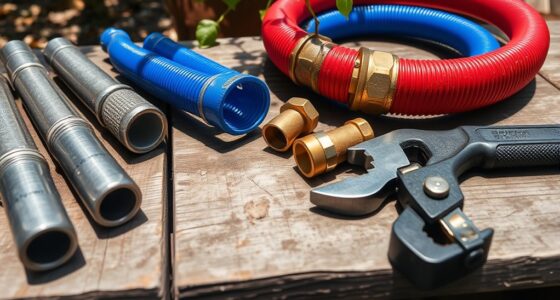
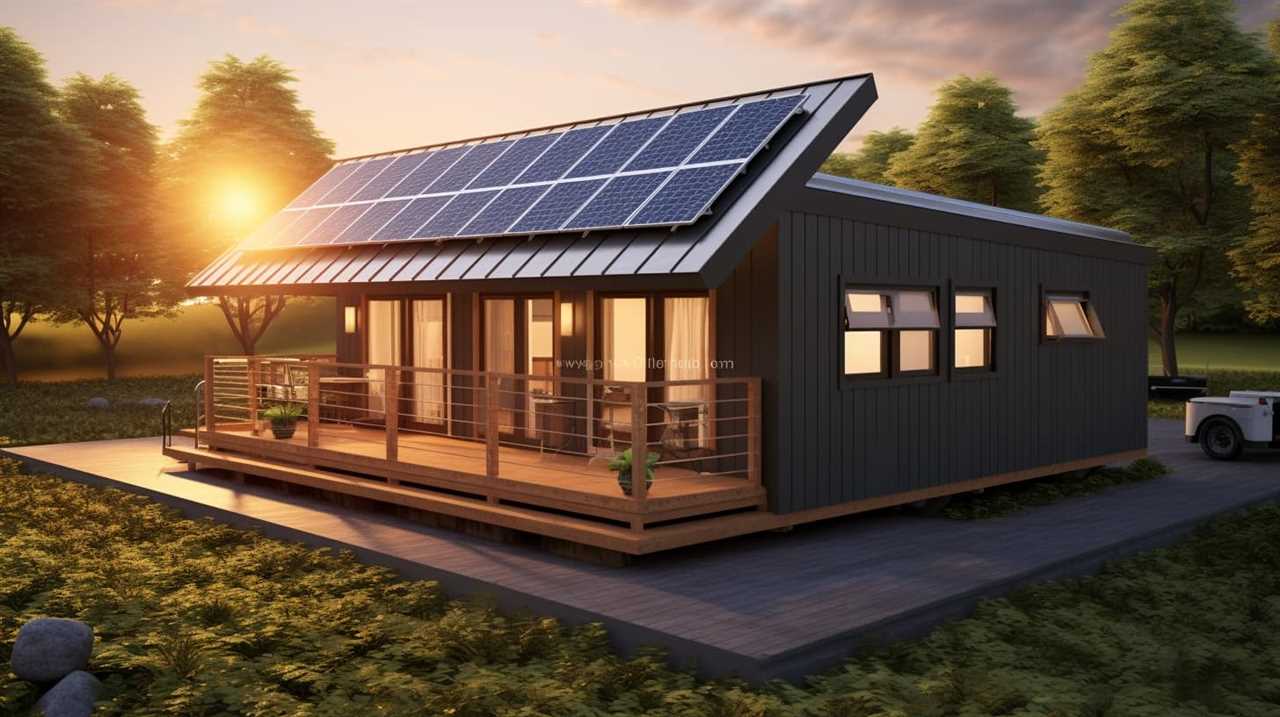
When you shift to installing utilities, like electrical, plumbing, and HVAC systems, your checklist will expand to include necessary fittings, pipes, wiring, and energy-efficient appliances. Prioritize energy-saving options and renewable energy sources, such as solar panels, to reduce long-term costs. For these systems, sustainable sourcing is crucial—look for certified eco-friendly components that perform well and last longer. Budget planning here involves estimating installation costs and factoring in the potential savings from energy-efficient choices, ensuring your tiny house remains affordable over its lifespan.
Finally, for interior finishes, your checklist should include low-VOC paints, natural textiles, and recycled or sustainable decor items. These choices support a healthy living environment and align with your eco-conscious values. Keep track of costs for these finishes, balancing quality and affordability to stay within your initial budget. By systematically planning each phase, focusing on sustainable sourcing, and maintaining a detailed, realistic checklist, you’ll streamline your tiny house build, reduce waste, and maximize your investment. This organized approach keeps you on track, making your tiny house dream both achievable and environmentally responsible.
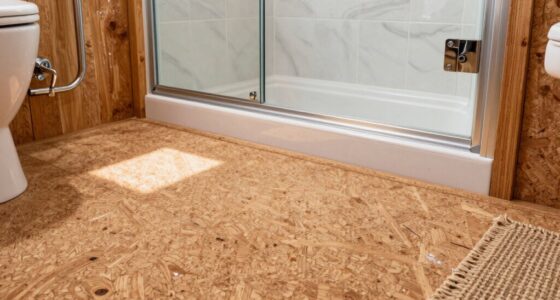
eco-friendly reclaimed wood for tiny house
As an affiliate, we earn on qualifying purchases.
As an affiliate, we earn on qualifying purchases.
Frequently Asked Questions
How Much Does a Tiny House Materials List Typically Cost?
A tiny house materials list typically costs between $10,000 and $30,000, depending on your budget planning and choices. You focus on material durability to guarantee longevity, selecting quality wood, insulation, and fixtures. Your costs vary based on the size, design, and finishes you want. Always factor in unexpected expenses and prioritize durable materials to avoid future repairs, making your tiny home both affordable and long-lasting.
Are Eco-Friendly Materials Suitable for Tiny House Construction?
Sure, eco-friendly materials are perfect for tiny house construction—they’re totally suitable and encourage eco-conscious building. Ironically, choosing sustainable alternatives might seem more complex, but it actually simplifies your project by reducing long-term costs and environmental impact. You get to build a cozy, sustainable space that’s good for the planet and your wallet. So, yes, eco-friendly materials are not only suitable but also highly recommended for your tiny house dream.
Can I Customize the Materials Based on Climate?
Yes, you can customize materials based on climate. You should select climate-specific insulation to guarantee your tiny house stays comfortable year-round. For colder climates, opt for thicker, high R-value insulation, while in warmer areas, focus on reflective or breathable materials. Seasonal material selection is essential, so choose weather-resistant, durable options suited to your local environment. Tailoring your materials helps optimize energy efficiency and comfort in your tiny house.
What Tools Are Needed Alongside the Materials?
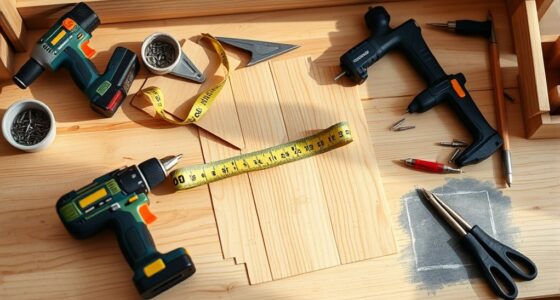
Did you know that proper tools can reduce construction accidents by 30%? To build your tiny house safely, you’ll need essential tools like a saw, drill, hammer, measuring tape, and level. Prioritize construction safety by wearing protective gear and maintaining your tools regularly to guarantee efficiency and safety. Keep your tools sharp and clean, and always follow safety guidelines to prevent injuries during your build.
How Do I Source Affordable Materials for My Tiny House?
You can source affordable materials for your tiny house by exploring budget options like reclaimed wood, recycled materials, and discount suppliers. Focus on material durability to guarantee your tiny house lasts. Visit salvage yards, online marketplaces, and local thrift stores for deals. Comparing prices and quality helps. Don’t forget to check for sales or bulk discounts. This way, you balance affordability with durability, creating a sturdy, cost-effective tiny home.
Conclusion
In the end, having a well-organized materials checklist isn’t just about staying on budget; it’s about turning your tiny house dream into reality. Some say that meticulous planning can actually influence the universe’s willingness to support your project—think of it as setting your intentions. By carefully choosing your materials and following your checklist, you harness that energy, making your tiny house journey smoother and more rewarding. Ready to build your dream? Let’s get started!
Fall Picks
fall essentials
As an affiliate, we earn on qualifying purchases.