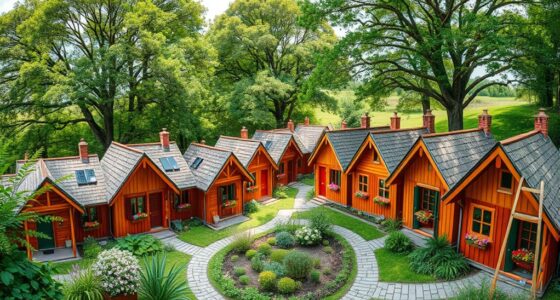
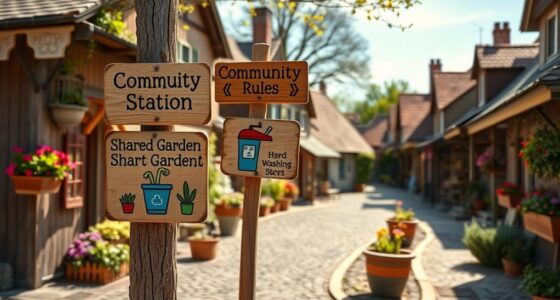
In tiny house neighborhoods, you’ll find parking is often organized with designated spots or zones, and community rules vary—some allow street parking for visitors, others don’t. For pets, rules typically cover leash use, waste cleanup, and space limitations. Shared areas are maintained through clear guidelines, and designated pet zones help keep everyone comfortable. Staying aware of these policies and responsibilities helps keep the neighborhood harmonious; keep exploring to see how residents successfully manage these aspects daily.

Get compact home essentials delivered free with Prime
- Fast, free delivery on millions of items
- Prime Video, Amazon Music and more included
- Member-only deals all year
Key Takeaways
- Residents are assigned specific parking zones, with some neighborhoods allowing visitor street parking and others restricting it.
- Pet rules typically include leash requirements, waste cleanup, and size restrictions to promote community harmony.
- Shared spaces are maintained through clear guidelines assigning responsibility for cleanliness and pet waste management.
- Designated pet zones and nearby parks provide convenient areas for pets, supporting resident pet management.
- Regular review of community rules and proactive participation help maintain neighborhood harmony and adherence to regulations.
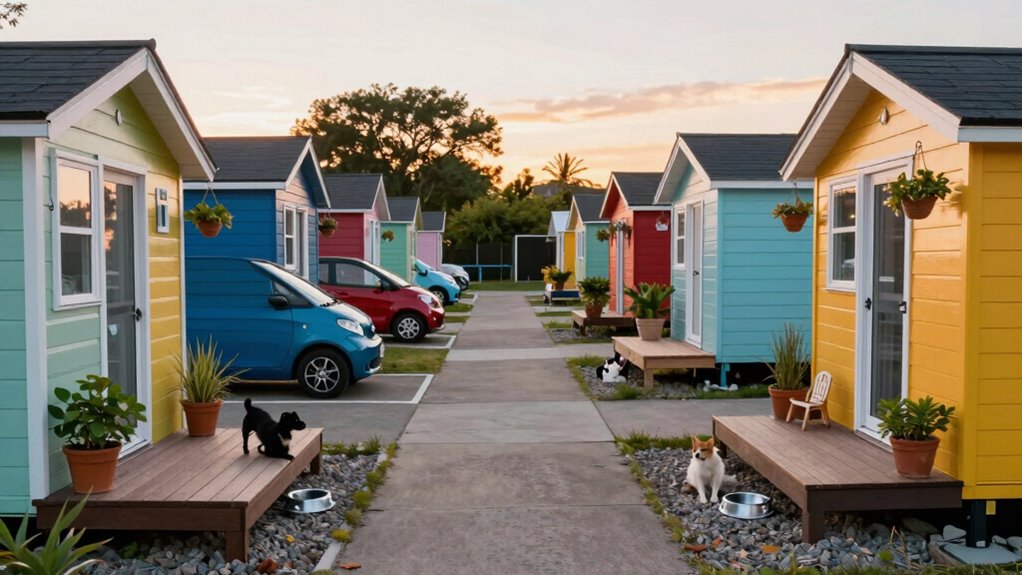
Living in a tiny house neighborhood offers a unique sense of community and simplicity, but it also comes with specific considerations for parking and pets. These regulations often require residents to park in assigned spots or within designated zones, which helps prevent congestion and maintains the neighborhood’s tidy appearance. It’s important to familiarize yourself with these community zoning policies, as they can vary markedly from one neighborhood to another. Some places might permit street parking for visitors, while others may restrict it entirely, encouraging you to plan ahead for your parking needs.
When it comes to pets, tiny house communities typically establish specific guidelines to promote harmony among residents. These rules usually address pet size, leash requirements, waste disposal, and noise levels. Since space is limited, you need to be mindful of your pet’s behavior and ensure they don’t disturb neighbors. Many neighborhoods require you to keep your pets on a leash when outside your home and to clean up after them promptly. These policies foster a respectful environment where pets and humans can coexist peacefully. It’s also wise to check whether there are designated pet areas or nearby parks, which can be convenient for walks and playtime. Additionally, understanding the importance of contrast ratio in related home design can help ensure your living space has a comfortable and inviting atmosphere, especially in small, shared environments. Proper management of these shared spaces often depends on maintenance responsibilities, which can vary from community to community. This might mean keeping your parking area clean or ensuring your pet’s waste doesn’t accumulate or cause issues in shared spaces. Knowing who is responsible for maintenance helps you plan and avoid conflicts. Furthermore, community guidelines often specify responsibility for upkeep, emphasizing the importance of proactive maintenance to keep shared areas welcoming. If you’re responsible for your space, it’s a good idea to set a routine for upkeep, keeping your parking spot tidy and your pet’s area clean. Regularly checking community rules can also help you stay updated on your responsibilities and maintain neighborhood harmony, preserving the neighborhood’s overall appeal.
tiny house parking lot organizer
As an affiliate, we earn on qualifying purchases.
As an affiliate, we earn on qualifying purchases.
Frequently Asked Questions
Are There Any Zoning Restrictions for Tiny House Neighborhoods?
Yes, tiny house neighborhoods often face zoning restrictions. You need to check local zoning regulations to see if tiny homes are permitted on specific lots. Building codes also come into play, dictating the minimum size, foundation, and utility hookups for your tiny house. These regulations vary widely, so it’s vital to research your area’s rules before starting your project. Staying compliant guarantees your tiny home remains legal and functional.
How Is Noise Managed in Tiny House Communities?
In tiny house communities, noise is surprisingly well-managed, thanks to sound mitigation strategies like strategic landscaping and building materials that absorb sound. You might think neighbor interactions would lead to constant chatter, but instead, residents often establish quiet hours and respectful boundaries. Ironically, the small space encourages more considerate living, making noise less of a problem. So, peaceful surroundings become the unexpected perk of tiny house living.
What Security Measures Are Typically in Place?
You’ll find that tiny house neighborhoods often use security cameras to monitor common areas, helping deter theft and promote safety. Fencing barriers are also common, creating physical boundaries that restrict unauthorized access and define property lines. These measures work together to give you peace of mind, ensuring that your community stays secure and protected while maintaining a welcoming, close-knit atmosphere where everyone feels safe.
Are There Shared Amenities Beyond Parking and Pets?
Sure, you’ll find shared amenities like community gardens and lively events that make tiny house neighborhoods feel more like a village than a parking lot. Forget private yards—here, everyone’s elbow-deep in tomatoes or swapping stories at neighborhood barbecues. These shared spaces foster a sense of connection, proving that tiny living isn’t just about small homes but big community spirit, all while enjoying a bit of dirt and a lot of fun.
How Are Tiny House Neighborhoods Maintained and Governed?
In tiny house neighborhoods, community governance typically manages upkeep and rules, ensuring everyone follows shared standards. You’ll find that tiny house zoning regulations guide where and how you can build, maintain, and modify your home. These neighborhoods often have homeowner associations or committees that oversee maintenance, enforce rules, and organize community activities. This structure helps keep the area well-kept, organized, and a welcoming place for all residents.
Conclusion
As you explore tiny house neighborhoods, you’ll notice innovative parking solutions and pet-friendly designs that create a welcoming community. Remarkably, a recent survey found that 78% of tiny homeowners consider pets an essential part of their lives, influencing neighborhood planning. By prioritizing thoughtful parking options and pet accommodations, these communities prove that even small spaces can offer big comfort and connection. Embrace these thoughtful designs, and you’ll find tiny living can be both practical and joyful.
Fall Picks
fall essentials
As an affiliate, we earn on qualifying purchases.