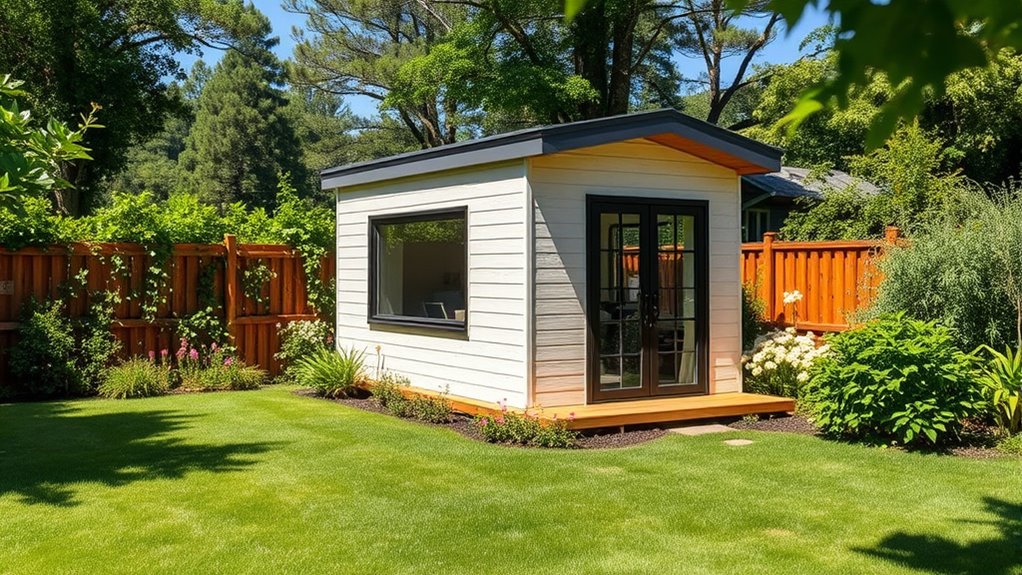

Getting a building permit for your tiny house depends on your local rules and zoning laws. Some areas have specific codes for tiny homes, while others may treat them as RVs or mobile units. You’ll need to check with your local building department early to understand what standards apply and what permits are required. Falling into compliance keeps your project legal and smooth. Stay with us to learn more about maneuvering these regulations effectively.
Key Takeaways
- Building permit requirements for tiny houses vary by location and local building codes.
- Some areas require tiny houses to meet specific safety standards for electrical, plumbing, and insulation.
- Tiny houses on wheels may be classified as RVs or mobile homes, affecting permit and regulation processes.
- Zoning laws can restrict tiny house placement, size, and land use; variances may be needed.
- Consulting local authorities ensures compliance, proper permits, and smooth approval of your tiny house project.
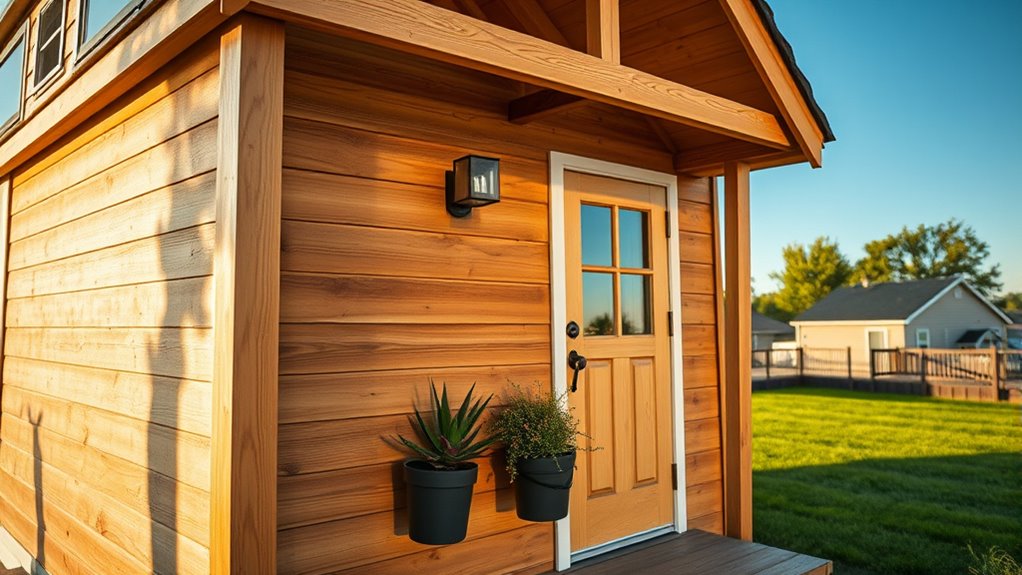
Are you curious about tiny houses and whether they could be the right choice for you? One of the first hurdles you’ll likely encounter is understanding the requirements for building permits. Building codes and zoning laws play a significant role in determining if you can legally build and place a tiny house on your property. These regulations vary widely depending on where you live, so it’s essential to do your homework early in the process.
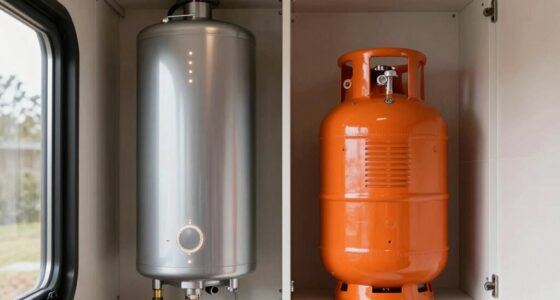
Building codes are designed to guarantee safety and quality standards for any structure, including tiny houses. They specify requirements for things like electrical wiring, plumbing, insulation, and fire safety. Sometimes, tiny houses don’t fit neatly into existing codes because they’re smaller than typical homes. However, many jurisdictions have adapted or created specific codes for tiny homes, especially as their popularity grows. You’ll want to check whether your local building department recognizes tiny houses as legal dwellings and what codes must be met for approval. If your tiny house is built on a trailer, it might be classified as an RV or mobile home, which involves different regulations altogether.
Building codes ensure safety standards but may need adaptation for tiny homes, especially trailers classified as RVs.
Zoning laws are equally important because they govern what types of structures can be built in different areas. Some zones are designated for residential use, while others are only for commercial or agricultural purposes. Even within residential zones, there might be restrictions on minimum lot sizes, setbacks, or the maximum allowable square footage, which can impact tiny house placement. For example, some neighborhoods have covenants that prohibit non-traditional homes or limit the size of structures. It’s important to research your local zoning laws to determine if a tiny house is permitted on your lot and how it must be positioned. If your property doesn’t officially allow tiny homes, you might need to seek variances or special permits, which can be a complex process.
Understanding building codes and zoning laws isn’t just about compliance; it also protects you from future legal issues. Failing to obtain the proper permits can lead to fines, orders to remove your tiny house, or difficulties when selling your property later. That’s why consulting with local authorities or professionals knowledgeable about tiny house regulations is a wise step. They can help you navigate the permit process, make sure your tiny home meets all safety standards, and confirm that it aligns with zoning requirements. Being informed and proactive about these regulations will make your tiny house journey smoother and help you enjoy your new home without legal worries. Moreover, knowing about local building codes and zoning laws can give you a significant advantage in planning your tiny house project efficiently.

DIY Miniature House Kit,Tiny House Pet Shop with Furniture & LED,DIY Dollhouse Miniature Kit for Adults Teen,Mini House Building kit,3D Wooden Craft Mini Model Kit,Birthday Gifts Home Decor
🏠Tiny House Pet Shop. This DIY miniature house kit is a popular pet shop that sell a variety…
As an affiliate, we earn on qualifying purchases.
As an affiliate, we earn on qualifying purchases.
Frequently Asked Questions
Do Tiny House Permits Vary by State or City?
Yes, tiny house permits vary by state or city because zoning laws and building codes differ across locations. You need to verify your local regulations to see what’s required for your tiny house project. Some areas may have specific permits or restrictions, while others may be more flexible. Always consult your local planning department to ensure you comply with all relevant zoning laws and building codes before starting construction.
Can I Build a Tiny House Without a Permit?
You can build a tiny house without a permit if it qualifies for permit exemptions, but zoning challenges often restrict this. Many places require permits for safety and code compliance, so check your local regulations first. If your tiny house meets specific criteria, like size or mobility, you might avoid permits. However, always verify with local authorities to prevent legal issues, as rules vary widely across cities and states.
How Long Does the Permit Approval Process Usually Take?
Imagine waiting by a mailbox, anticipation building as your permit approval duration unfolds. Generally, the permit timeline varies from a few weeks to a couple of months, depending on your local jurisdiction and project complexity. You can expect the approval duration to be influenced by factors like plan review, applicant responsiveness, and permit office workload. Staying proactive and ensuring all paperwork is complete helps speed up this process, making your tiny house dreams closer to reality.
Are There Specific Zoning Restrictions for Tiny Houses?
Zoning restrictions for tiny houses vary depending on your location. You might find zoning exceptions that allow tiny homes in certain areas, especially if land use regulations are flexible. Check with your local planning office to understand specific rules, as some zones may restrict tiny houses or have size limits. Being informed about land use policies helps guarantee your tiny house complies with local regulations and avoids legal issues.
What Are the Consequences of Building Without a Permit?
Imagine your tiny house standing proudly, then imagine it being torn down because you skipped permits. Building without a permit can lead to serious consequences like fines, legal penalties, and forced removal due to building code violations. You might also face restrictions on future projects or difficulty selling your home. Always secure the proper permits to protect your investment and avoid these costly, stressful setbacks.

Alipis 200Pcs Uy Butt Splice Connectors Gel Filled Insulation for Telephone Data Signal Cables Easy to Use Crimp Terminals for Household Electrical Wiring Network
Uy connector:splicing telephone / data cable wire connector, which changed complicated traditional cable wire and soldering connection method,Crimp…
As an affiliate, we earn on qualifying purchases.
As an affiliate, we earn on qualifying purchases.
Conclusion
Guiding building permits for your tiny house might seem overwhelming, but remember, you’re capable of conquering any obstacle that comes your way. With the right knowledge and persistence, you’ll turn your tiny house dream into a spectacular reality—more achievable than you ever imagined. Don’t let permits hold you back from creating your perfect haven; your tiny house journey is destined to be legendary. Keep pushing forward—you’re closer than you think to making this dream come true!

FIXXELY Set Screws Assortment Kit (M3, M4, M5, M6, M8) with Allen Keys – Durable 240 Pcs Metric Cup Point 304 Stainless Steel for Bathroom Fixtures, Door Knobs, Faucets, Plumbing, and More
Superior Quality: Made from high-quality 304 stainless steel, this hex socket set screws with Allen keys is extremely…
As an affiliate, we earn on qualifying purchases.
As an affiliate, we earn on qualifying purchases.
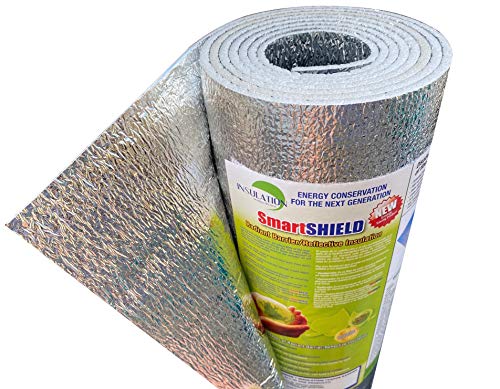
INSULATION MARKETPLACE SmartSHIELD -3mm 16inx10Ft ReflectiveINSULATION roll, Foam Core Radiant Barrier, ThermalINSULATION Shield – Engineered Foil
EXTREMELY EFFECTIVE – reflect 95% of radiant energy, perfect RADIANT BARRIER.
As an affiliate, we earn on qualifying purchases.
As an affiliate, we earn on qualifying purchases.