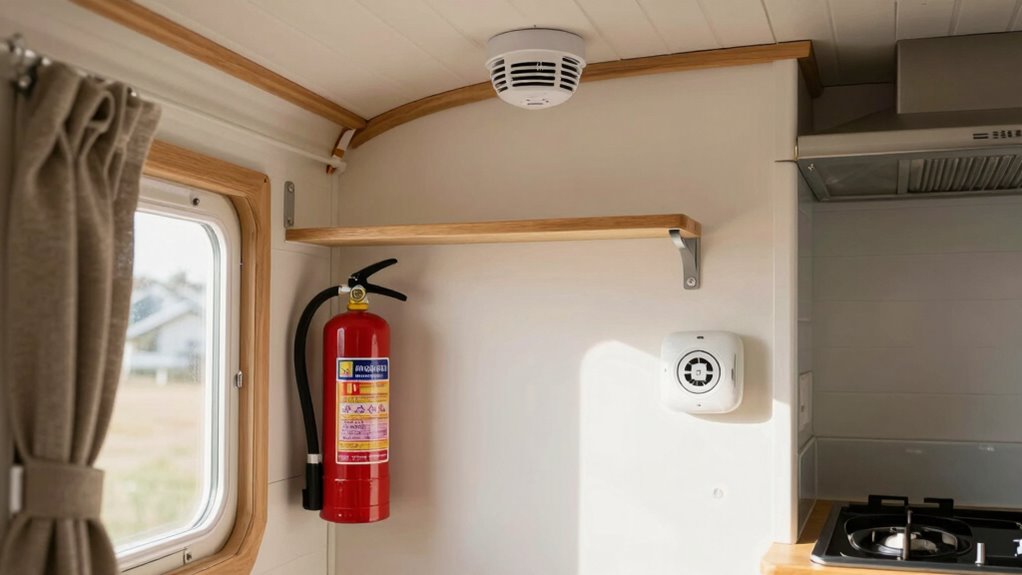
To guarantee your tiny house is safe, install working smoke and carbon monoxide detectors and keep fire extinguishers accessible. Regularly inspect the structure for cracks or leaks, reinforce weak areas, and seal windows and doors properly. Create an emergency plan, keep supplies handy, and secure your house against storms. Proper maintenance of electrical systems and safety equipment is essential. If you want to discover more important safety tips, you’ll find everything you need to know below.
Open a free Amazon Business account
Business pricing, bulk buying and tax-exempt orders.
As an affiliate, we earn on qualifying purchases.
Key Takeaways
- Install and regularly test smoke and carbon monoxide detectors throughout the tiny house.
- Conduct routine inspections of electrical systems, plumbing, and structural components for safety risks.
- Develop and practice a clear emergency escape plan with all household members.
- Keep fire extinguishers, first aid kits, and emergency supplies easily accessible and well-maintained.
- Ensure proper anchoring and stabilization to prevent shifting or damage during storms or high winds.
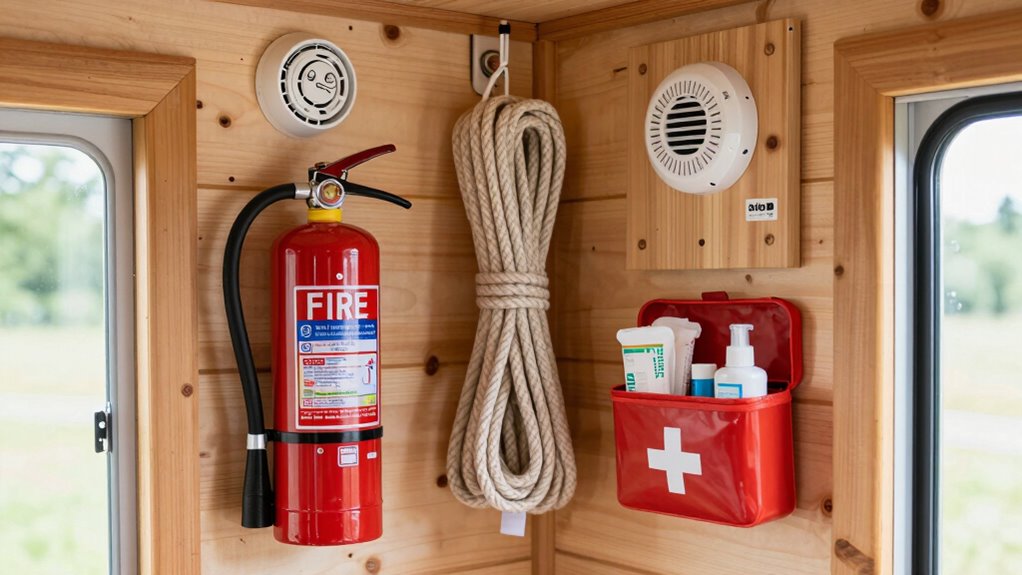
Living in a tiny house offers freedom and simplicity, but it also requires careful attention to safety. When space is limited, even small hazards can escalate quickly, so understanding the essentials is essential. Fire prevention becomes a top priority since the compact environment means fire can spread rapidly if not addressed promptly. You should always verify you have working smoke detectors installed in key areas like the kitchen and sleeping spaces. Keep fire extinguishers accessible and check them regularly to guarantee they’re in good condition. Avoid overloading electrical outlets, and never leave cooking unattended—these simple steps can prevent many common fires. Additionally, consider installing a carbon monoxide detector, especially if your tiny house relies on gas appliances or a generator. Proper ventilation is also crucial in reducing the risk of dangerous gases building up inside your home. Regularly inspecting your ventilation systems helps ensure they function effectively and maintain safe air quality. Ensuring your electrical system is up to code and properly maintained also plays a vital role in fire prevention, as outdated wiring can pose significant risks. To further enhance safety, familiarize yourself with local building codes and regulations for tiny homes, ensuring your space remains compliant and safe.
Prioritize fire safety with detectors, extinguishers, and cautious cooking to protect your tiny home.
Structural integrity is another critical aspect you can’t overlook. The backbone of your tiny home must be solid to withstand weather, movement, and daily wear. Regularly inspect the foundation, walls, and roof for any cracks, leaks, or signs of deterioration. Reinforce any weak points promptly to prevent structural failure, which could jeopardize your safety. Properly sealed windows and doors keep water out and improve insulation, but they also contribute to the overall sturdiness of your home. When building or renovating, choose quality materials and verify everything is securely fastened. Remember, a well-maintained structure not only protects you from the elements but also reduces the risk of accidents caused by falling or collapsing parts. Additionally, incorporating regular maintenance routines ensures long-term safety and helps identify potential issues early.
Living safely in a tiny house also involves planning for emergencies. Have a clear escape plan and make sure everyone in the household knows it. Keep emergency supplies, including a flashlight, first aid kit, and basic tools, easily accessible. Regularly check your safety equipment to confirm it’s functional. Additionally, consider how your tiny house is anchored or stabilized, especially if you’re in an area prone to strong winds or storms. Proper anchoring prevents your home from shifting or toppling, which could lead to injury. Emergency preparedness is essential for handling unexpected situations effectively and minimizing risks. Incorporating safety training for everyone in the household can further improve your readiness for various emergencies. Being aware of local weather conditions and having contingency plans can also greatly enhance your overall safety measures.
As an affiliate, we earn on qualifying purchases.
Frequently Asked Questions
How Do I Secure My Tiny House During Severe Weather?
To safeguard your tiny house during severe weather, implement storm-proofing strategies like anchoring it securely and sealing windows. Keep an emergency kit with essentials such as water, flashlights, and first aid supplies nearby. Make certain all loose items are secured, and consider installing storm shutters if possible. Stay informed with weather alerts and have a plan to evacuate if needed. Proper preparation helps protect your tiny house and keeps you safe.
What Are the Best Fire Prevention Tips for Tiny Homes?
Think of fire safety like tending a delicate garden—you need constant attention. You should place fire extinguishers in accessible spots, especially near the kitchen and heating areas. Regularly test and maintain smoke alarms to guarantee they’re working when needed. Keep flammable items away from heat sources, and never leave cooking unattended. These steps create a sturdy barrier against fires, helping protect your tiny home and loved ones from disaster.
How Can I Ensure Proper Ventilation and Air Quality?
To guarantee proper ventilation and air quality, you should install effective ventilation systems like exhaust fans and vents that promote airflow. Incorporate air filtration units to remove dust, allergens, and pollutants, improving indoor air quality. Regularly open windows when weather permits to increase fresh air intake. Keep vents and filters clean, and consider using air quality monitors to stay aware of indoor pollutants, assuring a healthier tiny home environment.
What Legal Safety Regulations Apply to Tiny House Construction?
You’ll want to dance through building codes and zoning laws like a pro. These regulations set the safety standards for tiny house construction, dictating everything from foundation to roof. Building codes guarantee your tiny home is structurally sound and safe, while zoning laws determine where you can park it. Ignoring these rules can lead to fines or forced relocations, so stay compliant and avoid turning your tiny dream into a legal nightmare.
How Should I Prepare for Electrical System Emergencies?
To prepare for electrical system emergencies, you should regularly inspect your electrical wiring for damage or wear and guarantee all connections are secure. Keep a fire extinguisher nearby, specifically rated for electrical fires, and know how to turn off your circuit breakers quickly to cut power during emergencies. Additionally, have a basic understanding of your circuit breaker panel, so you can respond swiftly if electrical issues arise, keeping everyone safe.
Conclusion
To keep your tiny house a safe haven, remember these essentials—proper fire safety, secure electrical systems, and regular maintenance. Think of it as your cozy fortress, where every detail matters. Don’t forget, even in this modern age, a good old-fashioned fire extinguisher and smoke alarms are timeless. By staying vigilant, you’ll enjoy your tiny home adventure without a hitch—like a trusty knight guarding their castle in a fairy tale. Stay safe, and happy tiny living!
Flea & tick season Picks
flea and tick prevention
As an affiliate, we earn on qualifying purchases.