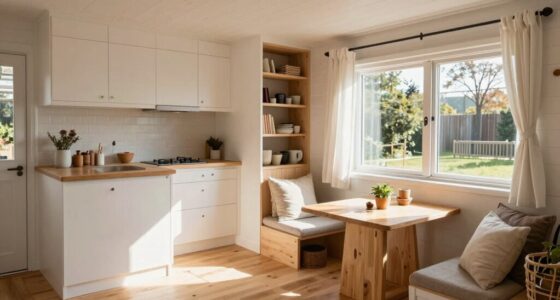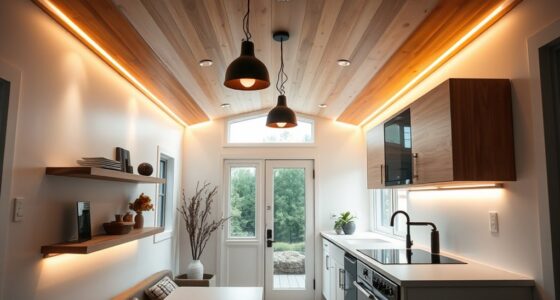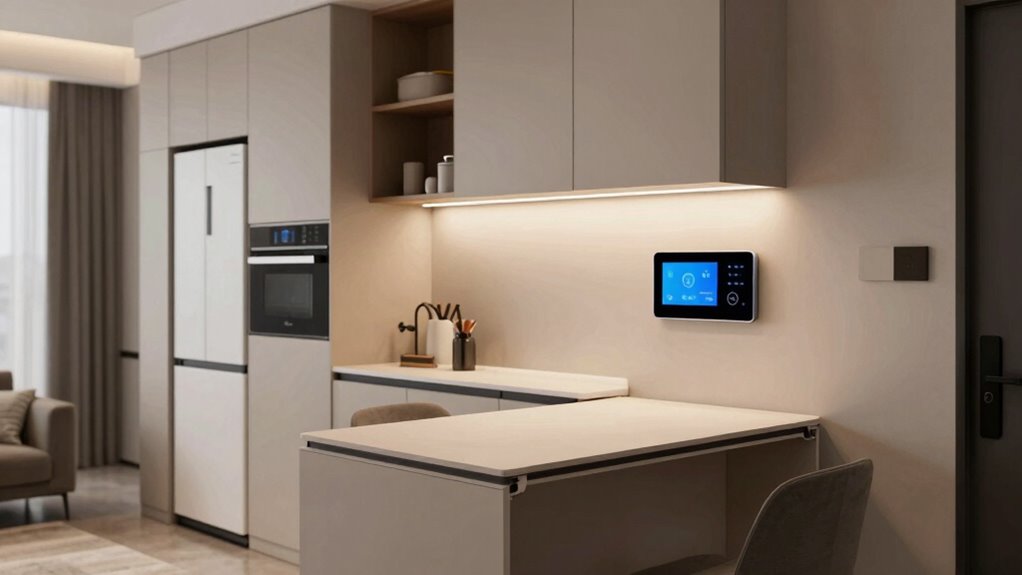

If you’re looking for smart home packages that actually fit tiny living, you’ll find options designed to maximize space and energy efficiency. These kits feature compact, multifunctional devices like programmable thermostats, motion sensors, and smart lighting that automate and optimize your environment. They seamlessly integrate into small spaces to enhance convenience and reduce utility bills. With the right package, you can enjoy a smarter, more efficient tiny home — and there’s plenty more to discover if you keep exploring.

Get compact home essentials delivered free — and shop member deals
- Fast, free delivery on millions of items
- Access to Prime Big Deal Days deals on October 6–7
- Prime Video, Amazon Music and more included
Key Takeaways
- Look for compact, multifunctional smart devices designed for small spaces to maximize functionality without clutter.
- Choose energy-efficient packages with automation features tailored for tiny homes’ limited size and resources.
- Opt for modular smart systems that can be customized and expanded as needed within tight spatial constraints.
- Prioritize solutions with seamless device integration to simplify control and reduce the need for multiple gadgets.
- Ensure the package supports sustainable practices, reducing energy waste and lowering utility costs in tiny living environments.
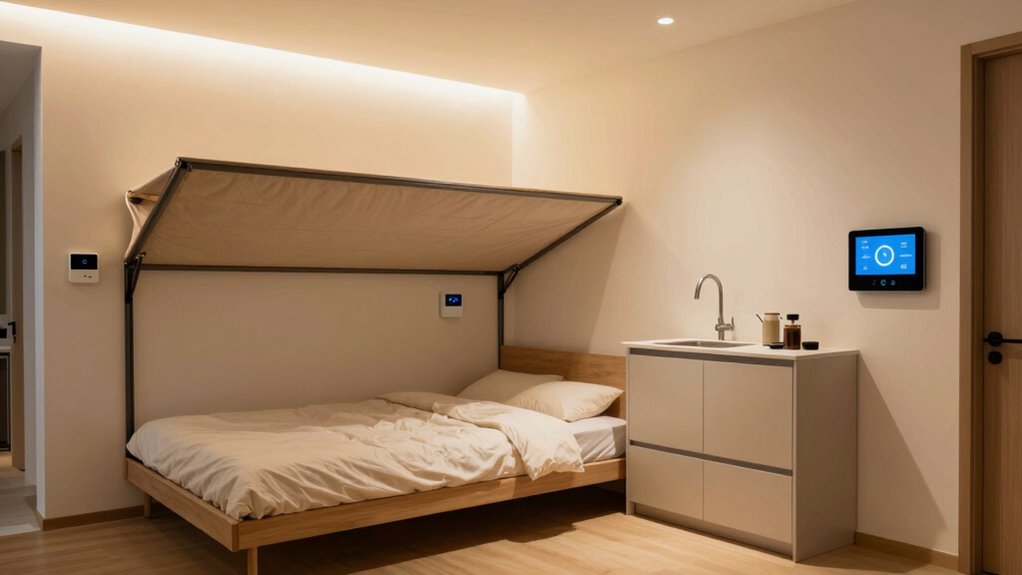
One of the biggest advantages is how these packages improve energy efficiency. Small spaces require careful energy management to keep utility bills manageable, and smart home systems make this easy. With programmable thermostats, motion sensors, and smart lighting, you can automate your energy use based on your schedule and habits. For example, you can set your lights to turn off when you leave the room or your thermostat to adjust when you’re asleep or away. This not only reduces waste but also helps you stay environmentally conscious. These energy-efficient features are especially valuable in tiny homes, where every watt counts, and space constraints limit the number of devices you can accommodate. Additionally, many smart systems incorporate energy management strategies that optimize power use further and contribute to sustainable living practices. Implementing compact and multifunctional devices can maximize functionality in small spaces, making your home both smarter and more efficient. Integrating smart home automation can also enhance your daily routines and simplify maintenance. Exploring integrated solutions allows for seamless control and customization, further improving your tiny living experience.
compact smart home automation kit for tiny homes
As an affiliate, we earn on qualifying purchases.
As an affiliate, we earn on qualifying purchases.
Frequently Asked Questions
Can Smart Home Packages Be Customized for Tiny Spaces?
Yes, you can customize smart home packages for tiny spaces. You’ll find customizable configurations that suit your specific needs and maximize limited space. Focus on selecting space-efficient devices like compact smart hubs, slim sensors, and multi-functional gadgets. These options help you create a tailored smart home setup without cluttering your tiny living area. By choosing flexible solutions, you make your space smarter, more convenient, and perfectly suited to your lifestyle.
How Much Do Smart Home Packages Typically Cost for Small Homes?
You’ll likely find smart home packages for small homes cost between $300 and $1,500, making it easy to fit your space and budget. Coincidentally, many packages include smart security features and voice control, so you can keep your home safe and operate devices effortlessly. By choosing a tailored package, you get the perfect blend of convenience and affordability, transforming your tiny space into a smart, secure haven without overspending.
Are There Wireless Options Suitable for Tiny Living Environments?
Yes, wireless options are perfect for tiny living environments. You should look for smart home devices with strong wireless compatibility and a good signal range to guarantee seamless connectivity in your small space. Many compact systems use Wi-Fi or Zigbee, which work well in limited areas. Keep in mind, a strong signal range prevents dead zones, so check device specifications to ensure reliable performance throughout your tiny home.
Do Smart Home Systems Require Professional Installation?
Most smart home systems don’t require professional installation, so you can set them up yourself. In fact, about 60% of users find DIY installation straightforward. With voice control and security sensors, you can easily customize your tiny space for safety and convenience. Simply follow the instructions, and you’ll have your smart home running smoothly without needing a technician. This way, you save time and money while enjoying the benefits of a connected home.
What Are the Best Energy-Saving Features for Tiny Homes?
You’ll want energy-efficient appliances like compact refrigerators and LED lighting to save power. Solar power integration is also a smart choice, allowing you to harness sunlight and reduce reliance on grid energy. These features work together to cut costs and minimize your tiny home’s carbon footprint. By choosing energy-efficient appliances and adding solar power, you make your tiny living space more sustainable and environmentally friendly.
Conclusion
Embracing smart home packages designed for tiny living is like fitting a perfect puzzle piece into your small space—seamlessly integrating convenience without clutter. These kits prove that smarter living isn’t just for sprawling homes but can transform your compact space into a cozy, efficient haven. With the right setup, you’ll find that small can indeed be mighty, making your tiny home feel like a spacious retreat where innovation and comfort go hand in hand.
Halloween Picks
halloween
As an affiliate, we earn on qualifying purchases.