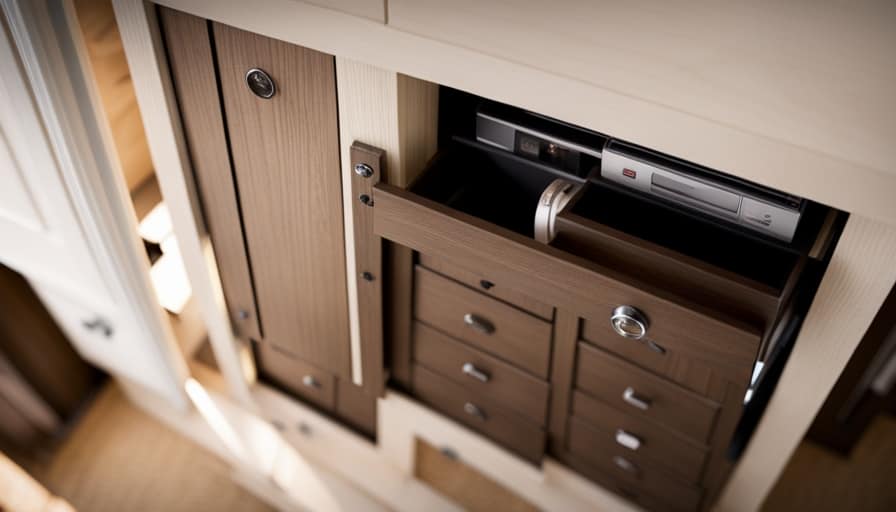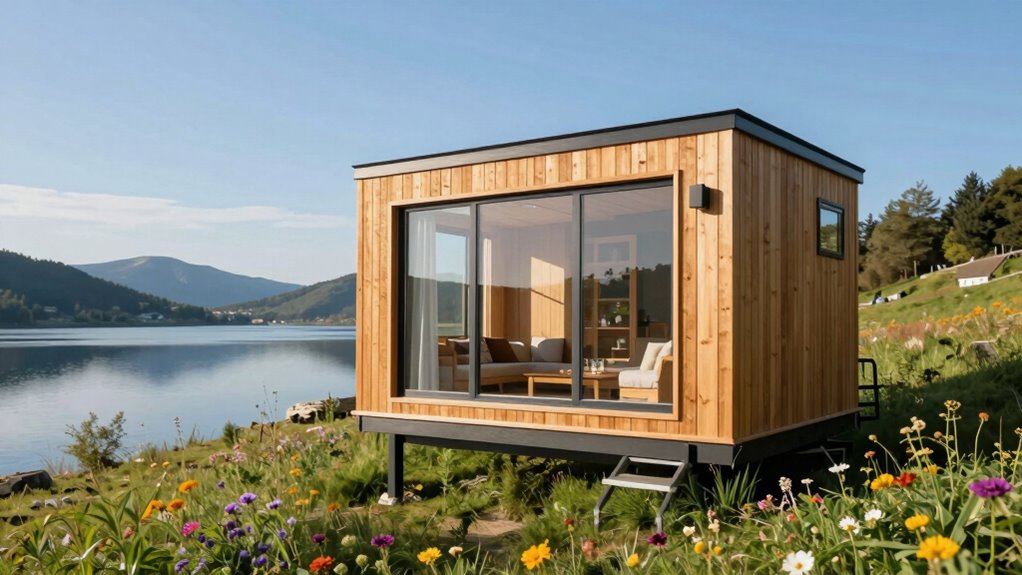

Tiny houses support your location-independent lifestyle by being mobile and easy to transport. Built on trailers, they let you move quickly and adapt to different climates or seasons. Smart space design with multi-purpose furniture and eco-friendly features make off-grid living comfortable and sustainable. Plus, understanding zoning laws helps you find legal spots to park your tiny home. With these tools, you can explore new places and live on your terms—discover how to maximize your freedom next.

Get compact home essentials delivered free with Prime
- Fast, free delivery on millions of items
- Prime Video, Amazon Music and more included
- Member-only deals all year
Key Takeaways
- Tiny houses’ mobility allows easy relocation to different locations for work, travel, or seasonal living.
- Built on trailers, they can be easily hitched and transported without extensive renovations.
- Compact design and smart layouts maximize space efficiency in varied environments.
- Off-grid features like solar power and composting toilets support sustainable, remote living.
- Flexibility with zoning and permits enables living in diverse regions and adapting to local regulations.
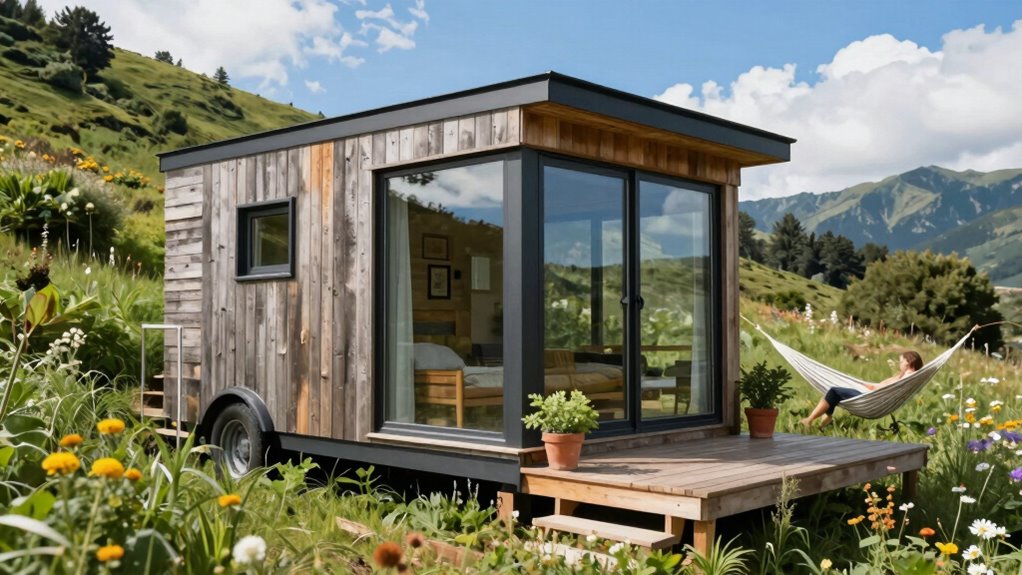
Tiny houses have revolutionized the way many people think about homeownership and mobility, especially for those seeking a location-independent lifestyle. With their compact size and efficient use of space, tiny houses allow you to move quickly and easily from one place to another, making them ideal for travelers, remote workers, or anyone craving flexibility. Their mobile design is central to this lifestyle, enabling you to take your home wherever life takes you. Unlike traditional homes, tiny houses often come built on trailers, so you can hitch them up and relocate without the need for extensive renovations or permits. This mobility not only supports exploration but also gives you the freedom to adapt your living situation based on work opportunities, climate preferences, or personal interests.
However, to fully enjoy this freedom, understanding zoning regulations becomes essential. Zoning laws govern where you can park, build, or live in a tiny house, and these rules vary dramatically from one jurisdiction to another. Some areas are welcoming to tiny houses, especially if they’re classified as RVs or mobile dwellings, but others have strict zoning restrictions that limit or prohibit their placement. You need to research local regulations carefully before choosing a location, as non-compliance can lead to fines, removal orders, or even legal trouble. Many tiny house owners find success by working with local authorities, applying for special permits, or locating their tiny homes in areas designated for alternative or temporary housing. Understanding these regulations helps you avoid surprises and guarantees your mobile home remains a legal, permanent part of your lifestyle.
The beauty of tiny houses supporting location independence lies in their adaptability. They’re designed to maximize limited space through clever storage solutions, multi-purpose furniture, and smart layouts. This mobile design not only makes moving feasible but also keeps your living environment comfortable and functional regardless of where you are. With a tiny house, you’re not tied down to a single property; instead, you can chase seasons, job opportunities, or personal adventures without the burden of a traditional mortgage or long-term lease. Additionally, advancements in tiny house technology, such as solar power and composting toilets, further support sustainable and off-grid living options. Incorporating eco-friendly materials and themes, like recyclable tissue paper, can also enhance your tiny home’s environmental sustainability. Moreover, adopting AI-powered tools can help optimize your tiny home’s energy efficiency and smart systems, making off-grid living more manageable and comfortable. This combination of mobility, innovation, and flexible legal options allows you to truly embrace a location-independent lifestyle that adapts to your needs and desires.
tiny house on wheels with solar power
As an affiliate, we earn on qualifying purchases.
As an affiliate, we earn on qualifying purchases.
Frequently Asked Questions
Can Tiny Houses Be Moved Across Borders Easily?
Yes, tiny houses can be moved across borders easily, especially if designed with mobility in mind. Their mobile design allows you to transport them via truck or trailer, making international travel feasible. However, you should consider cultural adaptation and local regulations, which vary by country. Planning ahead guarantees your tiny house complies with border crossing rules and fits into new environments, making your cross-border adventures smooth and enjoyable.
What Permits Are Needed for Tiny House Portability?
You’ll need to check local building codes and zoning restrictions before moving your tiny house across borders. Permits vary widely depending on the area, and some places may require special approvals for mobile structures. Make sure your tiny house conforms with road safety standards and is designed for portability. Contact local authorities beforehand to guarantee you obtain all necessary permits, avoiding legal issues during your move.
How Do Tiny Houses Impact Local Property Taxes?
You might wonder how tiny houses affect local property taxes. Their impact hinges on tax implications, which vary widely depending on local regulations. As tiny houses often blur the lines between permanent and movable structures, communities may see shifts in revenue, influencing community impact. While some areas benefit from increased housing options, others face challenges in maintaining tax bases. Your choices can directly shape local economies and development, making this a critical consideration.
Are Tiny Houses Suitable for Long-Term Remote Work?
Yes, tiny houses are suitable for long-term remote work. You can customize the interior to create a comfortable workspace, complete with ergonomic furniture and proper lighting. Plus, innovative storage solutions help keep your living and working areas organized, maximizing space. This setup allows you to maintain productivity and comfort while enjoying the flexibility of location-independent living, making tiny houses an ideal choice for remote workers.
How Do Tiny Houses Handle Off-Grid Power and Water?
Tiny houses handle off-grid power with solar energy systems, allowing you to generate electricity independently. They often incorporate water conservation features like rainwater harvesting, greywater systems, and efficient fixtures to maximize water use. These setup options help reduce reliance on municipal utilities, making your tiny home self-sufficient. By combining solar energy and water-saving strategies, you can enjoy a sustainable, off-grid lifestyle with minimal environmental impact.
Conclusion
Embracing tiny houses isn’t just a lifestyle choice—it’s a revolution that propels you into a domain where freedom knows no bounds. With each compact square foot, you access the ability to chase sunsets, explore new horizons, and live as if the entire world is your backyard. Your tiny house becomes a launchpad for adventures so limitless, they make traditional living look like a gilded cage. Welcome to a life where your dreams aren’t just possible—they’re inevitable.
Halloween Picks
halloween
As an affiliate, we earn on qualifying purchases.