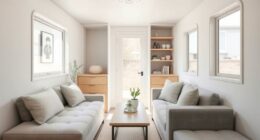

A curated list of tiny living inspirations offers practical tips and innovative ideas to help you maximize your small space. You’ll discover how to choose space-saving furniture, embrace minimalist designs, and adopt an intentional lifestyle that enhances comfort and organization. These resources guide you in creating a calm, functional home while reducing clutter and boosting efficiency. Keep exploring to find more strategies that turn your tiny space into a cozy, stylish sanctuary.
Key Takeaways
- Curated books offer practical tips on space-efficient layouts and organization for small living spaces.
- Reading lists include minimalist design ideas to create calming, clutter-free environments.
- Resources highlight space-saving furniture options that maximize functionality and comfort.
- Inspirational titles promote intentional living and mindful choices in tiny homes.
- Guides on well-being and comfort help transform small spaces into cozy, organized sanctuaries.

Have you ever wondered how a well-curated reading list can transform your daily routine? It’s not just about the books you choose but also how you integrate your living space to support your lifestyle. If you’re inspired by tiny living, you know that every square inch counts. That’s where space saving furniture and minimalist design ideas come into play, helping you maximize your area without sacrificing style or comfort. When you select your reading materials, think about how they can complement your space. Opt for books that inspire you to embrace simplicity or provide clever solutions for small-space living. Your reading list becomes a toolkit for transforming your environment, guiding you toward smarter furniture choices and design concepts.
Implementing space saving furniture can markedly alter your tiny living experience. Think fold-away beds, wall-mounted desks, or multi-purpose pieces that serve more than one function. These choices aren’t just practical; they elevate your space by reducing clutter and creating an open, breathable atmosphere. As you read about minimalist design ideas, you’ll discover how to keep your space visually clean and calming. Focus on neutral colors, sleek lines, and clutter-free surfaces. Your reading list might include books on decluttering, small-space organization, or Scandinavian-inspired interiors. These resources help you understand that less truly is more, encouraging you to curate your possessions and keep only what adds value to your life.
Space-saving furniture transforms tiny living by reducing clutter and creating open, calming spaces.
Your reading habits can also influence your mindset, making tiny living feel more manageable and even inspiring. When you learn about space-efficient layouts or clever storage solutions, you can apply those ideas directly to your home. For instance, using vertical storage or hidden compartments can free up precious floor space. Minimalist design ideas highlight the importance of intentionality—choosing quality over quantity, and focusing on what truly enhances your daily experience. Your reading list becomes a personalized guide, inspiring you to make thoughtful choices about your environment. This approach not only simplifies your living space but also cultivates a sense of calm and clarity.
Additionally, understanding the importance of comfort solutions for small spaces can help you select furniture and accessories that support a cozy yet functional environment. Ultimately, your curated reading list is more than just a collection of books; it’s a strategic tool for tiny living. By immersing yourself in space saving furniture concepts and minimalist design ideas, you empower yourself to create a home that’s functional, beautiful, and aligned with your values. Each book you read adds a layer of insight, helping you turn a small space into a sanctuary. The more you learn, the more confident you become in designing a home that feels spacious, organized, and truly yours—without the need for excess.
Frequently Asked Questions
How Do I Maximize Storage in a Tiny Home?
To maximize storage in your tiny home, prioritize vertical storage by installing shelves or wall-mounted cabinets to free up floor space. Use multi-use furniture like fold-out beds, ottomans with storage, or tables that double as desks. These strategies help you keep essentials organized and accessible without cluttering your space, making it feel larger and more functional. Embrace clever storage solutions to optimize every inch of your tiny home.
What Are the Best Eco-Friendly Tiny Living Materials?
Think of eco-friendly materials as the heartbeat of your tiny home. You should choose sustainable insulation like sheep’s wool or recycled denim, which keep your space warm without harming the planet. For flooring, biodegradable options such as cork or bamboo break down naturally, reducing waste. These materials not only support sustainability but also create a healthier living environment, making your tiny home both cozy and eco-conscious.
How Do I Choose the Right Tiny Home Design?
To choose the right tiny home design, consider how you want to use interior lighting and outdoor integration. Opt for a layout that maximizes natural light and includes large windows or skylights. Think about outdoor connections like decks or patios that blend seamlessly with your interior space. Prioritize designs that reflect your lifestyle, offering efficient use of space while enhancing comfort and accessibility for your daily routines.
What Are Common Challenges in Tiny Living?
You’ll face challenges like adapting to limited space, which requires smart storage solutions and multitasking furniture. Urban mobility can be tricky if you need to move often, so plan for easy transportation options. Building a sense of community is essential, so engage with neighbors and participate in local events. Balancing your independence with communal living helps you enjoy tiny living’s benefits while overcoming these common hurdles.
How Can I Personalize My Tiny Space Effectively?
You can personalize your tiny space effectively by adding decorative accents that reflect your personality, like unique artwork or cozy textiles. Choose a color scheme that makes you feel comfortable and energized, and incorporate it throughout your space. Use multifunctional furniture to maximize space, and display items that tell your story. These small touches will make your tiny living area feel truly yours, cozy, and inspiring.
Conclusion
You’ve got plenty of inspiration to start your tiny living journey. These books show that less truly is more and that big changes often start small. Remember, Rome wasn’t built in a day, so take it one step at a time. With each page, you’ll find new ideas to make your space smarter, simpler, and more your own. Embrace the adventure and watch your tiny living dreams turn into a reality—one small step at a time.