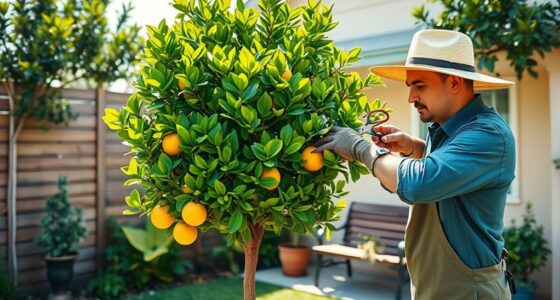
To keep your small garden healthy, safe, and well-shaped, you’ll need essential tools like sharp pruning shears for small branches, lightweight saws or loppers for larger ones, and extendable tools for hard-to-reach spots. Always wear safety gear such as gloves, safety glasses, and sturdy footwear during maintenance. Choosing manageable, high-quality tools and using proper techniques helps prevent damage and promotes healthy growth. Keep exploring to discover more tips for effective tree care and maintenance.

Get compact home essentials delivered free — and shop member deals
- Fast, free delivery on millions of items
- Access to Prime Big Deal Days deals on October 6–7
- Prime Video, Amazon Music and more included
Key Takeaways
- Choose compact, lightweight pruning tools like shears, saws, and extendable loppers suited for small garden trees.
- Use sharp, high-quality tools to ensure precise cuts and avoid damaging the tree’s health.
- Always wear appropriate safety gear such as gloves, safety glasses, and sturdy footwear during maintenance.
- Prune trees during dormancy to promote healthy growth and prevent disease.
- Regularly monitor trees and perform maintenance to maintain their health, safety, and aesthetic appeal.
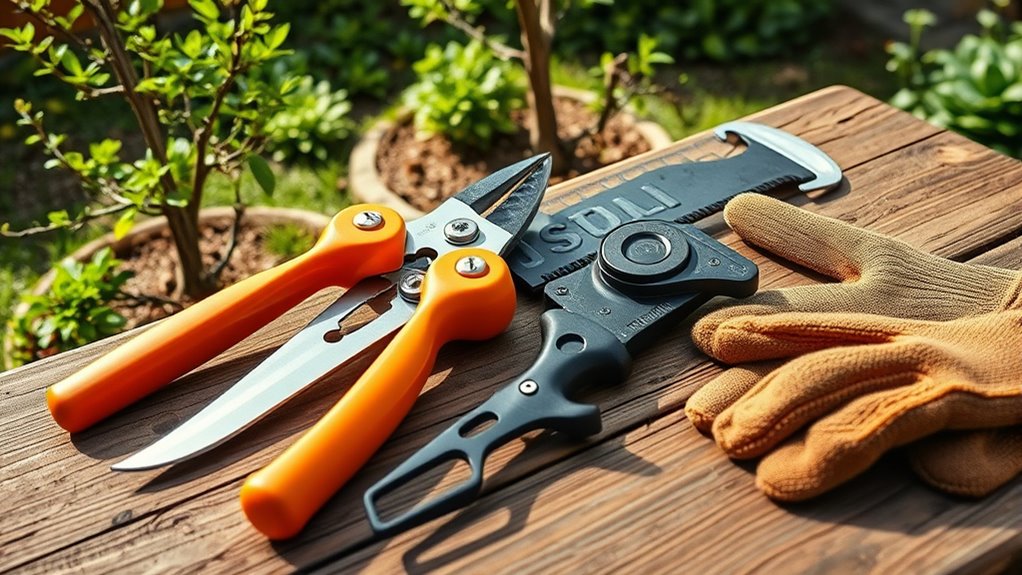
Maintaining healthy and safe trees requires the right tools to perform various tasks efficiently. In a small garden, you want to guarantee your trees stay vibrant and safe without causing damage or risking injury. To do this, investing in essential tree maintenance tools is critical, starting with safety gear and understanding proper pruning techniques. Safety gear is your first line of defense, protecting you from potential cuts, falling branches, or accidental injuries. Gloves, safety glasses, and sturdy footwear are indispensable when working around trees. Gloves prevent blisters and protect your hands from thorns or rough bark, while safety glasses shield your eyes from debris or branches that might snap unexpectedly. A hard hat can also be a wise addition, especially when pruning taller trees or working with heavy branches. Wearing the right safety gear ensures you can focus on the task without unnecessary worry about injury.
When it comes to pruning techniques, having the right tools makes all the difference. Pruning is essential for maintaining a tree’s health, shaping its growth, and removing dead or diseased branches. Using sharp, high-quality pruning shears is ideal for small branches and twigs, providing clean cuts that promote quicker healing. For larger branches, a pruning saw or lopper will give you the reach and leverage needed to trim safely and effectively. Proper pruning techniques involve making cuts at the right angle and location to avoid damaging the tree or creating entry points for pests. Always prune just outside the branch collar, the swollen area where the branch meets the trunk, to promote proper healing. Avoid leaving stubs, as they can lead to decay or infection. It’s also essential to prune at the right time—typically during dormancy in late winter or early spring—so your tree can recover and grow healthy new branches. Additionally, selecting the appropriate tree maintenance tools designed for small gardens ensures precision and efficiency in your work.
In small gardens, tools need to be manageable and precise. Compact pruning shears, lightweight saws, and extendable loppers allow you to reach different parts of your trees without overexerting yourself or causing damage. When using these tools, always follow proper pruning techniques to avoid creating wounds or stressing the tree. Regular maintenance, combined with the right safety gear, keeps your trees healthy and your gardening experience safe and enjoyable. Remember, taking your time, using proper tools, and respecting pruning principles will guarantee your small garden trees thrive for years to come.
Frequently Asked Questions
How Often Should I Prune Small Garden Trees?
You should prune small garden trees annually, ideally during their dormant season, to promote healthy growth. Follow proper timing schedules, such as late winter or early spring, for best results. Use correct pruning techniques, like making clean cuts just above a node, to prevent damage and encourage new growth. Regular pruning keeps your trees healthy, manageable, and attractive, ensuring they thrive throughout the year.
What Safety Gear Is Essential for Tree Trimming?
Did you know that wearing proper safety gear can reduce injuries by up to 70%? For tree trimming, you should always wear personal protective equipment like gloves, safety goggles, and a helmet to protect your eyes, hands, and head. Additionally, using the right tools safely involves proper handling techniques, such as maintaining a firm grip and keeping your body balanced. Prioritize your safety to make trimming effective and accident-free.
Can I Use Household Tools for Tree Maintenance?
You can try DIY tree pruning with household tools, but be aware of their limitations. Household tools like scissors or small saws aren’t designed for thicker branches, making your attempts risky and less effective. Using proper tree maintenance tools guarantees safety and better results. For larger branches, consider investing in or renting specialized tools like pruning saws or pole pruners. Avoid risking injury or damage by sticking to tools suited for the job.
How Do I Identify the Right Tool for Different Branches?
You identify the right tool by considering branch thickness and pruning technique. For small, thin branches, use pruning shears or scissors; they’re precise and easy to control. For thicker branches, opt for loppers or a pruning saw, which provide more leverage and cutting power. Always match your tool to the branch size, and remember to follow proper pruning techniques to prevent damage and promote healthy growth.
Are Electric or Manual Tools Better for Small Gardens?
You should choose between electric or manual tools based on your needs, as each has its pros and cons. Electric tools are easier to use, especially for larger or tougher branches, and often have better tool durability. Manual tools, on the other hand, are more eco-friendly, quieter, and reliable for small, precise cuts. For small gardens, a combination of both might work best, balancing ease of use and durability.
Conclusion
With the right tools in hand, maintaining your small garden’s trees becomes a breeze. Think of your toolkit as a trusted orchestra, each instrument playing its part to create harmony and health. Don’t let your trees fall silent—equip yourself today and turn your garden into a lush symphony of growth. Remember, a well-maintained tree isn’t just beauty; it’s nature’s masterpiece, waiting for you to bring it to life.
Fall Picks
fall essentials
As an affiliate, we earn on qualifying purchases.