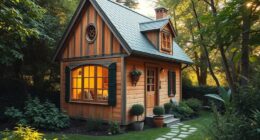
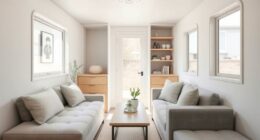
Exploring different types of tiny houses, you’ll find options that suit your lifestyle, from portable trailers built for easy relocation to stationary homes anchored on foundations. You can personalize their interiors with clever storage, modular furniture, and eco-friendly materials to make them truly your own. Whether you prefer the flexibility of moving or the stability of a permanent spot, there’s a tiny house design perfect for you. Keep going to discover even more about these versatile, space-saving homes.
Key Takeaways
- Tiny houses vary between portable models on trailers and stationary homes anchored to foundations.
- Interior layouts are customizable with open-concept designs, modular furniture, and personalized decor.
- Materials range from eco-friendly, sustainable options to rustic or modern minimalist styles.
- Off-grid options include solar power, composting toilets, and energy-efficient systems for remote living.
- Design choices reflect lifestyle needs, balancing mobility, permanence, personalization, and environmental considerations.

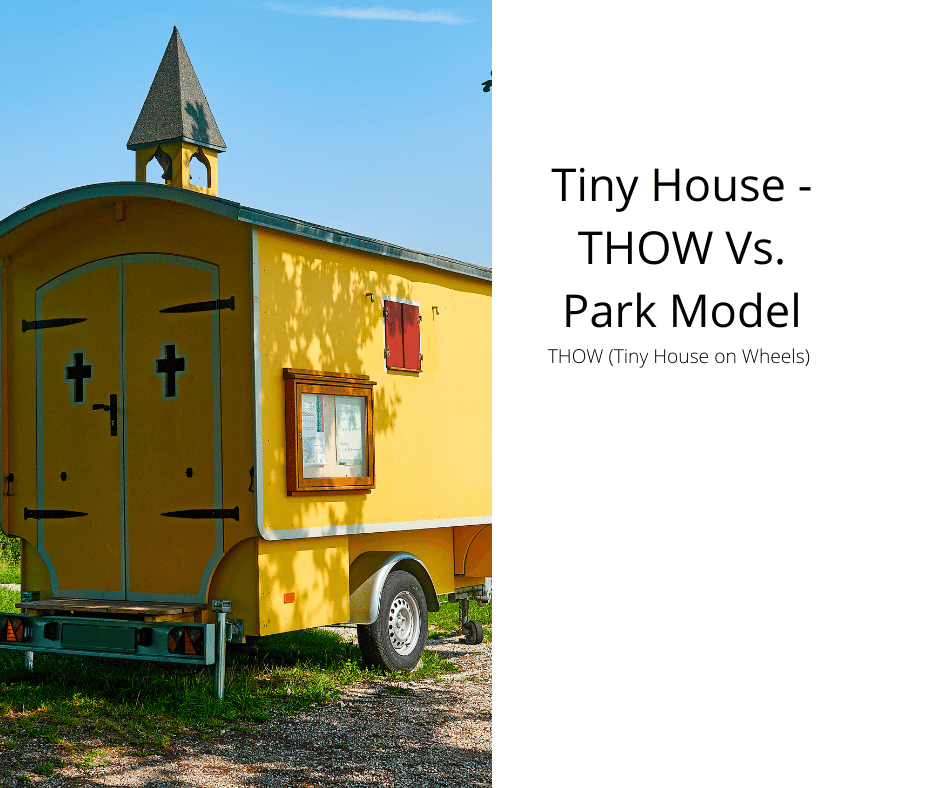
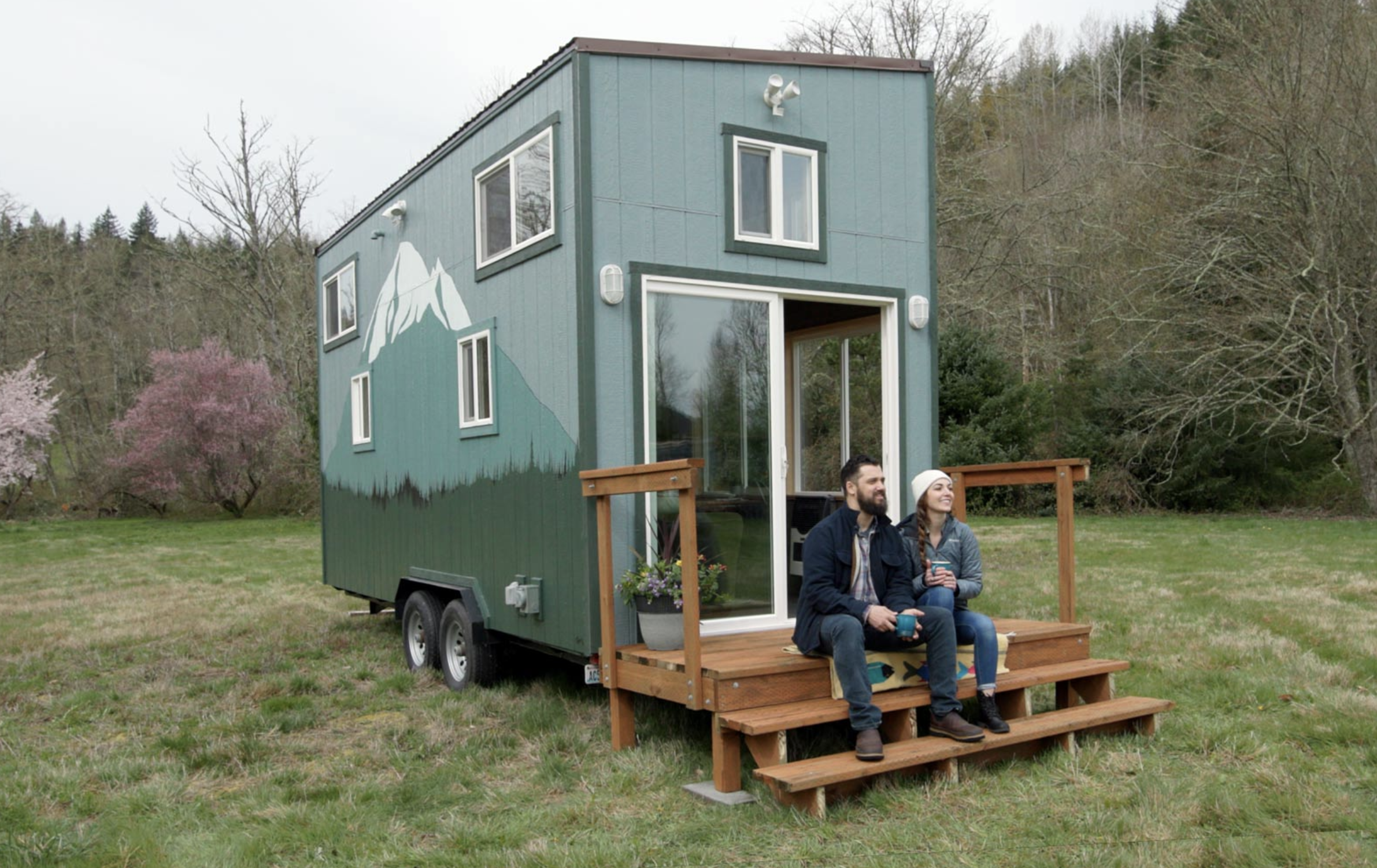
Tiny houses have gained popularity as a practical and affordable lifestyle choice for those looking to simplify. One of the main reasons for their appeal is the variety of designs available, each catering to different needs and preferences. When exploring the different types of tiny houses, you’ll notice that many prioritize a portable design, making it easy to move your home from one location to another. This feature is especially attractive if you enjoy traveling or want the flexibility to relocate without the hassle of traditional property transactions. Portable tiny houses often come on trailers, allowing you to hit the road with your home in tow, while still offering all the comforts of a regular house.
Portable tiny houses on trailers offer mobility and comfort for a flexible, simplified lifestyle.
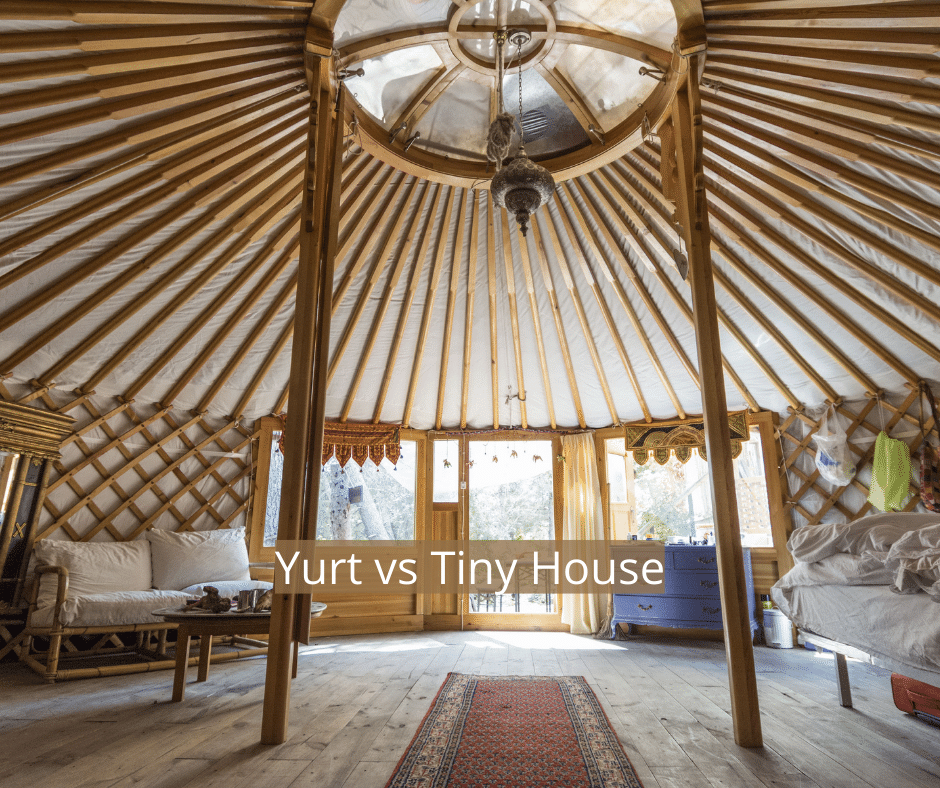
Another key aspect to contemplate is interior customization. The beauty of tiny houses lies in how you can tailor the interior to match your lifestyle and aesthetic tastes. Unlike standard homes, tiny houses often feature open-concept layouts, which you can personalize through clever storage solutions, color schemes, and furniture choices. You get to decide how much space you want for a kitchen, bedroom, or workspace, and you can optimize every inch for maximum functionality. Some models come with modular furniture or multi-purpose pieces, making it easier to adapt the interior as your needs evolve. This level of customization ensures your tiny house feels uniquely yours, despite its small footprint.
When it comes to different types of tiny houses, you’ll find options that suit various climates, terrains, and budgets. For example, some are built with eco-friendly, sustainable materials for environmentally conscious owners. Others are designed specifically for off-grid living, equipped with solar panels and composting toilets. If you prefer a more traditional look, there are tiny houses styled to resemble rustic cabins or modern minimalist homes. Additionally, some tiny houses are stationary, anchored to a foundation, while others are mobile, built on trailers for easy relocation. Each type offers distinct advantages depending on how much flexibility and customization you desire. It is also important to consider that many tiny house designs can help address potential nutrient deficiencies, such as B12 or iron, ensuring a balanced lifestyle even in a small space.
Ultimately, exploring different types of tiny houses means understanding what features matter most to you. Whether you prioritize portability for travel or interior customization for a personalized space, you’ll find a tiny house that fits your vision. The key is to identify your lifestyle needs and match them with the right design. This way, your tiny house isn’t just a compact dwelling but a true reflection of your personality and way of living. No matter which type you choose, embracing the tiny house lifestyle can bring more freedom, simplicity, and joy into your daily routine.
Frequently Asked Questions
What Are the Most Affordable Tiny House Options Available?
You can find the most affordable tiny house options through affordable construction methods and budget-friendly designs. Look for DIY kits or plans that let you build your tiny home yourself, saving on labor costs. Consider prefabricated models or modular tiny houses made from cost-effective materials. These options help you stay within your budget while still enjoying a functional, stylish tiny home that fits your needs and lifestyle.
How Do Tiny Houses Perform in Extreme Weather Conditions?
In extreme weather, your tiny house becomes a resilient fortress or a fragile shell, depending on your preparations. You might face insulation challenges that threaten warmth or coolness, but smart heating solutions like radiant heaters or wood stoves can turn your space into a cozy haven. With proper insulation and reliable heating, your tiny house can stand firm against storms or freezing cold, making comfort your constant companion.
Are Tiny Houses Legal in All Urban Areas?
Tiny houses aren’t legal in all urban areas due to zoning restrictions and building codes. You’ll need to check local regulations, as some cities have strict rules about minimum square footage, foundation types, and utility hookups. While some places embrace tiny homes, others don’t permit them as primary residences. Always research specific zoning laws and building codes in your target area before planning to build or park a tiny house there.
What Are the Best Space-Saving Furniture Ideas?
Think of your tiny house as a puzzle where every piece counts. You’ll want multi-functional furniture like sofa beds and fold-down tables that serve double duty. Incorporate compact storage solutions such as under-bed drawers or wall-mounted shelves to keep clutter at bay. These smart choices maximize space, making your tiny home feel spacious and organized. With creative furniture, you’ll turn small into mighty, creating a cozy yet functional living area.
How Environmentally Sustainable Are Tiny Houses?
Tiny houses are quite environmentally sustainable, especially if you incorporate tiny house composting and renewable energy integration. You can reduce waste through composting, which minimizes your environmental impact, while solar panels or wind turbines help you generate clean energy. By choosing eco-friendly materials and efficient appliances, you make your tiny home even greener. Overall, tiny houses offer a smaller footprint and promote sustainable living, making them a smart choice for eco-conscious individuals.
Conclusion
As you explore the world of tiny houses, remember that size isn’t everything—it’s about making the space your own. Whether you choose a sleek modern design or a cozy rustic style, these homes prove that less truly can be more. Keep in mind the saying, “Good things come in small packages.” By embracing simplicity and creativity, you’ll find a tiny house that feels just right, proving that big happiness doesn’t require a big footprint.