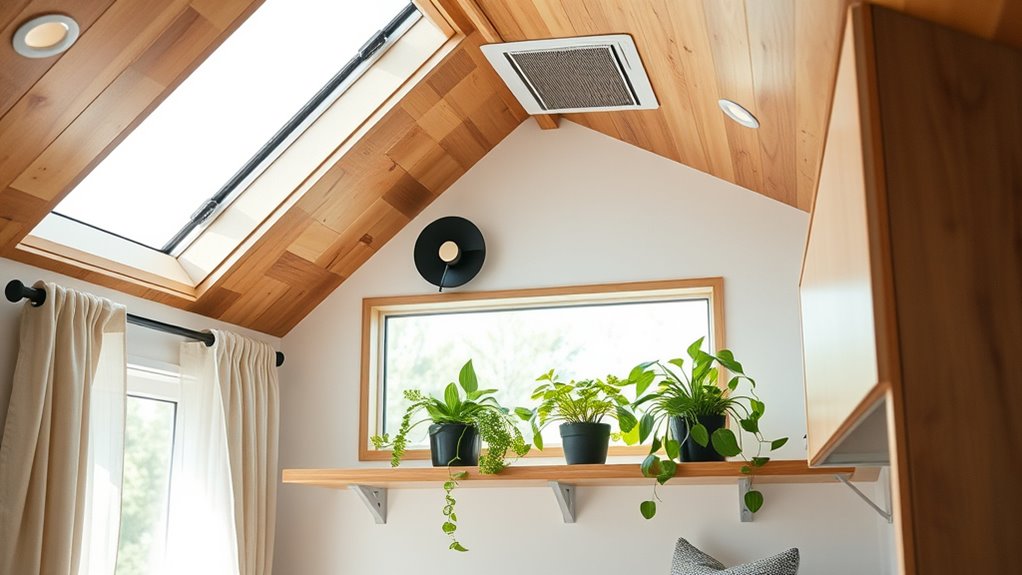

To optimize your tiny house ventilation, focus on installing operable windows on opposite sides for effective cross-ventilation and incorporate exhaust fans in kitchens and bathrooms to remove moisture and odors. Use solar shading devices to control heat from direct sunlight, keeping your space cooler and reducing energy use. Regularly monitor air quality and humidity levels to identify issues early, and consider layout strategies that maximize natural light and airflow. Keep exploring for more expert tips on creating a healthy, comfortable tiny home environment.
Key Takeaways
- Install operable windows on opposite sides for effective cross-ventilation and continuous fresh air exchange.
- Use adjustable solar shading devices to control sunlight and reduce indoor heat, humidity, and pollutants.
- Incorporate exhaust fans in kitchens and bathrooms to remove moisture and odors efficiently.
- Regularly monitor indoor air quality and humidity levels to identify and address airflow or pollution issues promptly.
- Strategically position windows and vents to maximize natural light, airflow, and privacy without compromising insulation.
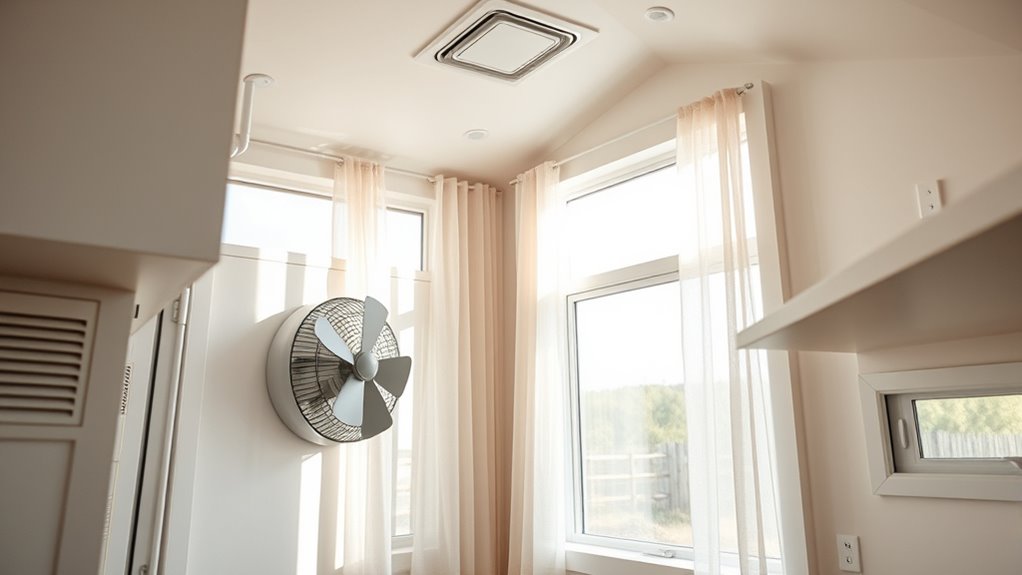
Proper ventilation is essential in a tiny house to guarantee good air quality and maintain a comfortable environment. In such a compact space, stale air, humidity, and indoor pollutants can quickly build up, making effective airflow crucial for your health and comfort. One way to enhance natural ventilation is by using solar shading. Solar shading devices, like adjustable awnings or window films, help control the amount of direct sunlight entering your tiny house. By reducing heat gain during the hottest parts of the day, solar shading keeps your space cooler and reduces the need for energy-intensive cooling systems. This not only improves comfort but also minimizes indoor humidity levels, which is vital for preventing mold growth and maintaining good air quality.
In addition to solar shading, you can optimize airflow through strategic placement of vents and windows. For instance, installing operable windows on opposite sides of your tiny house encourages cross-ventilation, effectively replacing stale indoor air with fresh outdoor air. When weather conditions permit, opening multiple windows creates a natural breeze that circulates air efficiently without relying on mechanical systems. To guarantee your ventilation efforts are effective, regular air quality testing becomes essential. Air quality testing allows you to monitor levels of indoor pollutants, humidity, and carbon dioxide. By doing so, you can identify problem areas—such as spaces with poor airflow or excess humidity—and take targeted action. For example, if testing reveals high humidity levels, you might need to add additional exhaust fans or dehumidifiers, especially in kitchens or bathrooms where moisture tends to accumulate.
Another effective tip is to incorporate exhaust fans in key areas like the kitchen and bathroom. These fans help remove excess moisture and odors, preventing indoor air from becoming stale or contaminated. When choosing exhaust fans, opt for energy-efficient models that work quietly and can be controlled with timers or humidity sensors, so they run only when needed. It’s also wise to consider the overall layout of your tiny house to maximize natural light and airflow. Positioning windows and vents thoughtfully encourages a steady flow of fresh air without sacrificing privacy or insulation. Additionally, choosing energy-efficient home security systems can provide added safety without compromising your ventilation setup. Finally, schedule periodic air quality testing to track improvements and ensure your ventilation system remains effective over time. This proactive approach helps you catch any issues early, such as mold growth or pollutant buildup, and address them before they become serious problems.

Wooden Window for Dollhouse, Miniature Window Frame Mini Furniture Doll House 1:12 Dollhouse Wooden Doors Miniature Furniture Doll Craft Window Frame Model Decoration
【Wooden Window for Dollhouse】Our mini doll house windows are made of wood material, this model looks really delicate,…
As an affiliate, we earn on qualifying purchases.
As an affiliate, we earn on qualifying purchases.
Frequently Asked Questions
How Often Should I Check My Tiny House Ventilation System?
You should check your tiny house ventilation system at least once every three to six months. Regular ventilation maintenance guarantees everything works efficiently and keeps air quality monitoring on point. During these checks, inspect filters, vents, and fans for blockages or wear. Staying proactive helps prevent issues, maintains good airflow, and keeps your living space fresh. If you notice any musty smells or increased humidity, check the system sooner.
Can Natural Ventilation Alone Suffice in Winter?
In winter, natural ventilation alone might not suffice, especially if passive cooling isn’t enough to prevent humidity buildup. Rely on solar vents to harness sunlight for airflow and use passive cooling techniques to regulate temperature. You should also supplement natural airflow with mechanical options if needed, ensuring good air quality and comfort. Remember, combining passive and active methods offers the best chance to keep your tiny house cozy and well-ventilated year-round.
What Are the Best Low-Energy Ventilation Options?
You should consider low-energy options like heat recovery ventilators (HRVs) or energy recovery ventilators (ERVs) to optimize air exchange and energy efficiency. These systems use minimal power while providing fresh air and removing stale indoor air. You can also install high-quality, airtight vents and exhaust fans that work efficiently without wasting energy. By choosing these solutions, you guarantee good ventilation without sacrificing your tiny house’s energy efficiency.
How Do I Prevent Moisture Buildup in Small Spaces?
Think of your tiny space as a delicate dance floor; moisture buildup can trip you up. To prevent this, focus on humidity control and ventilation maintenance. Use exhaust fans or vents, especially in bathrooms and kitchens, to remove excess moisture. Keep windows open when possible, and regularly check that your ventilation systems are clean and working efficiently. These steps help keep your space dry, comfortable, and mold-free.
Are There DIY Ventilation Solutions for Tiny Houses?
Yes, you can create DIY ventilation solutions for your tiny house. Start by installing vent fans or exhaust fans, which are simple upgrades that improve airflow. You might also add passive vents or windows that open easily. Don’t fall for ventilation myths; proper airflow isn’t just about sealing tight. These DIY upgrades boost ventilation naturally, reducing moisture buildup and keeping your tiny space fresh and comfortable.

Gopper 12" Ultra Quiet Bathroom Exhaust Fan with 6500K LED Light, 1.0 Sone 120 CFM, 10×10 Mount, 1500 LM Ceiling Ventilation Fan, Energy Efficient (6500K LED-W)
12-inch Classic LED Light: Only bright cool white (6500K), non-adjustable color temperature.
As an affiliate, we earn on qualifying purchases.
As an affiliate, we earn on qualifying purchases.
Conclusion
By following these ventilation tips, you’ll turn your tiny house into a gust of fresh air, making it a comfortable haven. Remember, good airflow isn’t just about keeping things cool—it’s the lifeblood that keeps your space healthy and vibrant. Think of proper ventilation as the heartbeat of your tiny home, pulsing with energy and vitality. Embrace these strategies, and watch your small space flourish like a well-tuned orchestra.

RENOGY REGO 400 Watt Solar Panel, 2PCS Renogy ShadowFlux 200W Solar Panel Anti-Shading N-Type 16BB, 25% High-Efficiency, Solar Panels Charger for RV Marine Roof Farm Battery and Off-Grid Applications
𝐒𝐡𝐚𝐝𝐨𝐰𝐅𝐥𝐮𝐱 𝐀𝐧𝐭𝐢-𝐒𝐡𝐚𝐝𝐢𝐧𝐠 𝐓𝐞𝐜𝐡𝐧𝐨𝐥𝐨𝐠𝐲 – Renogy solar panels feature ShadowFlux anti-shading technology that enhances performance in shaded conditions (from…
As an affiliate, we earn on qualifying purchases.
As an affiliate, we earn on qualifying purchases.
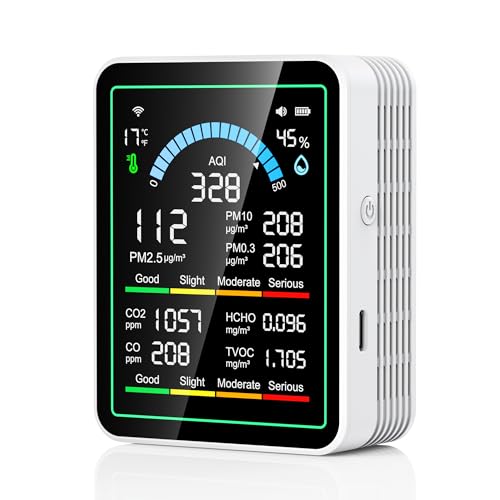
Air Quality Monitor Indoor, 10 in 1 Portable Smartair Quality Tester for CO2 | CO | TVOC | HCHO | Temp | AQI | PM0.3-1 Detection Hum for Home Cars Plants, Pets, Car, Hotel
【10-in-1 Smart Air Quality Monitor: Your All-Round Environmental Guardian】 This portable intelligent air quality tester delivers ultra-precise multi-gas…
As an affiliate, we earn on qualifying purchases.
As an affiliate, we earn on qualifying purchases.