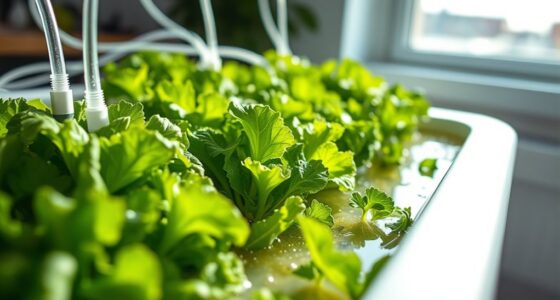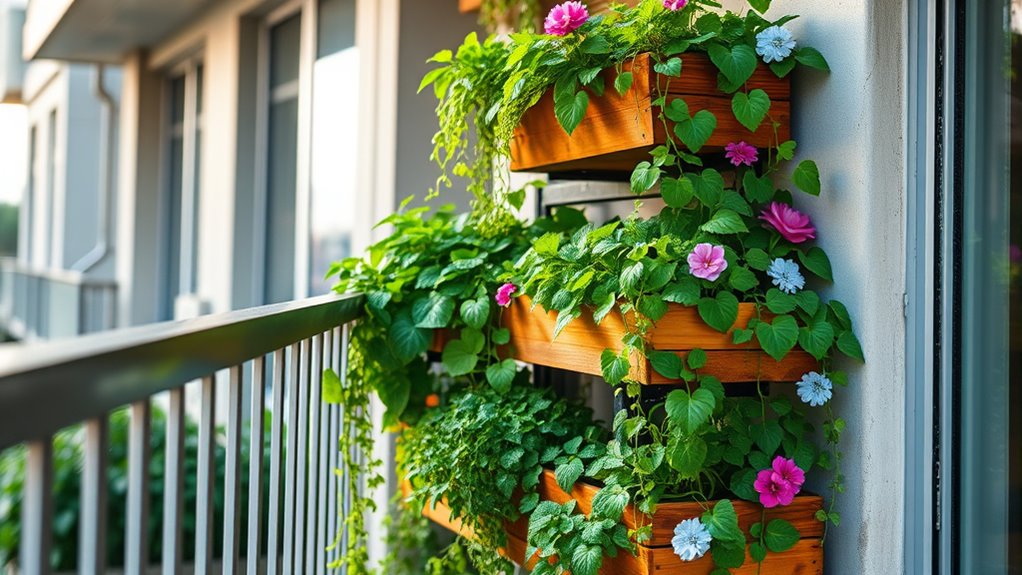

Vertical planters are perfect for making the most of small outdoor spaces. They let you grow lush gardens on walls, fences, or structures, saving ground space and creating a vibrant green oasis. By choosing plants suited for microclimates and using the right soil mixes, you can guarantee healthy growth. Remember to water consistently and protect plants from harsh elements. Keep exploring for more tips to help your vertical garden thrive in tight spots.
Key Takeaways
- Maximize limited space by mounting planters on walls, fences, or vertical structures to create lush gardens.
- Select plants suitable for microclimate conditions, such as sun-loving herbs or shade-tolerant greens.
- Use lightweight, well-draining soil mixes designed for vertical containers to support healthy plant growth.
- Ensure consistent watering and proper drainage, as vertical planters dry out faster in small spaces.
- Design your vertical garden to protect plants from harsh urban elements and optimize microclimate benefits.

Ever wondered how to turn a tiny balcony or cramped backyard into a lush garden? With vertical planters, you can transform limited space into a thriving green oasis. The key lies in understanding how to adapt to urban microclimates and choosing the right container soil mixes. Urban microclimates can be unpredictable, often characterized by higher temperatures, wind exposure, and limited sunlight, all of which impact plant growth. To succeed, you’ll need to select plants that tolerate these conditions and design your vertical garden to protect against harsh elements.
Transform small spaces into lush gardens by understanding urban microclimates and choosing the right soil mixes.
One effective way to optimize space is using vertical planters mounted on walls, fences, or free-standing structures. These allow you to maximize your planting area without sacrificing floor space. When setting up your vertical garden, pay close attention to the microclimate around your spot. For example, if your balcony faces the sun most of the day, you might choose sun-loving plants like herbs, tomatoes, or peppers. Conversely, if shade dominates, opt for shade-tolerant greens such as lettuce, spinach, or ferns.
The success of your vertical garden also hinges on selecting the appropriate container soil mixes. Regular garden soil isn’t suitable because it can become compacted or drain poorly in containers, leading to root rot or stunted growth. Instead, go for specially formulated container soil mixes that are lightweight, well-draining, and rich in organic matter. These mixes ensure your plants receive adequate aeration and moisture retention, which are critical in small, confined spaces. You might consider mixing in perlite or coconut coir to improve drainage and aeration further.
Another factor to guarantee is watering. Vertical planters tend to dry out faster, especially in urban microclimates with wind and sun exposure. Regular, consistent watering is essential, but you’ll also want to incorporate a drainage system to prevent waterlogging. Mulching the soil surface can help retain moisture and regulate temperature, which is particularly beneficial during hot, windy days.
Furthermore, the right container soil mixes can influence your plants’ ability to withstand urban stresses. A good mix supports healthy roots, which are crucial for nutrient uptake and resilience. Keep an eye on your plants’ growth, and adjust watering and feeding schedules as needed. With thoughtful planning, proper soil, and an understanding of your microclimate, you can create a vertical garden that flourishes despite limited space. It’s a rewarding way to bring nature into your urban environment while making the most of every inch available.
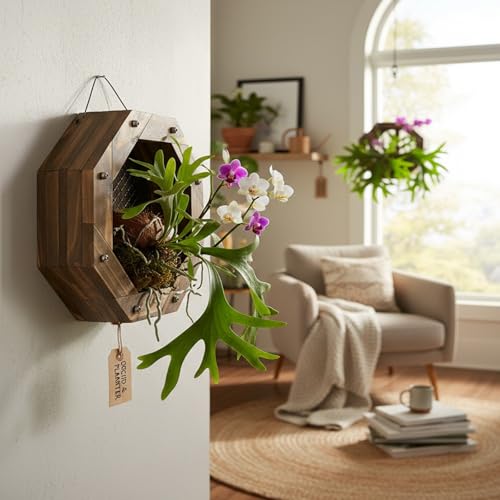
Dranvosk Staghorn Fern Mounting Kit – Wood Wall Planter for Orchids,Herbs & Indoor Plants | Hanging Plant Holder,Basket & Stand for Wall Decor(8.18inch)
Versatile Stylish Wall Decor:Perfect for kitchens, dining rooms, and hallways, this wood wall planter adds a natural touch…
As an affiliate, we earn on qualifying purchases.
As an affiliate, we earn on qualifying purchases.
Frequently Asked Questions
How Do I Prevent Pests in Vertical Gardens?
To prevent pests in your vertical garden, start by choosing pest-resistant plants that naturally deter bugs. Keep your planters clean and remove any dead leaves or debris regularly. Use natural pest control methods like introducing beneficial insects or spraying a homemade solution of neem oil or insecticidal soap. Also, guarantee proper airflow and avoid overwatering, which can attract pests. These steps help keep your vertical garden healthy and pest-free.
What Are the Best Plants for Shaded Vertical Planters?
You’ll be surprised how many shade-tolerant, low-maintenance plants thrive in vertical planters. Think ferns, hostas, and impatiens—they handle limited sunlight effortlessly and add lush greenery. Also, consider trailing varieties like creeping Jenny or English ivy to create a cascading effect. These plants not only flourish in shaded spots but also require minimal care, making your vertical garden both beautiful and easy to maintain.
How Do I Water Plants Evenly in Vertical Arrangements?
To water your vertical planters evenly, set up a drip irrigation system to deliver consistent moisture. Adjust the watering schedule based on plant needs and weather conditions, ensuring each plant receives adequate water without overwatering. Regularly check for dry spots or excess moisture, and consider using a moisture meter. This approach keeps your plants healthy and thriving, even in tight spaces.
Can Vertical Planters Be Used Indoors Safely?
Think of vertical planters as a lush, living mural on your wall. Yes, you can use them indoors safely, but you must consider indoor lighting and safety. Place your planters where they get enough light, like near windows, and make certain they’re securely mounted to prevent accidents. Use non-toxic, child-safe materials, and avoid overwatering to keep your indoor garden thriving without hazards.
What Materials Are Most Durable for Outdoor Vertical Planters?
You should choose materials with excellent material longevity and weather resistance for outdoor vertical planters. Durable options like cedar, composite wood, and high-quality plastics withstand rain, sun, and temperature changes. Metal planters, especially galvanized steel or aluminum, also last well outdoors. Avoid cheaper materials that may warp or rot quickly. By selecting these resilient materials, your vertical planters will stay sturdy and attractive, even after years of exposure to the elements.

Burpee, 9 Quarts | Premium Organic Potting Natural Soil Mix Food Ideal for Container Garden-Vegetable, Flower & Herb Use for Indoor Outdoor Plant
ALL-NATURAL MIX: Burpee Organic Premium Potting Mix is formulated with plant food & coconut coir to promote seed…
As an affiliate, we earn on qualifying purchases.
As an affiliate, we earn on qualifying purchases.
Conclusion
With vertical planters, you can maximize even the tiniest spaces for lush, vibrant gardens. Did you know that vertical gardening can increase your planting area by up to 150%? So, whether you have a small balcony or tiny backyard, you can grow a surprising variety of herbs, vegetables, or flowers. Embrace vertical gardening, and transform your limited space into a thriving green oasis that’s both functional and beautiful. Your compact garden just got a whole lot bigger!

VECELO 5 Tier Vertical Garden Planter, Self Watering Stackable Planters with Wheels for Strawberries, Herbs, Flowers, Vegetables, White
Space-Saving : This strawberry planter maximizes your gardening space by stacking 5 layers to grow more plants in…
As an affiliate, we earn on qualifying purchases.
As an affiliate, we earn on qualifying purchases.

79"x40" Garden Shade Kit, 70% Garden Sun Shade Cloth with Hoops for Plants Heat Protection, Raised Garden Bed Shade Cover Plant Sun Shade for Outdoor Plants Vegetables
GARDEN SHADE CLOTH WITH HOOPS: Our plant shade cloth kit includes 79"x40" thickened shade cloth, 12pcs straight tubes,…
As an affiliate, we earn on qualifying purchases.
As an affiliate, we earn on qualifying purchases.