You’ve probably heard about whole-house fans as an energy-efficient way to keep your home cool, but are they truly a smart choice or just outdated technology? While they can provide natural ventilation and save on energy costs, their effectiveness depends heavily on your climate and home setup. Before deciding if they’re a good fit, it’s worth exploring how these fans work and whether they suit your specific needs.
Key Takeaways
- Whole-house fans provide natural, energy-efficient cooling by ventilating warm indoor air outdoors, especially effective in dry, cool evenings.
- They are cost-effective with low installation and maintenance costs, offering a good alternative to traditional air conditioning.
- Their effectiveness depends on proper attic ventilation, home design, and outdoor climate conditions.
- Best suited for climates with cooler nights; less effective in hot, humid overnight environments.
- Regular maintenance ensures safe operation and optimal performance, making them a viable cooling option when appropriately installed.
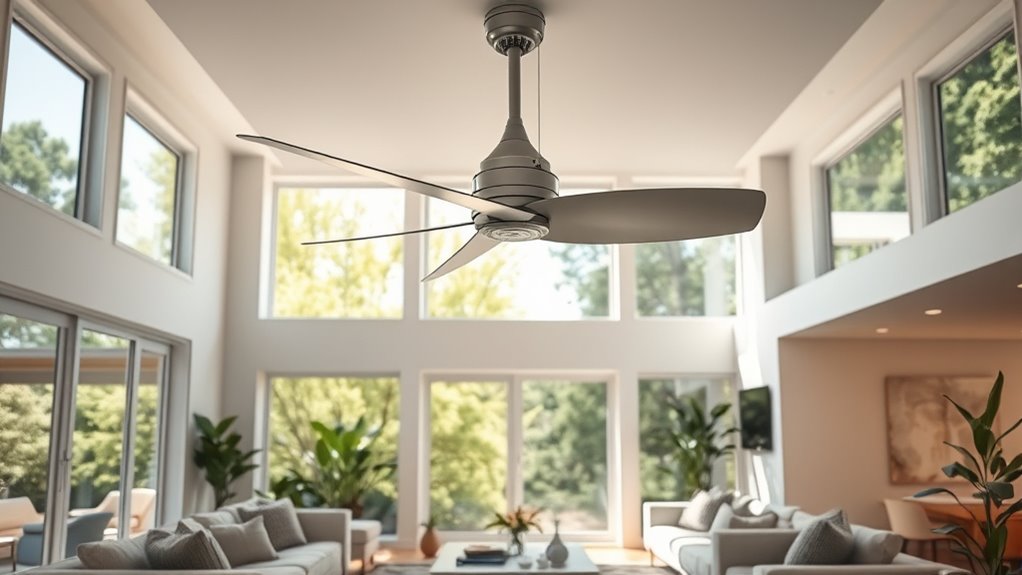
Have you ever considered how to cool your entire home efficiently without relying solely on air conditioning? If so, whole-house fans might be worth exploring. These fans are designed to pull cool outdoor air into your home through open windows while pushing out warm indoor air through attic vents. The result? A natural and energy-efficient way to lower indoor temperatures, especially during evenings and mornings when outdoor air is cooler. Unlike traditional air conditioning units that run continuously and consume significant energy, whole-house fans operate primarily during specific times, making them a more sustainable choice for many households. When you look at the bigger picture, their energy efficiency can considerably reduce your cooling costs, especially if paired with good insulation and strategic window placement.
Whole-house fans offer energy-efficient cooling by drawing in outdoor air and pushing out warm indoor air.
However, before jumping into installation, you should contemplate the costs involved. Installation costs for a whole-house fan can vary widely depending on the size of your home and the complexity of the setup. On average, you might spend between a few hundred to a thousand dollars, including the fan unit and professional installation. While this might seem like an upfront investment, many homeowners find that the savings on energy bills over time make the expense worthwhile. Keep in mind, though, that a whole-house fan works best in areas with dry, cool evenings and mornings. If your climate tends to stay hot and humid overnight, its effectiveness might be limited.
Another factor to weigh is the home’s design. Proper attic ventilation is vital for whole-house fans to work efficiently. If your attic isn’t well-ventilated, the fan won’t be able to expel warm air effectively, reducing its cooling power. Additionally, you’ll need to think about the placement of windows and whether they can be easily opened and closed to maximize airflow. Proper sealing of your home’s envelope guarantees that outside air circulates efficiently and that the cooled indoor air doesn’t escape too quickly. According to Wood Stove Safety First, regular maintenance and safety considerations are key to ensuring safe operation of ventilation systems, which applies to whole-house fans as well.
In terms of maintenance, whole-house fans are generally straightforward to care for. Regularly cleaning the fan blades and inspecting vents ensures that the system runs smoothly. Unlike air conditioners, they don’t require refrigerants or complex filters, which can save you money on upkeep. Overall, whole-house fans offer a compelling, eco-friendly alternative to traditional cooling methods, especially if installed correctly and used in suitable climates. Their combination of energy efficiency, relatively low installation costs, and ease of use can make them a valuable addition to your home cooling strategy—if you understand their limitations and guarantee your home is ready for their integration.
Top picks for "whole house fans"
Open Amazon search results for this keyword.
As an affiliate, we earn on qualifying purchases.
Conclusion
In the end, whole-house fans are like a double-edged sword—you’ll love their energy savings if your climate suits them, but they can fall flat in humid heat. When used correctly, they’re a smart, eco-friendly way to cool your home naturally. Just remember, they’re not a one-size-fits-all solution. Evaluate your environment, install them properly, and they can be a invigorating, cost-effective alternative—turning your home into a breezy sanctuary just like a gentle wind.