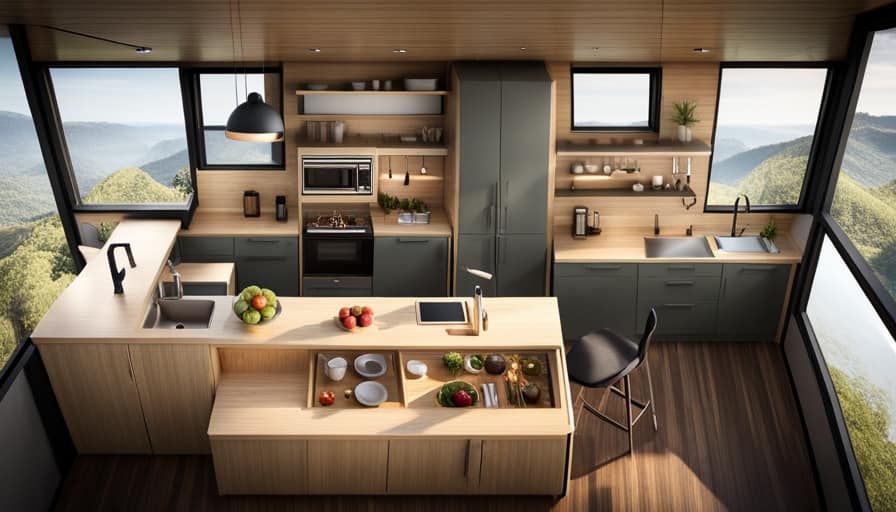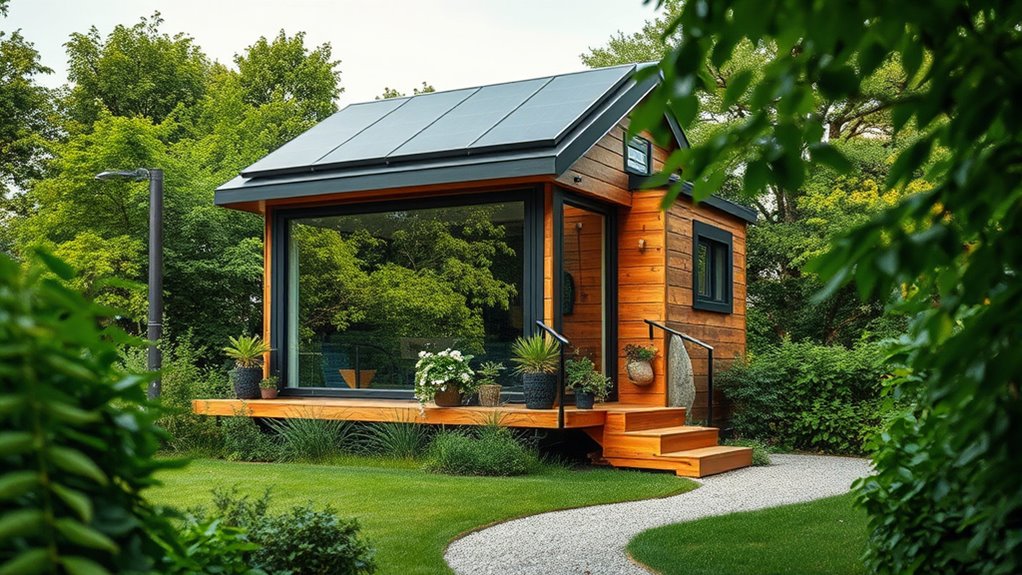

Exploring tiny houses as a sustainable solution shows how their small size and efficient design reduce material use, energy consumption, and waste. They often incorporate renewable energy sources like solar panels and can include urban farming setups, promoting local food growth. Their mobility and affordability make eco-friendly upgrades easier, while fostering mindful resource use. If you want to discover more about how tiny houses can help protect the environment and transform your lifestyle, keep exploring these eco-smart options.
Key Takeaways
- Tiny houses reduce material use and waste, lowering environmental footprints during construction and daily living.
- Their compact design decreases energy consumption, often complemented by renewable sources like solar panels.
- Integration with urban farming encourages local food production, reducing transportation emissions and promoting sustainability.
- Small size facilitates easy retrofitting with eco-friendly systems such as rainwater harvesting and energy-efficient appliances.
- Mobility and community connections support eco-conscious lifestyles and resource management, fostering greener living environments.
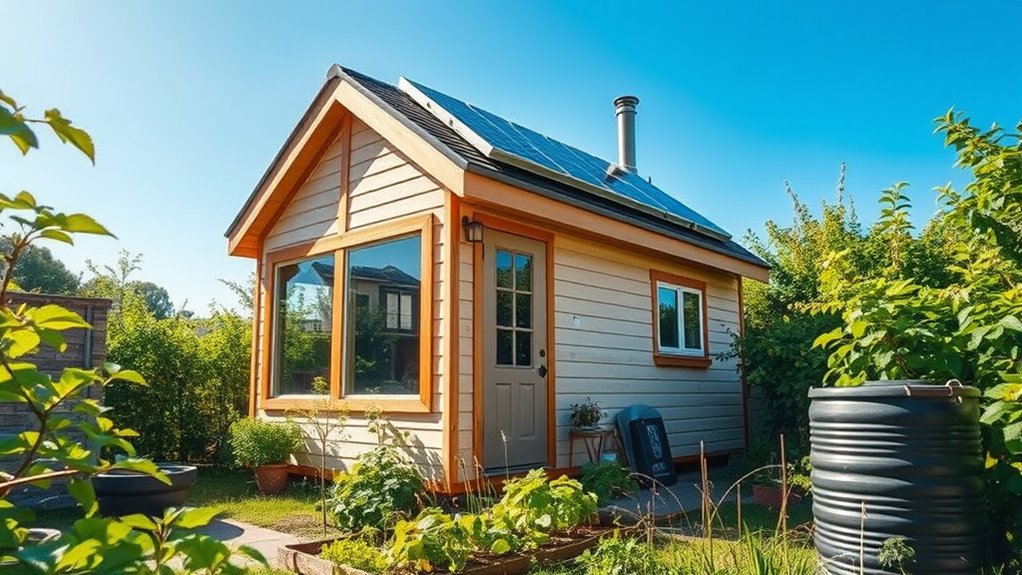
Have you ever wondered if smaller living spaces could help protect our planet? Tiny houses offer more than just a cozy lifestyle; they’re a compelling step toward sustainability. By design, these compact homes use fewer materials during construction, reducing waste and lowering the environmental footprint. But their benefits go beyond just size. Many tiny house owners embrace urban farming, transforming limited outdoor or rooftop spaces into lush vegetable gardens or herb patches. This practice not only promotes local food production, lowering reliance on industrial agriculture and long-distance transportation, but also fosters a deeper connection to nature within city environments. Urban farming in tiny houses encourages sustainable habits and helps cut down on packaging waste and carbon emissions associated with store-bought produce.
Additionally, tiny houses are often equipped with renewable energy sources, making them even more eco-friendly. Solar panels are a common feature, providing clean electricity that powers everything from lighting to appliances. Wind turbines are also an option for those in suitable locations, further reducing dependence on fossil fuels. With smaller energy needs due to their size and efficient design, tiny houses can operate entirely off-grid or with minimal impact on the grid, cutting down on power consumption and carbon emissions. This shift toward renewable energy not only benefits the environment but also helps owners save money in the long run, as they reduce utility bills and avoid reliance on nonrenewable sources.
Living in a tiny house encourages mindful consumption. Since space is limited, you tend to buy only what you need, reducing waste and excess. Coupled with urban farming, this lifestyle promotes a circular approach to resource use—growing your own food decreases your carbon footprint, and composting food scraps minimizes landfill waste. The small scale of these homes also makes them easier to maintain and retrofit with eco-friendly technologies, such as rainwater harvesting systems or energy-efficient appliances, further decreasing environmental impact. Plus, the mobility of many tiny houses means you can choose locations with better access to renewable energy sources or community gardens, optimizing sustainability benefits. Furthermore, incorporating market research strategies can help tiny house owners identify the most effective ways to enhance their eco-friendly features and connect with like-minded communities, amplifying their positive environmental impact.
Living small fosters mindful use, eco-friendly upgrades, and access to sustainable resources for a greener lifestyle.
In essence, tiny houses aren’t just about downsizing; they’re about rethinking your relationship with resources and the environment. By integrating urban farming and renewable energy, you can live more sustainably, reduce your ecological footprint, and contribute to a healthier planet—all while enjoying the freedom and simplicity that tiny living offers.

Solar Panel for Security Camera Outdoor, 3W USB C Solar Panel Charger with Micro USB Port, Small Solar Panel for Bird Feeder Camera, Outdoor Camera, Rechargeable Battery Powered Camera
【Continuous Solar Power & Advanced Safety Chip】Equipped with a built-in voltage stabilization & protection board, this solar panel…
As an affiliate, we earn on qualifying purchases.
As an affiliate, we earn on qualifying purchases.
Frequently Asked Questions
What Are the Common Challenges Faced by Tiny House Dwellers?
You might face land use conflicts and privacy concerns as a tiny house dweller. Finding suitable land can be tough due to zoning laws and neighborhood restrictions, making it hard to settle in desired locations. Privacy might also become an issue if your tiny home is close to neighbors or in busy areas. These challenges require proactive planning and community engagement to enjoy the benefits of tiny living fully.
How Do Tiny Houses Impact Local Communities and Neighborhoods?
Like stones tossed into a still pond, tiny houses ripple through your community, fostering vibrant interactions. You see them blending into neighborhoods, enhancing community integration while sparking debates over neighborhood aesthetics. When thoughtfully integrated, they breathe new life into areas, promoting diversity and affordability. Yet, if unmanaged, they risk disrupting harmony. Your role is to balance these waves, ensuring tiny homes strengthen community bonds without disturbing the neighborhood’s visual harmony.
Are Tiny Houses Suitable for Families With Children?
Tiny houses can be suitable for families with children if you prioritize child safety and space optimization. You’ll need to carefully design the layout to ensure enough room for play and rest, while securing safety features like window locks and sturdy furniture. With smart organization, you can maximize space, making a tiny house a cozy, functional home for your family. Just remember to plan thoroughly to meet your children’s needs.
What Are the Zoning Laws Affecting Tiny House Placements?
Think of zoning laws like the unyielding sea, shaping where your tiny house can land. You’ll often need zoning variances to bypass restrictions, and setback regulations determine how close your home can be to property lines. Local ordinances vary widely, so you must check with city or county authorities before placing your tiny house. Being proactive helps you avoid surprises and guarantees your tiny home fits within legal boundaries.
How Do Tiny Houses Compare in Cost to Traditional Homes Long-Term?
You’ll find that tiny houses are generally more affordable upfront than traditional homes, making them a great affordable alternative. Over the long term, they often cost less in maintenance, utilities, and property taxes, boosting their investment potential. While you might save initially, remember that resale value varies. Overall, tiny houses can be a smart, budget-friendly choice if you’re seeking a sustainable, low-cost living option.

Collapsible Rain Barrel Water Storage Containers-53 Gallon Portable Rainwater Collect System Water Tank to Collect Rainwater from Gutter Downspout Water Catcher with Spigots,Filter&Overflow Kits
【Leak-Proof Design】Unlike typical rain barrels, our product features an integrated design with a straightforward screw-in faucet, eliminating the…
As an affiliate, we earn on qualifying purchases.
As an affiliate, we earn on qualifying purchases.
Conclusion
Imagine trading your oversized house for a cozy, eco-friendly tiny home that fits perfectly into your life and the planet. Just like downsizing your belongings can bring clarity and peace, choosing a tiny house can reduce your carbon footprint markedly—by up to 45%. It’s like planting a small seed that grows into a sustainable future. Embrace tiny houses, and you’ll find yourself part of a movement that’s reshaping how we live and care for Earth.

Field Guide to Urban Gardening: How to Grow Plants, No Matter Where You Live: Raised Beds • Vertical Gardening • Indoor Edibles • Balconies and Rooftops • Hydroponics
As an affiliate, we earn on qualifying purchases.
As an affiliate, we earn on qualifying purchases.

Sweetcrispy 3.2 Cu.Ft Mini Fridge with Freezer, 2 Door Small Refrigerator with Adjustable Thermostat Energy-efficient Low Noise, Compact Fridge for Bedroom, Office, Dorm, Black
Compact and Convenient: With a compact design(17.5’’*17.7’’*31.5’’(W*D*H)), the single-door mini fridge has more capacity than a double-door small…
As an affiliate, we earn on qualifying purchases.
As an affiliate, we earn on qualifying purchases.