
In tiny houses, limited space makes moisture control more challenging since there’s less airflow and ventilation. Every source of humidity, like cooking or showering, affects the overall environment quickly. Poor insulation can trap moisture inside walls, increasing mold risk, while small ventilation options struggle to refresh the air effectively. These combined factors mean moisture tends to linger longer, risking damage. To understand how to better manage these issues, keep exploring the key solutions that can help maintain a dry, comfortable tiny home.
Key Takeaways
- Limited space reduces airflow and ventilation options, causing moisture to linger and accumulate more easily.
- Small volumes of air mean moisture sources like cooking and showering have a greater impact on humidity.
- Insulation in tiny homes can trap moisture if improperly installed or made from unsuitable materials.
- Achieving a balance between insulation and ventilation is more challenging, risking increased humidity and mold growth.
- Tight spaces hinder effective moisture dissipation and make it harder to manage indoor humidity levels.

Tiny houses, with their compact design and efficient use of space, can present unique moisture management challenges. Because these homes are smaller, every cubic foot counts, but this tight space can make controlling humidity and preventing moisture buildup more difficult. One of the primary issues is ventilation challenges. Unlike larger homes that have multiple rooms and larger ventilation systems, tiny houses often rely on limited airflow to keep the interior dry. Poor ventilation allows moisture from cooking, showering, and even breathing to linger longer inside. Without proper airflow, humidity levels rise quickly, leading to condensation on walls, ceilings, and windows. This lingering moisture creates a perfect environment for mold and mildew to develop, which can damage the structure and compromise your health. Additionally, the compact nature of tiny houses means that even small amounts of excess moisture can have a disproportionately large impact on indoor air quality. Proper ventilation is essential in such small spaces to prevent these issues from escalating. Properly designed ventilation systems can improve airflow and help remove excess moisture more effectively. Incorporating air exchange systems can further enhance moisture control by continuously refreshing indoor air and reducing humidity buildup.
Small spaces can trap moisture, increasing mold risk without proper ventilation and humidity control.
Another factor that amplifies moisture problems in tiny houses is insulation effectiveness. In smaller spaces, insulation plays a critical role in maintaining a stable interior environment. However, if the insulation isn’t properly installed or if the material isn’t suitable for moisture control, it can trap humidity inside the walls. This trapped moisture not only reduces the insulation’s effectiveness—causing your home to be less energy-efficient—but also creates damp conditions that promote mold growth. Since tiny houses are often built with lightweight or unconventional materials to save weight and cost, their insulation may sometimes fall short in moisture management. Without adequate insulation to block cold outside air or to prevent interior heat from escaping, condensation becomes more likely, especially during colder months. Properly designed moisture-resistant insulation can help mitigate these issues. Incorporating moisture-resistant materials and techniques can greatly improve the durability and comfort of your tiny home.
You also face the challenge of balancing insulation and ventilation. When you try to improve insulation, you might inadvertently reduce airflow, worsening moisture issues. Conversely, increasing ventilation can cause heat loss, making it harder to keep your tiny house warm and dry. Finding that sweet spot is tricky, but essential. Properly designed ventilation systems, like exhaust fans or vented skylights, can help, but they need to be correctly sized and strategically placed. Without these, moisture can easily become trapped, leading to long-term damage. Implementing proper moisture management techniques can significantly mitigate these risks and help maintain a healthy indoor environment. Regularly monitoring humidity levels using a hygrometer is also beneficial to catch potential problems early. Consistent maintenance and awareness of moisture sources can make a big difference in preventing costly repairs down the line.
In essence, your tiny house’s small footprint means every detail counts. Poor ventilation and ineffective insulation are interconnected issues that profoundly influence moisture control. If you neglect these aspects, your home becomes more vulnerable to moisture-related problems. Addressing these challenges requires careful planning—installing the right ventilation solutions and choosing insulation materials that resist moisture—to keep your tiny home comfortable, dry, and mold-free.

VEVOR 10'' Shutter Exhaust Fan, High-speed 820 CFM, Aluminum Wall Mount Attic Fan with AC-motor, Ventilation and Cooling for Greenhouses, Garages, Sheds, Shops, FCC
10'' Exhaust Fan: Dimensions: 12.8 x 12.8 inch, Airflow: 820 CFM, FCC Listed, Speed: 1650 rpm. Our high-airflow…
As an affiliate, we earn on qualifying purchases.
As an affiliate, we earn on qualifying purchases.
Frequently Asked Questions
How Does Insulation Affect Moisture Control in Tiny Houses?
Insulation in your tiny house plays a key role in moisture control by affecting air circulation and vapor barriers. Proper insulation helps prevent warm, moist air from reaching cold surfaces, reducing condensation. It also works with vapor barriers to block moisture from seeping into walls. When installed correctly, insulation keeps air moving freely, minimizes moisture buildup, and helps maintain a dry, healthy environment inside your tiny home.
Are Tiny House Vents Sufficient to Prevent Moisture Buildup?
Tiny house vents can be effective if you guarantee proper ventilation effectiveness, but they often aren’t enough alone. Small spaces trap moisture easily, so adding moisture barriers like vapor barriers helps prevent buildup. Relying solely on vents might overlook hidden moisture sources. To keep your tiny home dry, combine good ventilation with moisture barriers, and consider exhaust fans or air circulation systems for ideal moisture control.
What Specific Materials Are Best for Moisture-Resistant Tiny House Construction?
You should choose moisture-resistant materials like rigid foam or foil-faced insulation that act as moisture barriers. For walls and floors, consider using vapor diffusion-resistant sheathing, which prevents moisture from passing through and condensing inside. Additionally, installing proper vapor barriers helps control moisture and reduces the risk of mold. These materials work together to keep your tiny house dry, protecting against moisture buildup and ensuring a healthier living space.
How Often Should Tiny House Occupants Inspect for Moisture Issues?
You should inspect your tiny house at least once a month to catch moisture issues early. Keep an eye on humidity levels, especially during seasonal changes, and use moisture sensors for precise readings. Regular inspections help prevent small leaks from turning into major problems. By staying vigilant, you can avoid moisture damage that can be as destructive as a hurricane, ensuring your tiny home stays dry and cozy year-round.
Can Tiny House Design Features Reduce Moisture-Related Problems Effectively?
Yes, tiny house design features can effectively reduce moisture-related problems. Incorporate moisture barriers in floors, walls, and ceilings to prevent water intrusion. Use proper ventilation and humidity control systems, like exhaust fans and dehumidifiers, to maintain ideal indoor moisture levels. Additionally, selecting materials resistant to mold and moisture ensures longevity. These design strategies help keep your tiny home dry, comfortable, and protected from moisture issues.
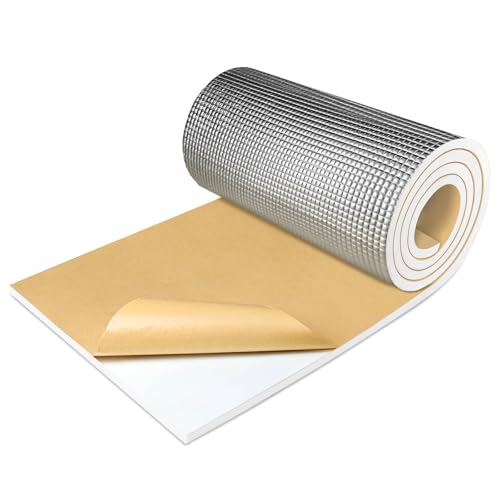
TroyStudio Sound Proof PEF Closed Cell Foam with Aluminum Foil, Self-Adhesive 13" x 78" Heat Shield White Foam Sheet – Waterproof Noise Vibration Thermal Insulation Roll for Home, HVAC and Car
【SPECIFICATION】: This acoustic & thermal insulation foam roll is crafted from PEF closed cell foam, aluminum foil surface,…
As an affiliate, we earn on qualifying purchases.
As an affiliate, we earn on qualifying purchases.
Conclusion
In the world of tiny houses, moisture problems can feel like a storm on the horizon, threatening to erode your cozy haven. But with vigilant ventilation, proper insulation, and mindful moisture control, you can turn the tide in your favor. Remember, small spaces are like delicate gardens—you must tend to them carefully to keep them thriving. With a little effort, you’ll guarantee your tiny house remains a warm, dry sanctuary against the elements.

Weiworld Through Wall HEPA Ventilation Fan with WiFi & Remote Control, Ultra Quiet EC Motor Wall Vent, Fresh Air Intake & Air Exchange System for Bedroom, Home Office, Attic
【HEPA Fresh Air Ventilation Fan】Equipped with a 3-stage filtration system (pre-filter, HEPA filter, and activated carbon), this wall-mounted…
As an affiliate, we earn on qualifying purchases.
As an affiliate, we earn on qualifying purchases.

CLEVAST Small Dehumidifier for Home, 30 OZ Mini Quiet Dehumidifiers for Bedroom, Portable Compact Air Dehumidifier for Bathroom, Closet, RV, Camper, House (60 sq. ft), Not Cordless
ADVANCED DEHUMIDIFIER: The CLEVAST small dehumidifier for bathroom uses semiconductor condensation technology and operates without any chemical refrigerants….
As an affiliate, we earn on qualifying purchases.
As an affiliate, we earn on qualifying purchases.