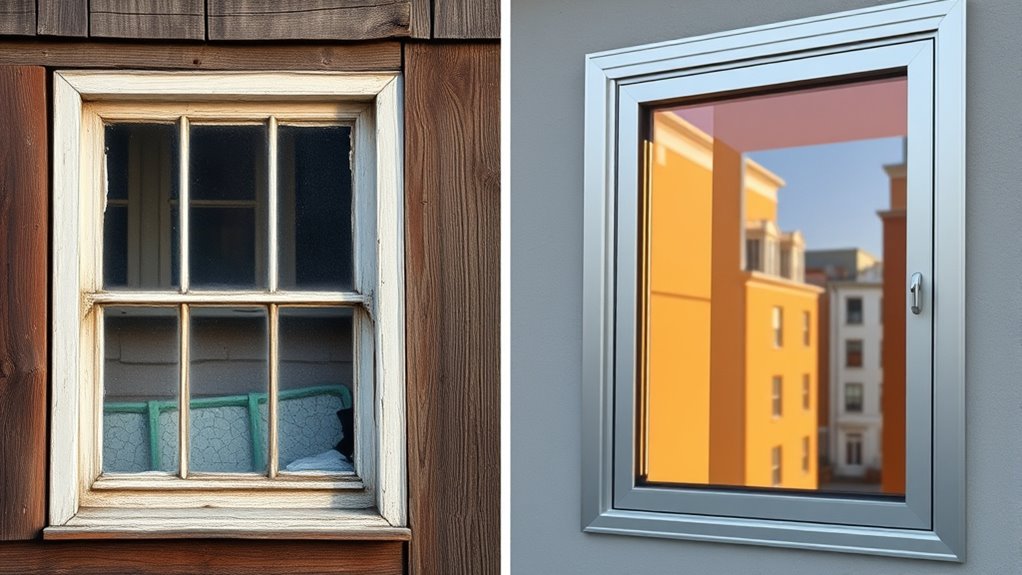

Did you know that a simple window retrofit, like adding weather stripping or film, can temporarily improve insulation at a fraction of the cost of replacing your windows? While these quick fixes might seem appealing, they often don’t solve underlying issues or provide long-term savings. Choosing between retrofits and full replacements depends on your window’s condition and your goals—so, what should you consider before making a decision?
Key Takeaways
- Quick fixes like window film and weather stripping are inexpensive but provide only temporary, superficial improvements.
- Full replacements offer durable, energy-efficient windows but require a higher initial investment.
- Retrofitting upgrades existing panes without replacing frames, suitable for minor improvements and structural integrity issues.
- Complete window replacements improve long-term energy savings and durability, especially when frames are damaged or outdated.
- Cost considerations depend on window condition, desired efficiency, and budget, balancing short-term fixes against long-term benefits.
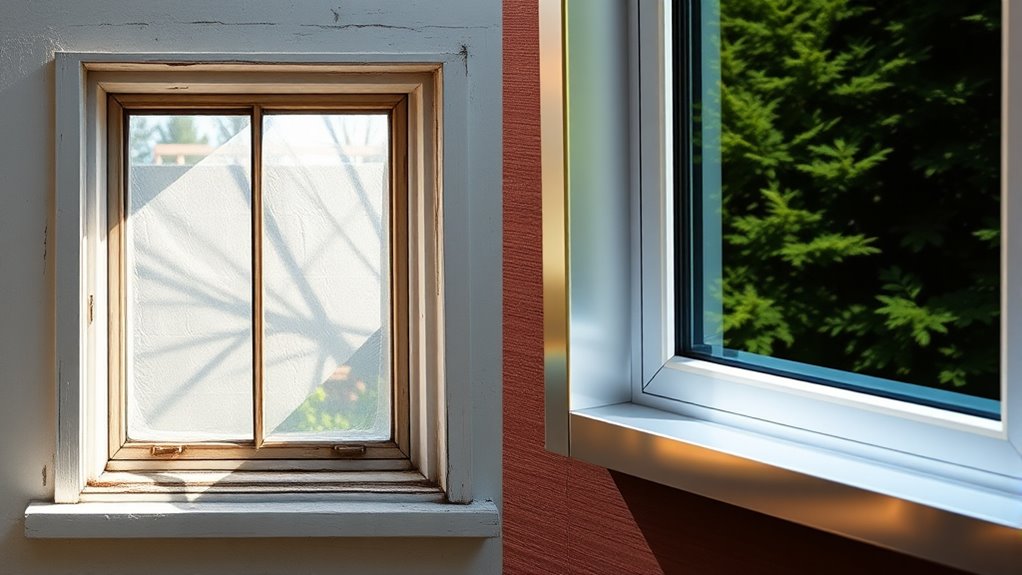
Are your windows ready for an upgrade? If you’re considering retrofitting, it’s essential to weigh your options carefully. You might be tempted by quick fixes, or you could opt for a full replacement. Understanding the differences can save you money and improve your home’s comfort. When exploring window retrofits, the choice of pane materials is crucial. Single-pane windows are outdated, offering poor insulation and higher energy costs. Upgrading to double-pane or even triple-pane glass significantly enhances energy efficiency. These panes trap air or inert gases like argon or krypton between layers, reducing heat transfer and noise. But keep in mind, the type of pane materials you choose will impact installation costs. Double-pane windows are more affordable than triple-pane options, but they still come with a higher price tag than simple repairs. The installation costs for retrofitting depend on the complexity of the job, the size of your windows, and the type of glass you select. If you’re only looking for a quick fix, installing window film or adding weather stripping can be cost-effective solutions to improve insulation temporarily. These methods are inexpensive and quick to implement, but they don’t address underlying issues like drafty frames or broken seals. Additionally, choosing energy-efficient pane materials can have a lasting impact on your home’s thermal performance. On the other hand, full window replacements tend to have higher upfront costs but offer long-term benefits. With new windows, you get modern pane materials, better durability, and improved energy performance, which can lead to savings on utility bills over time. The initial investment might be substantial, but the durability and energy savings often justify it. Consider also that full replacements allow you to upgrade to more energy-efficient window frames, such as vinyl or fiberglass, which are low-maintenance and weather-resistant. While retrofitting with pane upgrades can be a budget-friendly way to extend the life of your existing windows, it’s not always a perfect solution. If your frames are rotted or warped, a retrofit won’t fix those structural issues. In these cases, a full replacement might be the better choice. Ultimately, the decision depends on your budget, the condition of your current windows, and your long-term goals. If you want a quick, inexpensive fix, focusing on improving pane materials and sealing gaps can make a noticeable difference. But if your windows are old and inefficient, investing in full replacements might be more cost-effective in the long run. Whatever you choose, make sure to consider both the upfront costs and the long-term benefits to get the best value for your investment.
Conclusion
When it comes to your windows, remember that a quick fix can be a penny saved, but it might not last forever. Retrofits like weather stripping are great for minor issues and quick improvements, but if your windows are old or damaged, investing in full replacements pays off in the long run. Don’t put all your eggs in one basket—consider your needs and budget carefully to make the best choice for lasting comfort and savings.