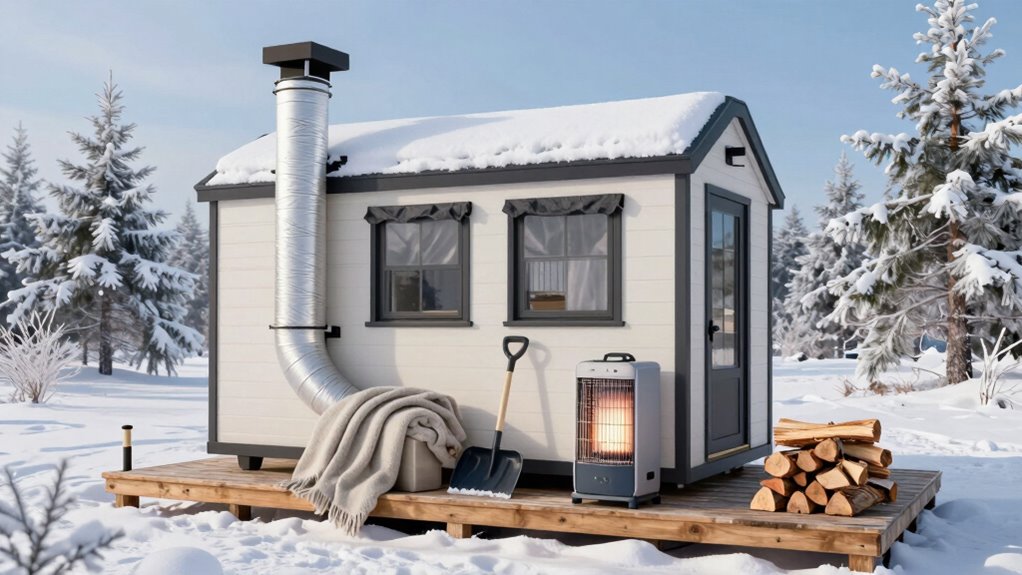

To prepare your tiny house for winter, focus on insulating walls, floors, and ceilings to keep heat in and drafts out. Add weatherstripping, thermal curtains, and draft stoppers for extra warmth. Choose efficient heating options like electric heaters, wood stoves, or off-grid solutions, and maintain them regularly. Good ventilation helps control moisture without losing heat. Keep exploring to discover how combining these strategies creates a cozy, winter-ready tiny home.

Get compact home essentials delivered free with Prime
- Fast, free delivery on millions of items
- Prime Video, Amazon Music and more included
- Member-only deals all year
Key Takeaways
- Insulate walls, floors, and ceilings to retain heat and reduce energy consumption.
- Use efficient heating devices like electric heaters, wood stoves, or solar-powered systems.
- Seal gaps with weatherstripping and install thermal curtains to prevent drafts.
- Incorporate ventilation solutions to control moisture and maintain air quality.
- Combine insulation, heating, and ventilation for an integrated, winter-ready tiny house system.
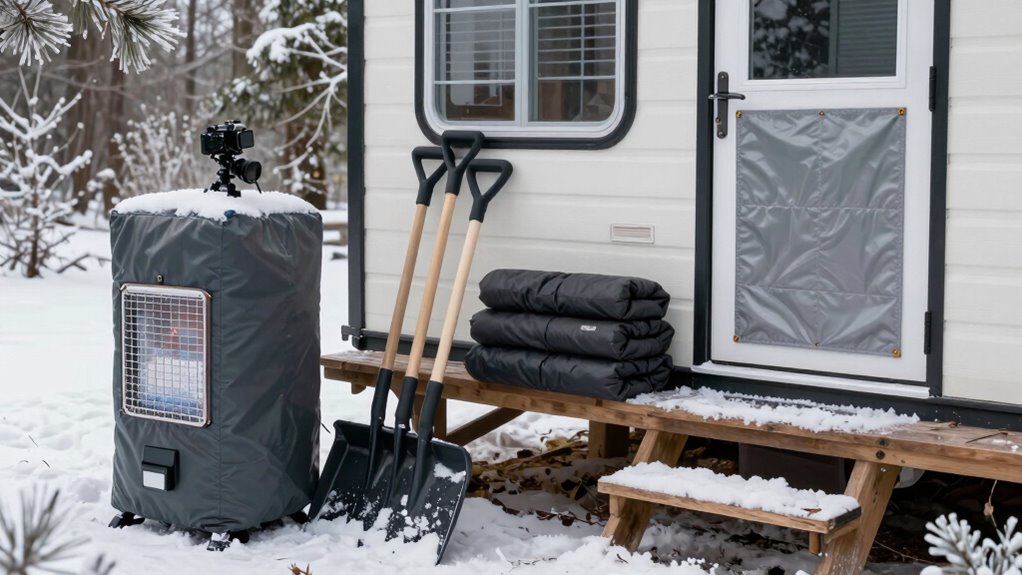
As winter approaches, guaranteeing your tiny house is equipped for cold weather becomes essential. The key to staying warm and comfortable lies in maximizing insulation efficiency and having reliable heating solutions. Tiny houses, by their very nature, are smaller and often less insulated than traditional homes, which means you need to focus on strategies that prevent heat loss and keep your space cozy. Start by inspecting your existing insulation. You want to make sure walls, floors, and ceilings are well insulated to minimize drafts and heat escape. If you find gaps or thin spots, seal them with weatherstripping or spray foam insulation. Upgrading insulation can dramatically improve your insulation efficiency, making it easier to retain heat and reducing the burden on your heating systems.
Alongside insulation, choosing the right heating solutions is vital. Portable electric heaters are popular for tiny houses due to their ease of use and quick heat output. Look for models with thermostats and safety features like tip-over protection. Alternatively, a small wood stove or pellet heater can be highly effective, especially if you enjoy the ambiance and don’t mind the maintenance. These methods provide a consistent, natural heat source, and can be more cost-effective over time. If you’re connected to the grid, electric or propane heaters are convenient options, but if you’re off-grid, consider solar-powered solutions or battery-operated heating systems designed specifically for tiny living.
In addition to your primary heating solutions, consider supplementary measures to boost warmth. Installing draft stoppers on doors and windows keeps cold air out, and thermal curtains can add an extra layer of insulation during the night. Insulating your skirting or undercarriage also prevents cold from creeping in through the floor. To further improve insulation efficiency, add reflective barriers behind radiators or heaters to redirect heat back into the space. Regular maintenance of your heating equipment ensures it runs efficiently, saving energy and preventing breakdowns during cold snaps. Incorporating sustainable heating options can also help reduce your environmental impact while keeping your tiny house warm.
Finally, pay attention to ventilation. Proper airflow prevents moisture buildup, which can compromise insulation and lead to mold. Use exhaust fans and open vents strategically to maintain a healthy balance of fresh air and warmth. Preparing your tiny house for winter isn’t just about choosing the right equipment; it’s about creating an integrated system where insulation efficiency and effective heating solutions work together. Incorporating proper insulation techniques and ensuring your heating systems are well-maintained will maximize your comfort. Additionally, understanding the role of insulation material types can help you select the most effective materials for your specific needs. Being aware of ventilation strategies can help you prevent issues related to moisture and air quality inside your tiny home. With these measures in place, you’ll stay warm, save energy, and enjoy the winter months comfortably in your tiny home.
As an affiliate, we earn on qualifying purchases.
Frequently Asked Questions
How Much Does Winter Equipment for Tiny Houses Typically Cost?
Winter equipment for tiny houses usually costs between $500 and $2,500, depending on what upgrades you choose. Insulation upgrades can be around $300 to $1,000, helping you stay warm. Snow removal tools, like shovels or snow blowers, might add $50 to $500. You might also want a heated water hose or pipe insulation, which can cost $50 to $200. Budget accordingly to keep your tiny house cozy all winter.
Can Tiny Houses Withstand Extreme Cold Temperatures?
Yes, your tiny house can withstand extreme cold if you use proper insulation techniques and draft prevention methods. Adequate insulation keeps heat inside, while sealing drafts prevents cold air from sneaking in. You should also invest in quality windows and doors, and consider a reliable heating system. With these measures, your tiny house will stay warm and cozy, even during the harshest winter conditions.
How Often Should Winter Equipment Be Maintained or Replaced?
You should perform regular maintenance on your winter equipment at least once a year, ideally before the coldest months arrive. Follow a clear maintenance schedule to check for wear and tear, ensuring everything functions properly. Replacement guidelines depend on the item’s lifespan; replace insulation, heaters, and seals when they show signs of damage or inefficiency. Staying proactive helps keep your tiny house safe and warm all winter long.
Are There Any Eco-Friendly Winter Heating Options for Tiny Houses?
Think of eco-friendly winter heating options like a tiny, resilient forest. You can harness solar panels to power electric heaters, reducing emissions and lowering your carbon footprint. Some tiny houses even use composting toilets with heat exchange systems to manage waste sustainably. These options are reliable, renewable, and gentle on the environment, making your winter stay cozy and eco-conscious. You’re effectively nurturing your home and the planet simultaneously.
What Safety Precautions Are Necessary for Winterizing Tiny Houses?
You should prioritize insulation techniques like sealing gaps and adding weatherstripping to prevent heat loss. Regularly check your heating system and guarantee proper ventilation. For safety, have emergency preparedness supplies on hand, such as a portable heater and backup power sources. Keep fire extinguishers accessible, and test smoke and carbon monoxide detectors frequently. These precautions help keep your tiny house safe and warm during winter, reducing risks and ensuring comfort.
Conclusion
Getting your tiny house winter-ready might seem intimidating, but with the right equipment, you’ll be cozy and prepared all season long. Make sure your insulation, heating, and plumbing are up to snuff, and don’t forget those essential safety tools. When it comes to winterizing, it’s better to be safe than sorry—cover all your bases before the snow hits. Remember, a stitch in time saves nine, so start now to keep winter worries at bay.
Halloween Picks
halloween
As an affiliate, we earn on qualifying purchases.