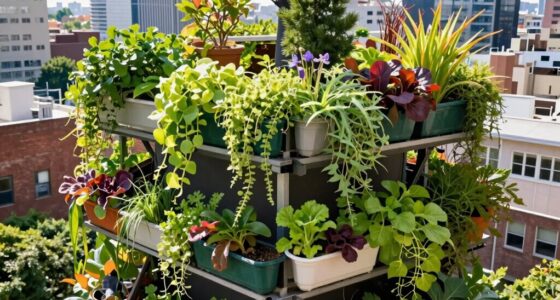
Did you know that up to 70% of household water use goes toward maintaining your yard? Many people aren’t aware that you can substantially cut this number by adopting xeriscaping principles. This sustainable approach not only conserves water but also creates a resilient, low-maintenance landscape. If you’re interested in transforming your yard into a vibrant, eco-friendly space, understanding the basics of xeriscaping might just be the key to making it happen.
Prime for Young Adults — start your free trial
Fast free delivery, streaming and member deals for eligible 18–24 year olds.
As an affiliate, we earn on qualifying purchases.
Key Takeaways
- Focus on native, drought-tolerant plants to reduce watering needs while maintaining landscape beauty.
- Use water-efficient irrigation methods like drip systems and smart timers to minimize water waste.
- Group plants with similar water requirements and mulch to conserve soil moisture and suppress weeds.
- Incorporate mulching and proper plant placement to enhance soil health and reduce maintenance.
- Design landscapes that work with natural conditions, significantly lowering water consumption by up to 70%.
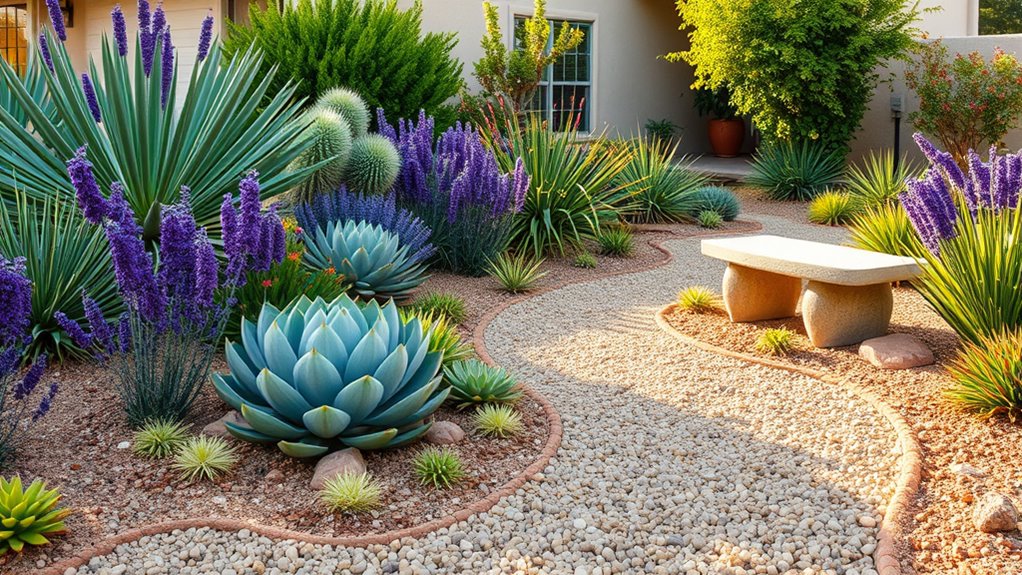
Have you ever wondered how to create a beautiful landscape that conserves water and reduces maintenance? If so, xeriscaping might be exactly what you need. This landscaping approach emphasizes the use of native plants and smart irrigation techniques to minimize water use without sacrificing beauty. By choosing plants that are adapted to your local climate, you can considerably cut down on watering needs and keep your yard looking vibrant year-round. Native plants thrive naturally in your area, requiring less fertilizer, fewer pesticides, and less routine care, which not only saves water but also reduces your overall maintenance efforts.
Creating a beautiful, low-maintenance landscape with native plants and water-saving techniques
To start, focus on selecting native plants suited to your region’s soil and climate conditions. These plants are naturally drought-tolerant, so they require less water once established. They also tend to be more resistant to pests and diseases, further decreasing the need for chemical interventions and watering. Incorporating a variety of native grasses, shrubs, and flowering plants not only makes your landscape more resilient but also creates a harmonious, natural aesthetic. When you use native plants, you’re fundamentally working with nature rather than against it, making your yard more sustainable and easier to care for.
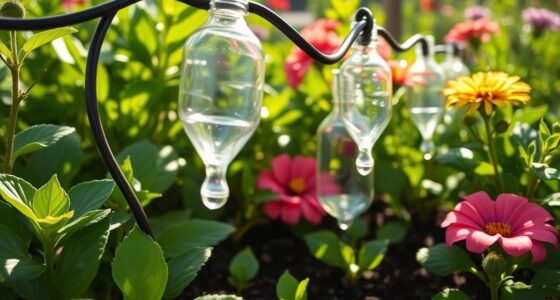
Equally important is installing a water-efficient irrigation system. Traditional sprinklers often waste water through runoff and evaporation, especially if not properly adjusted. Instead, opt for drip irrigation or soaker hoses that deliver water directly to the roots of your plants. These systems use less water by eliminating overspray and ensuring that moisture reaches only the plants that need it. When combined with a smart timer, you can schedule watering during early morning or late evening hours when evaporation rates are lower. This setup maximizes water efficiency and keeps your landscape healthy without wasting resources.
Another key step is to group plants with similar water needs together. This way, your irrigation system can be tailored to provide the right amount of moisture without overwatering plants that prefer drier conditions. Mulching around your plants is also essential because it helps retain soil moisture, suppress weeds, and regulate soil temperature. The combination of native plant selection, water-efficient irrigation, and proper mulching creates a self-sustaining landscape that looks lush and vibrant while using a fraction of the water traditional lawns consume.
native drought-tolerant plants for xeriscaping
As an affiliate, we earn on qualifying purchases.
As an affiliate, we earn on qualifying purchases.
Conclusion
By embracing xeriscaping, you’re transforming your yard into a lush oasis that’s both stunning and sustainable. Like planting the seeds of a greener future, your efforts conserve water and reduce maintenance, all while creating a vibrant space that thrives in harmony with nature. Imagine your garden as a well-tuned symphony, where native plants and smart techniques work together effortlessly—turning your outdoor space into a lasting demonstration of beauty and conservation.
Fall yard work Picks
leaf blowers
As an affiliate, we earn on qualifying purchases.