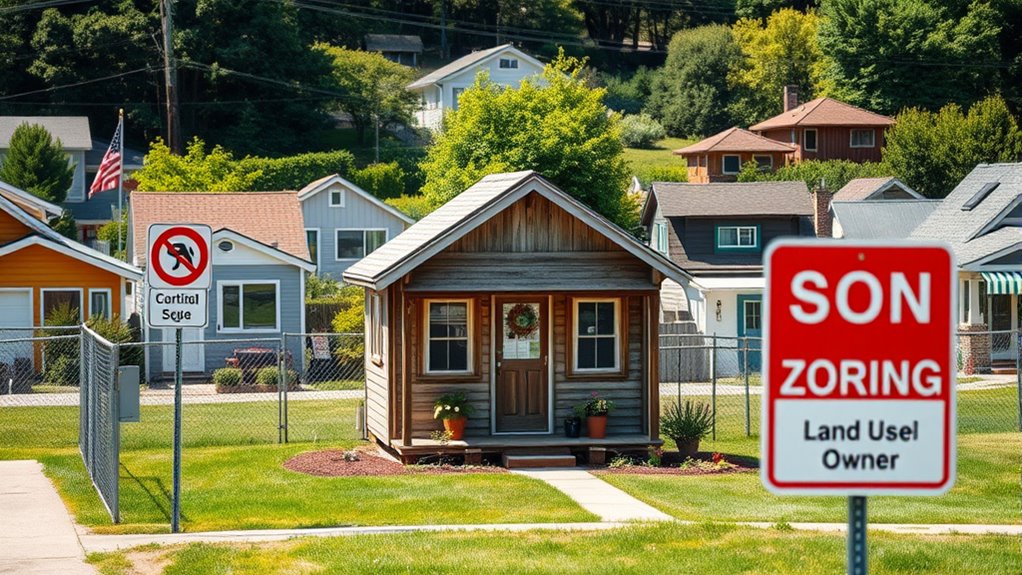

When considering tiny house placement, your options depend on local zoning laws, land ownership, and taxes. Placing your tiny home on a mobile park can be easier but watch for restrictions and lot rent. Owning land gives you more control but requires understanding zoning rules, permits, and tax obligations—whether the house is on wheels or a foundation. To make informed decisions, it’s helpful to explore how these laws and costs impact your plans in different areas.
Key Takeaways
- Zoning laws vary widely and can restrict tiny house placement, especially for permanent foundations or mobile structures.
- Living in a mobile home park simplifies placement but involves lot rent and potential size restrictions.
- Tiny houses on wheels may be classified as personal property and taxed differently than permanent structures.
- Owning land requires understanding local zoning and property tax laws to ensure compliance.
- Permits and building codes may be necessary depending on location and whether the tiny house is on a foundation or wheels.

Are you curious about tiny houses and whether they might be right for you? One of the first things to weigh is where you’ll place your tiny home and how zoning laws could affect that decision. Many people find that mobile home parks are a convenient option, especially if they want to avoid the hassle of land ownership. These parks often have designated spaces for tiny homes, making it easier to find a suitable location without needing to navigate complex zoning regulations. However, keep in mind that living in a mobile home park usually involves paying lot rent, which can add up over time. Some parks also have restrictions on the size and type of tiny house you can park there, so it’s important to verify the rules before committing.
If you’re contemplating owning land outright, zoning laws become even more critical. Local regulations can vary widely, and some areas may have strict restrictions on tiny houses, especially if they’re classified as mobile or temporary structures. You might need to get special permits or meet specific building codes, which can be time-consuming and sometimes costly. It’s a good idea to contact your city or county planning department early to understand what’s permitted in your preferred location. Knowing the zoning rules upfront can save you from surprises and legal issues down the line.
When it comes to land ownership, one major concern for many tiny house enthusiasts is property taxes. Unlike traditional homes, tiny houses can sometimes fall into a gray area when it comes to taxation. If your tiny house is on a permanent foundation and considered real estate, you’ll likely be subject to property taxes similar to those on a traditional home. However, if it’s on wheels and classified as personal property, the tax situation can be different. Some jurisdictions impose annual personal property taxes on mobile homes or tiny houses on wheels, which might be lower or higher depending on local laws. It’s essential to research the specific tax policies in your area to understand how owning a tiny house will impact your finances.
Additionally, if you’re planning to buy land, you’ll need to factor in property taxes as part of your ongoing costs. These taxes can vary drastically based on location, land value, and local tax rates. Sometimes, purchasing land in a less populated or rural area might mean lower property taxes, but it could also mean fewer amenities or services. Balancing land costs, property taxes, and your lifestyle preferences will help you decide whether owning land or living in a mobile home park suits you best. In any case, understanding zoning restrictions and tax obligations is essential before making your decision, ensuring that your tiny house fits seamlessly into your life—and your budget. Being aware of building codes and regulations can also help you avoid future legal hurdles and ensure your tiny house is compliant with local standards.

Tiny Home Plans on Wheels 115sqft – Mobile Living Design with 3D Visuals, Floor Plan Includes Bed, Kitchen, and Washroom
Compact Design: 115 sqft layout optimized for efficiency and comfort
As an affiliate, we earn on qualifying purchases.
As an affiliate, we earn on qualifying purchases.
Frequently Asked Questions
Can I Build a Tiny House on Leased Land?
Yes, you can build a tiny house on leased land. Just make certain the lease land agreement allows for building and living in a tiny house. Since land ownership stays with the landlord, you’ll need their permission and should review lease terms carefully. It’s also wise to check local zoning laws, as they may impact your ability to construct and occupy a tiny house on leased land.
Are There Federal Restrictions on Tiny House Zoning?
You’re hitting the nail on the head—there are no strict federal restrictions on tiny house zoning. Federal regulations mainly focus on safety standards like building codes and energy efficiency, but zoning restrictions are handled at the state and local levels. It’s a bit of a wild card, so you’ll want to check your local rules to see what’s allowed in your area. Stay informed, and you’ll avoid stepping on toes.
How Do I Convert a Tiny House Into a Permanent Residence?
To convert your tiny house into a permanent residence, start by obtaining the necessary tiny house permits and ensuring your structure meets permanent residence requirements. Check local zoning laws and building codes, and apply for any needed approvals. You might need to upgrade utilities or insulation. Once you satisfy all legal and safety standards, you can register your tiny house as a permanent residence and enjoy your new home long-term.
What Are the Property Tax Implications for Tiny House Owners?
You’ll need to contemplate property assessment and potential tax exemption options for your tiny house. If it’s classified as real property, it may be taxed like a traditional home, based on its assessed value. However, some areas offer tax exemptions for tiny houses, especially if they’re on leased land or meet certain criteria. Check local regulations to understand your specific property tax implications and explore available exemptions.
Can I Place a Tiny House on a Boat or Floating Land?
Yes, you can place a tiny house on a boat or floating land, but you need to adhere to marina regulations and local laws governing floating structures. Check with the marina or authorities to guarantee your floating tiny house complies with safety standards, zoning rules, and navigation laws. Keep in mind that some areas may have restrictions, so always do thorough research before setting up your floating structure.

Shipping Container Homes: The best guide to building a shipping container home and tiny house living, including plans, tips, FAQs, and more!
As an affiliate, we earn on qualifying purchases.
As an affiliate, we earn on qualifying purchases.
Conclusion
So, now you’re aware of the zoning and land ownership questions surrounding tiny houses. But the real challenge lies ahead—navigating local regulations and making your dream a reality. Will you find the perfect spot? Will the rules change just as you’re about to build? The answers aren’t always clear, but one thing’s certain: your journey is only beginning. Stay curious, stay prepared, and remember—your tiny house story is waiting to be written.

Tiny House Legal and Zoning Made Simple: Avoid the Nightmare of Getting Shut Down (Tiny Home)
As an affiliate, we earn on qualifying purchases.
As an affiliate, we earn on qualifying purchases.
Mobile home park lot for rent Write On Me Red 18×24 in Double Sided Yard Road Sign w/Stand
Yard Sign
As an affiliate, we earn on qualifying purchases.
As an affiliate, we earn on qualifying purchases.