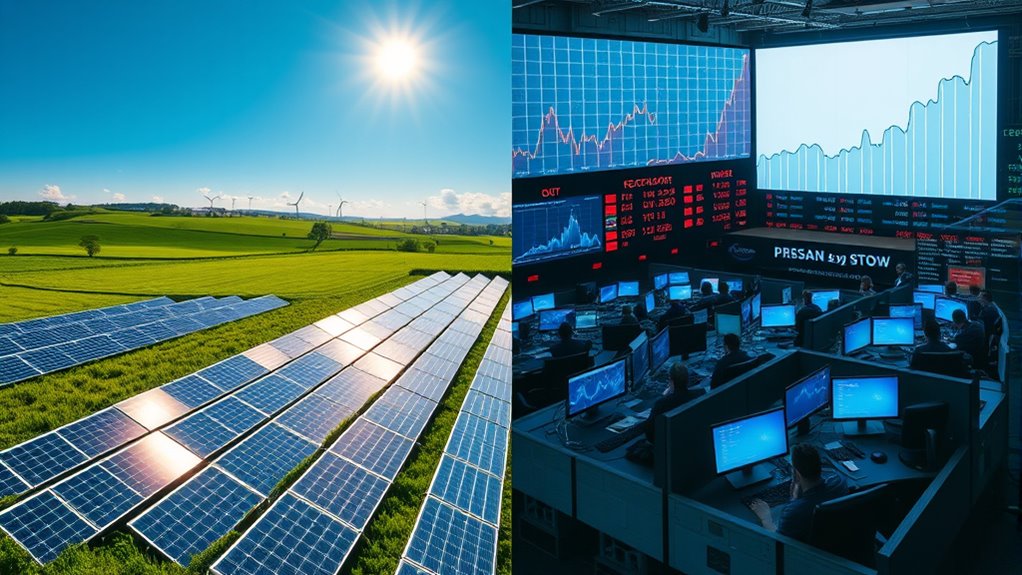

When comparing the 20-year returns of solar investments and the stock market, you need to consider more than just potential gains. Solar offers stable, predictable growth driven by energy savings and government incentives, while stocks can deliver higher short-term returns but come with increased volatility. Understanding these differences can help you decide which option aligns best with your long-term financial goals—yet, there’s more to explore before making a choice.
Key Takeaways
- Stocks typically average 7-10% annual returns, but are more volatile than the stable, predictable returns from solar investments.
- Solar investments benefit from government incentives like the 30% federal ITC, boosting ROI and reducing initial costs.
- Solar provides consistent energy savings over 25+ years, offering long-term stability compared to fluctuating stock market returns.
- Market volatility can significantly impact stock gains, while solar energy yields steady, less risky financial and environmental benefits.
- Solar is ideal for risk-averse investors seeking stable, environmentally friendly growth, whereas stocks suit those seeking higher short-term gains amid market swings.
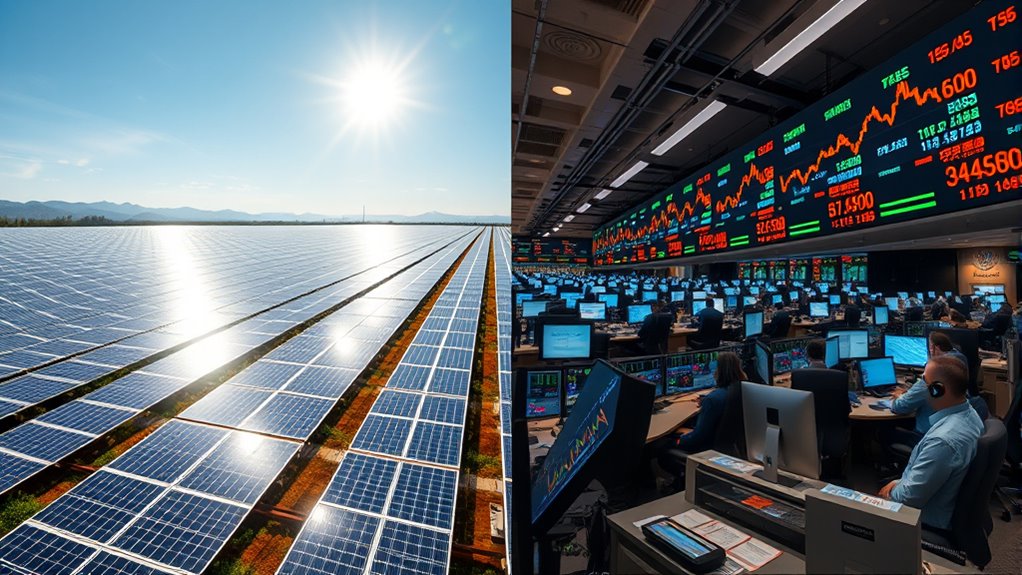
Have you ever wondered which investment offers a better return—solar energy or stocks? Over the past 20 years, both have shown impressive growth, but understanding how they compare requires examining key factors like solar tax credits and market volatility. Solar investments can be highly appealing because of government incentives that reduce upfront costs. Solar tax credits, such as the federal Investment Tax Credit (ITC), can cover up to 30% of installation expenses, considerably boosting your ROI. These credits not only lower your initial investment but also accelerate your break-even point, making solar energy financially attractive from the start. On the other hand, stocks are less dependent on government incentives but are subject to market volatility, which can cause substantial fluctuations in returns over short periods. While stocks may offer higher potential gains during bullish markets, they can also suffer steep declines during downturns, creating a level of unpredictability that some investors find unsettling.
When comparing the long-term ROI of solar versus stocks, consider the stability that solar provides. Once installed, solar panels typically require minimal maintenance and can generate consistent energy savings for 25 years or more. These savings translate into a steady, predictable return on your investment, especially when combined with solar tax credits that help reduce initial costs. In contrast, stock market returns can be highly variable. Over a 20-year span, stocks have historically averaged around 7-10% annual returns, but that figure is not guaranteed. Market volatility can lead to periods of rapid growth or sharp declines, and timing your investments perfectly is nearly impossible. This unpredictability adds a risk factor that many investors need to account for in their calculations.
Furthermore, the decision between solar and stocks depends on your risk tolerance and financial goals. If you prefer a more stable, long-term investment that also benefits the environment, solar energy might be your best choice. The impact of solar tax credits can tip the scales, making solar more financially feasible and appealing. Conversely, if you’re comfortable with market swings and seek potentially higher short-term gains, stocks could provide opportunities for growth, but with the caveat of increased risk from market volatility. Additionally, incorporating comfortable and support solutions like quality solar panels and reliable maintenance can further enhance your investment’s performance and longevity.
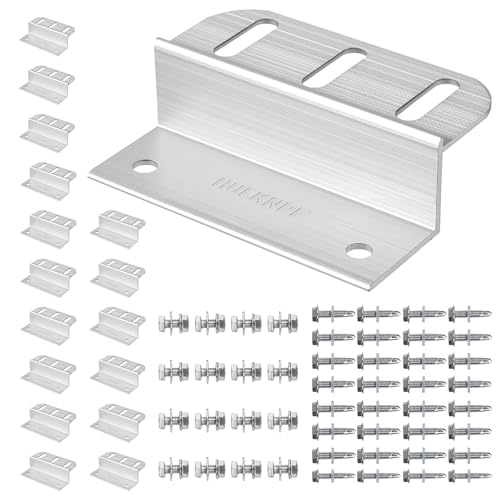
HULKNPE Z Brackets Solar Panel Mounting Kit (16 Pack) – Heavy Duty Corrosion-Resistant Aluminum for RV, Boat, Roof & Off-Grid Installations
Durable & Wind-Resistant Build: Crafted from corrosion-resistant aluminum alloy, these heavy-duty Z brackets provide long-lasting, stable performance and…
As an affiliate, we earn on qualifying purchases.
As an affiliate, we earn on qualifying purchases.
Conclusion
So, as you weigh your options, remember that investing in solar isn’t just about dollars—it’s about planting seeds for a sustainable future. While stocks may promise fleeting riches like shooting stars, solar offers steady growth like the rising sun, illuminating your long-term path. In the end, choosing solar is like embracing the dawn’s promise—trust in a future that’s brighter, steadier, and more resilient. Your future self will thank you for it.

The Politics of Energy Research and Development (Energy and Environmental Policy Series)
As an affiliate, we earn on qualifying purchases.
As an affiliate, we earn on qualifying purchases.

ECO-WORTHY 10KW Output 9.36KWH Off Grid Solar System Complete Kit for Home:12pcs 195W Solar Panels(2340W)+10KW 120V/240V Inverter (UL 1741)+ 2pcs 48V 100AH Lithium Batteries(UL 1973&UL 9540A)
[Ideally Output of 9.36KWH] The power of 9.36KWh per day under 4 hours full sunshine by the 2340W…
As an affiliate, we earn on qualifying purchases.
As an affiliate, we earn on qualifying purchases.

LyriFine Electric Solar Panel Cleaning Brush and Pole Kit, 20Ft Extendable Washing Kit with Water Fed Pole, 2 Speed & Soap Dispenser, Outdoor Window Cleaning Tool for Solar Panel, Window, Roof, RV
Lightweight & powerful – effortless to lift, effortless to install: Our electric spin solar panel cleaning brush and…
As an affiliate, we earn on qualifying purchases.
As an affiliate, we earn on qualifying purchases.