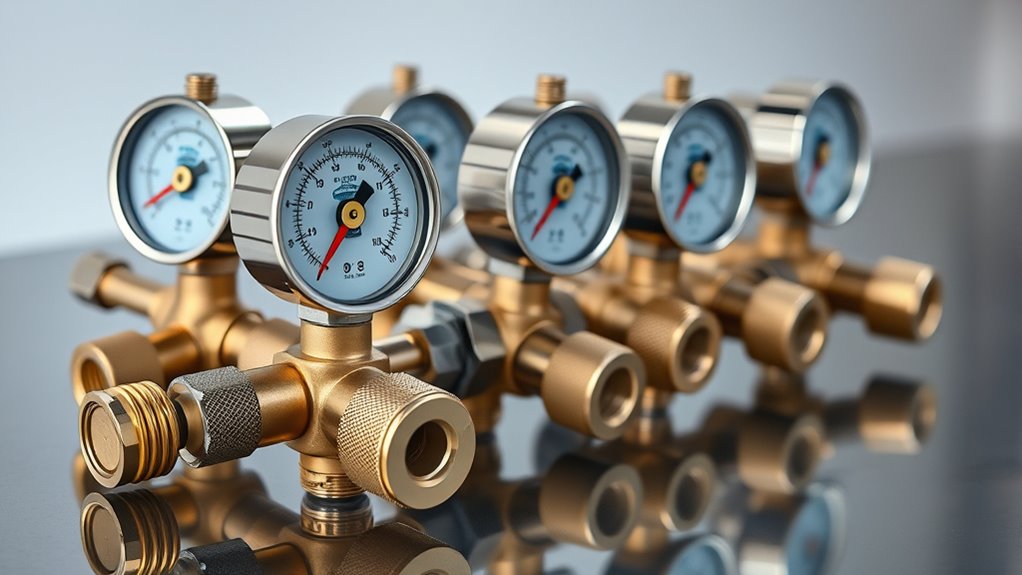

Choosing the right hydrogenated pressure regulator depends heavily on your specific needs, whether it’s for industrial use, welding, or testing high-pressure cylinders. The market features a range of options, each with distinct strengths and tradeoffs. The High Pressure Nitrogen Regulator offers exceptional durability and precision for inert gases, but its weight and manual adjustments may be drawbacks for portable or beginner users. The RX WELD Nitrogen Regulator emphasizes ease of use with protective gauges and adjustable pressure, making it a good fit for HVAC or pressure testing, yet its gauge ratings and lack of downstream protection limit some applications. The Victor 0781-1444 Sr4J-350 stands out for heavy-duty hydrogen and methane regulation, delivering high flow capacity and precise control at the expense of portability and ease for non-expert users. Finally, the Miller Electric Regulator provides American-made reliability specifically for hydrogen and methane cylinders, though limited specs and reviews may pose questions for some buyers. Each of these options balances different priorities, so understanding their core differences is key to the right choice.
Key Takeaways
- Durability and precision are highest in the High Pressure Nitrogen Regulator, ideal for industrial environments.
- RX WELD’s user-friendly design makes it suitable for HVAC and pressure testing, but it lacks downstream protection.
- Victor’s heavy-duty design is best for high-pressure hydrogen and methane applications, not portable or beginner-friendly.
- Miller’s regulator offers American quality for hydrogen/methane cylinders but may lack detailed specs for some buyers.
- Tradeoffs often involve weight, complexity, and application-specific features, making context critical in selection.
| High Pressure Nitrogen Regulator, 0-4500 PSI, CGA580 Inlet, 2.5 Inch Dual Gauges |  | Best for Heavy-Duty Industrial and Welding Use | Inlet Pressure Range: 0-6000 PSI | Outlet Pressure Range: 0-4500 PSI | Inlet Connector: CGA-580 | VIEW ON AMAZON | See Our Full Breakdown |
| RX WELD Nitrogen Regulator, 0-600 PSI, CGA580 Inlet, 1/4″ Flare Outlet |  | Best for Ease of Use and HVAC Applications | Inlet Connection: CGA580 | Outlet Connection: 1/4″ SAE Male Flare | Input Pressure: 0-4000 PSI | VIEW ON AMAZON | See Our Full Breakdown |
| Victor 0781-1444 Sr4J-350 High Pressure Regulator for Methane and Hydrogen |  | Best for Heavy-Duty Hydrogen and Methane Regulation | Delivery Range: 200-3000 PSIG | Gauge Range Inlet: 4000 PSIG | Gauge Range Outlet: 4000 PSIG | VIEW ON AMAZON | See Our Full Breakdown |
| Miller Electric Regulator, Cylinder, Hydrogen/Methane, CGA-350 (30-100-350) |  | Best for Reliable US-Made Cylinder Regulation | Type: Regulator | Gas Compatibility: Hydrogen/Methane | CGA Connection: CGA-350 | VIEW ON AMAZON | See Our Full Breakdown |
| hydrogenrated pressure regulator | Material | Inlet Connection | Outlet Connection |
|---|---|---|---|
| High Pressure Nitrogen Regulat | Brass | — | — |
| RX WELD Nitrogen Regulator | Brass, stainless steel | CGA580 | 1/4" SAE Male Flare |
| Victor 0781-1444 Sr4J-350 High | — | CGA 350 | 1/4 inch Swaglok |
| Miller Electric Regulator | — | — | — |
More Details on Our Top Picks
High Pressure Nitrogen Regulator, 0-4500 PSI, CGA580 Inlet, 2.5 Inch Dual Gauges
This regulator stands out for its robust brass construction and large dual gauges, which provide accurate, real-time pressure monitoring crucial in demanding industrial or welding settings. Compared to other options, its heavy weight and manual adjustment process can be less convenient for portable or less experienced users. It’s ideal when durability and precise control are priorities, but those seeking a lightweight or highly automated solution might find it cumbersome. The large gauges are a notable advantage in environments where quick, clear readings are essential, yet the requirement for manual tuning demands some technical familiarity.
Pros:- Durable brass construction for heavy-duty use
- Large, scratch-resistant dual gauges for accurate monitoring
- Designed for precise inert gas regulation
Cons:- Heavy weight reduces portability
- Limited connection options
- Manual adjustment can be complex for new users
Best for: Industrial welders and heavy-duty inert gas applications
Not ideal for: Portable setups or beginners needing simple, automated regulation
- Inlet Pressure Range:0-6000 PSI
- Outlet Pressure Range:0-4500 PSI
- Inlet Connector:CGA-580
- Outlet Connector:1/4″ Flare
- Gauge Diameter:2.5 inches
- Material:Brass
Our verdict“A highly durable, precise regulator suited for industrial or welding environments where robustness outweighs portability.”
RX WELD Nitrogen Regulator, 0-600 PSI, CGA580 Inlet, 1/4″ Flare Outlet
This model offers a balanced combination of ease of use and reliable performance, featuring protective rubber boots on the gauges for durability and clear readability. It handles input pressures up to 4000 PSI but is rated for an output maximum of 450 PSI, making it suitable for HVAC purging, pressure tests, and brazing. Compared with the high-pressure nitrogen regulator, its smaller size and user-friendly design make it more accessible for less experienced users or those in fieldwork. However, the gauge ratings can be confusing, as the display shows 600 PSI while the rated maximum is 450 PSI; this could lead to overestimating the safe working pressure.
Pros:- Easy-to-read gauges with protective boots
- Durable brass and stainless steel components
- Adjustable pressure up to 450 PSI
Cons:- Gauge ratings may be misleading
- Lacks downstream protection features
- Limited to specific pressure ranges
Best for: HVAC technicians, pressure testers, hobbyists
Not ideal for: High-pressure industrial applications or critical safety environments
- Inlet Connection:CGA580
- Outlet Connection:1/4″ SAE Male Flare
- Input Pressure:0-4000 PSI
- Output Pressure:0-450 PSI (up to 600 PSI capacity)
- Gauge Size:2 inches
- Material:Brass, stainless steel
Our verdict“A practical choice for HVAC and pressure testing, offering simplicity and durability at a moderate pressure capacity.”
Victor 0781-1444 Sr4J-350 High Pressure Regulator for Methane and Hydrogen
This regulator is designed specifically for high-pressure applications involving methane and hydrogen, making it ideal for cylinder testing and high-pressure vessel work. Its machined brass body and built-in relief valves ensure durability and safety when handling gases at pressures up to 3000 PSIG. Compared with other models, its high flow capacity and precise regulation are advantageous in demanding environments, but its weight and specialized design limit portability. Its setup complexity also means it’s best suited for users with some technical experience in high-pressure gas systems.
Pros:- Heavy-duty machined brass construction
- High flow capacity for demanding applications
- Precise pressure control with integrated relief valves
Cons:- Heavy weight hampers portability
- Limited to specific gases
- Setup may be complex for beginners
Best for: Hydrogen and methane cylinder testing and high-pressure applications
Not ideal for: Light-duty or non-specialized gas regulation needs
- Delivery Range:200-3000 PSIG
- Gauge Range Inlet:4000 PSIG
- Gauge Range Outlet:4000 PSIG
- Inlet Connection:CGA 350
- Outlet Connection:1/4 inch Swaglok
- Maximum Inlet Pressure:3000 PSIG
- Flow Coefficient:0.1147 Cv
Our verdict“A robust, high-capacity regulator tailored for high-pressure hydrogen and methane use, best suited for professional testing environments.”
Miller Electric Regulator, Cylinder, Hydrogen/Methane, CGA-350 (30-100-350)
This regulator emphasizes American manufacturing quality for hydrogen and methane cylinders, making it a reliable choice for industrial and welding applications. While detailed specifications are limited, its design focuses on safety and consistent pressure control. It’s a suitable option for users prioritizing domestic quality and straightforward cylinder regulation, although the lack of extensive technical details could be a concern for advanced users seeking specific metrics or features.
Pros:- American-made quality and reliability
- Suitable for hydrogen and methane cylinders
- Designed for industrial use
Cons:- Limited detailed specs and reviews
- No indication of advanced safety features
- Less suitable for complex or high-flow applications
Best for: Hydrogen and methane cylinder regulation in industrial settings
Not ideal for: Non-cylinder applications or users requiring detailed specifications
- Type:Regulator
- Gas Compatibility:Hydrogen/Methane
- CGA Connection:CGA-350
- Model Number:30-100-350
- Country of Manufacture:United States
Our verdict“A dependable, US-manufactured regulator best suited for straightforward cylinder regulation where reliability is key.”

How We Picked
Our selection process focused on identifying pressure regulators specifically designed for hydrogen or capable of handling hydrogenated gases with high safety and precision. We prioritized models that balance durability, ease of use, and pressure capacity, considering industrial applications, welding, and testing environments. Each product was evaluated on build quality, pressure range, gauge readability, and safety features like relief valves. We also considered user feedback and industry relevance, aiming to highlight options suitable for both professionals and serious hobbyists. The final lineup reflects a mix of high-end, mid-range, and specialized models to meet diverse needs, with a clear focus on how each performs in hydrogen-related applications.
| hydrogenrated pressure regulator | Material | Inlet Connection |
|---|---|---|
| High Pressure Nitrogen Regulat | Brass | — |
| RX WELD Nitrogen Regulator | Brass, stainless steel | CGA580 |
| Victor 0781-1444 Sr4J-350 High | — | CGA 350 |
| Miller Electric Regulator | — | — |
Factors to Consider When Choosing Hydrogenrated Pressure Regulator
Selecting a hydrogenated pressure regulator involves understanding your specific application, pressure requirements, and safety features. The primary considerations include pressure capacity, connection types, build quality, and ease of use. Whether you need a high-capacity, industrial-grade regulator or a more portable, user-friendly model, choosing the right device hinges on matching these features to your operational demands.
Key Factors to Consider
When choosing a hydrogenated pressure regulator, focus on the maximum inlet and outlet pressures to ensure compatibility with your cylinders or systems. Durability is equally important, especially if you work in demanding environments; look for regulators made from high-quality brass or stainless steel. Gauge readability and safety features such as relief valves are essential for maintaining control and preventing accidents. Lastly, consider the size and weight if portability or ease of handling matter to your setup.
Application-Specific Options
If your work involves high-pressure cylinder testing or industrial applications, selecting a heavy-duty, high-flow regulator like the Victor 0781-1444 or the High Pressure Nitrogen Regulator makes sense. For HVAC or pressure testing where simplicity and ease of reading are priorities, the RX WELD model offers a practical solution. Hobbyists or those in need of domestic, reliable regulation might prefer the Miller Electric regulator, especially if they value American manufacturing quality.
Frequently Asked Questions
What is the typical pressure range I should look for in a hydrogen regulator?
The pressure range you need depends on your specific application. For high-pressure testing and industrial use, look for regulators rated up to 3000 PSI or more. For general laboratory or hobbyist work, models with ranges up to 600 PSI are often sufficient. Always ensure your regulator’s maximum inlet and outlet pressures match or exceed your system’s requirements to maintain safety and performance.
Are safety features like relief valves important in hydrogen regulators?
Yes, safety features such as relief valves are vital when working with hydrogen or other flammable gases. They help prevent overpressure situations that could lead to leaks or accidents. High-quality regulators typically incorporate relief mechanisms to protect both the system and the user, especially in industrial or high-pressure testing environments.
Can I use a nitrogen regulator for hydrogen applications?
While nitrogen regulators often share similar connection standards and pressure ranges, it’s safest to use a regulator specifically rated for hydrogen. Hydrogen’s unique properties can pose additional safety concerns, and some regulators may not be designed to handle its specific requirements. Always check manufacturer recommendations and specifications to ensure compatibility.
Is portability an important factor for hydrogen regulators?
Portability can be important if you need to move your regulator frequently or work in different locations. Heavier, industrial-grade models like the High Pressure Nitrogen Regulator and Victor’s high-capacity units tend to be less portable. For fieldwork or hobbyist use, smaller, lighter models such as the RX WELD regulator are more manageable, though they may sacrifice some high-pressure capacity or robustness.
How do I know if a regulator is suitable for my gas type?
Always verify the regulator’s compatibility with your specific gas. Regulators designed for inert gases like nitrogen or argon might not be suitable for hydrogen due to differences in safety, material compatibility, and pressure handling. Look for models explicitly rated for hydrogen or high-pressure flammable gases, and confirm the connection type and pressure ratings match your cylinders and system requirements.
Conclusion
If you operate in a professional setting requiring rugged durability and precise control, the High Pressure Nitrogen Regulator or the Victor 0781-1444 are the best choices. For hobbyists, HVAC technicians, or those prioritizing ease of use, the RX WELD Nitrogen Regulator offers a balanced approach. Industrial users who value American manufacturing and straightforward cylinder regulation might prefer the Miller Electric Regulator. Consider your specific pressure needs, safety features, and portability when making your decision to find the regulator that best fits your application in 2026.