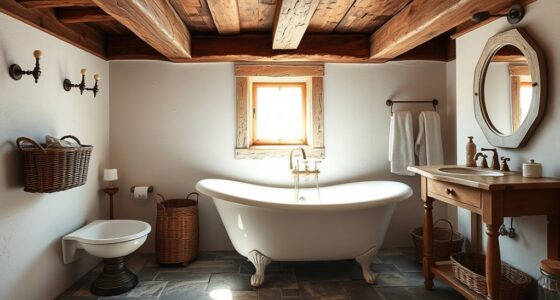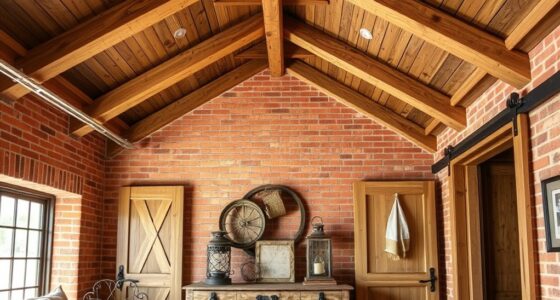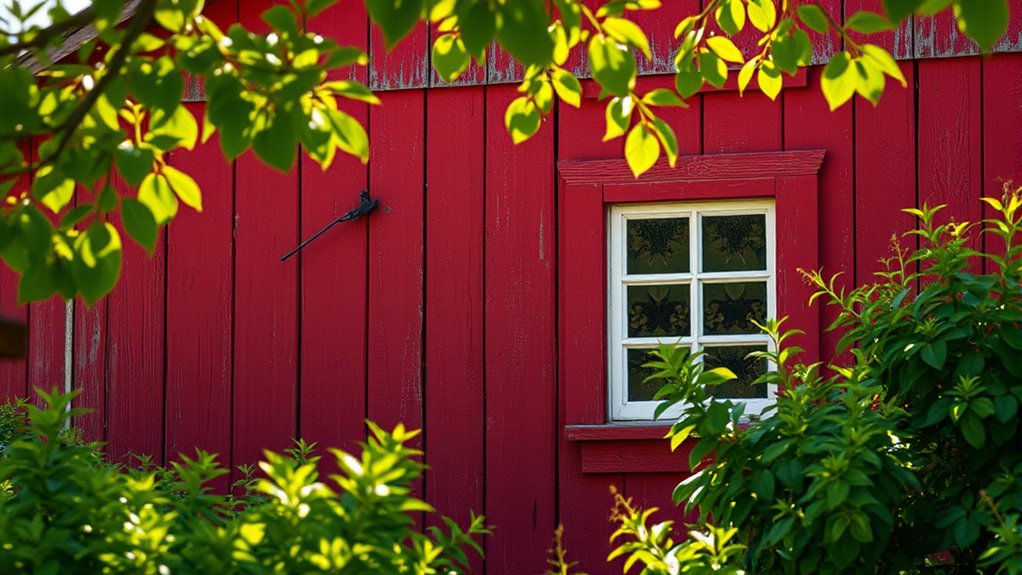

Rustic tiny barn conversions turn old rural barns into cozy, charming homes that blend authentic character with modern comfort. You’ll maximize space using vintage decor, reclaimed materials, and clever storage ideas while preserving original features like weathered wood and exposed beams. This approach creates a warm, inviting atmosphere rooted in rustic charm and practicality. If you want to discover how to add vintage touches and make the most of small spaces, keep exploring these inspiring conversions.
Key Takeaways
- Maximize small spaces by preserving original architectural features like exposed beams and weathered wood.
- Incorporate vintage decor and reclaimed materials to enhance rustic charm and nostalgic appeal.
- Utilize multi-purpose furniture and open shelving to optimize storage and functionality.
- Maintain the barn’s historic authenticity while blending modern comforts for a cozy living experience.
- Create a warm, inviting atmosphere that celebrates rustic simplicity and timeless character.
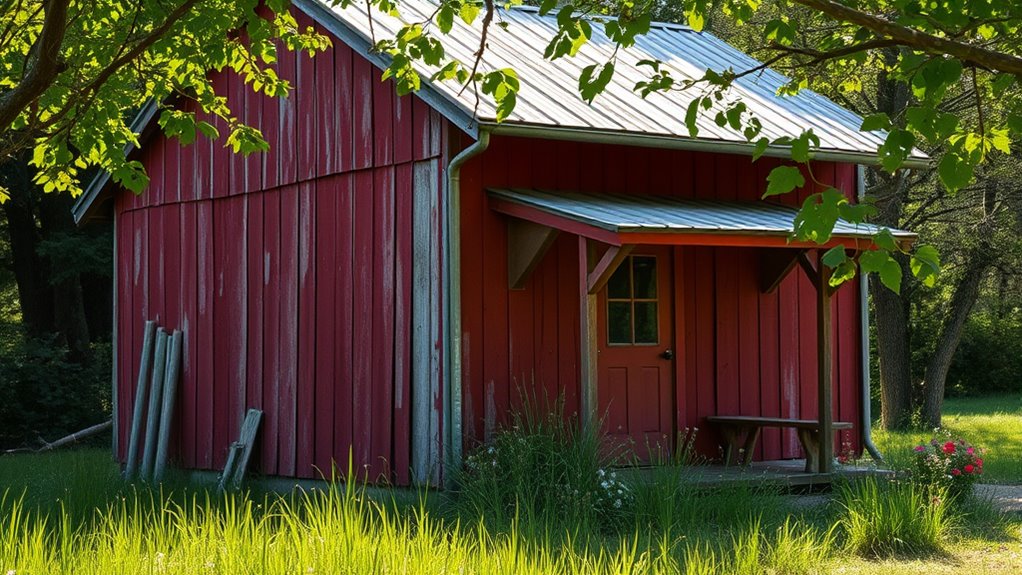
If you’re looking to maximize space and embrace a charming, rustic aesthetic, tiny barn conversions offer a perfect solution. These conversions celebrate barn preservation, transforming old structures into cozy, functional homes that retain their historic character. The beauty of barn preservation lies in maintaining the original architecture, like exposed beams, weathered wood, and rustic accents, which create an authentic and inviting atmosphere. When you step inside a tiny barn conversion, you’re greeted by the charm of vintage decor that complements the aged textures and timeless appeal of the space. Vintage furniture, antique fixtures, and reclaimed materials work together to craft a warm, nostalgic feel that’s hard to replicate in modern construction.
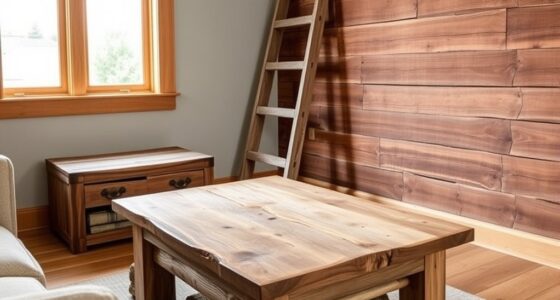
Designing a tiny barn conversion with vintage decor isn’t just about aesthetics; it’s about honoring the history embedded within the walls. You’ll find that incorporating vintage pieces not only enhances the rustic charm but also adds a personalized touch to your living space. Think of a repurposed wooden ladder as a bookshelf or an antique trunk as a coffee table—these elements bring character and story to your home. When selecting decor, focus on items that echo the barn’s original purpose, like galvanized metal accents, wrought iron fixtures, or vintage lighting that casts a warm glow. These choices make your tiny barn feel authentic and rooted in history, blending practicality with timeless beauty. Additionally, paying attention to the original architectural features can elevate the overall design and preserve the structure’s unique character.
Incorporate vintage pieces like wooden ladders and antique trunks to add charm and history to your tiny barn conversion.
Maximizing your small space involves clever storage solutions that don’t compromise the vintage aesthetic. Use open shelving made from reclaimed wood to display your favorite decor and keep essentials within reach. Fold-away furniture or multi-purpose pieces help optimize every square inch without cluttering the space. The key is to keep the design simple yet impactful, allowing the barn’s inherent charm to shine through. With thoughtful barn preservation, you can create a cozy retreat that’s both functional and beautiful, filled with vintage decor that tells a story of craftsmanship and history.
Living in a tiny barn conversion isn’t just about saving space; it’s about embracing a lifestyle rooted in simplicity and tradition. You’ll enjoy the unique blend of rustic authenticity and modern comfort, all within a structure that’s been carefully preserved. Vintage decor ties everything together, making your small space feel warm, inviting, and full of character. Whether you’re relaxing by a vintage-inspired fireplace or enjoying the natural light streaming through weathered windows, your tiny barn home becomes a true sanctuary where history, charm, and practicality coexist effortlessly.

Farmhouse Wall Art Set of 2, Vintage Rustic Barn Landscape Canvas Prints
- Set Includes Two Canvas Prints: Vintage barn landscapes and rural scenery
- Rustic Countryside Themes: Old barns, country roads, open fields
- Versatile Farmhouse Decor: Suitable for living rooms, bedrooms, offices
As an affiliate, we earn on qualifying purchases.
As an affiliate, we earn on qualifying purchases.
Frequently Asked Questions
What Permits Are Required for Tiny Barn Conversions?
You need to check local zoning regulations and building codes before converting a tiny barn. Typically, you’ll require permits for construction, electrical, and plumbing work. Contact your city or county planning office to determine specific requirements, restrictions, and if a special permit is necessary. Failing to obtain proper permits can lead to fines or having to undo your conversion, so verify all paperwork is in order before starting your project.
How Much Does a Barn Conversion Typically Cost?
Imagine turning a simple barn into your dream space—costs typically range from $20,000 to $50,000. Your budget planning should include a detailed cost breakdown covering permits, foundation work, insulation, utilities, and interior finishes. Factors like size, location, and customization affect the price. By understanding these elements, you can better manage expenses and create a cozy, rustic retreat that fits your financial plan and vision perfectly.
What Are the Best Insulation Options for Barns?
You should consider using spray foam, fiberglass batts, or rigid foam boards for barn insulation, as these materials offer excellent energy efficiency. Spray foam provides a seamless barrier against drafts, while fiberglass batts are cost-effective and easy to install. Rigid foam boards add good insulation value and help maintain consistent indoor temperatures. Selecting the right insulation materials guarantees your barn stays warm in winter and cool in summer, saving you energy and money.
Can a Barn Be Converted Into a Full-Time Residence?
Yes, you can convert a barn into a full-time residence, but you’ll need to take into account local building codes and zoning laws first. You can incorporate barn decor to maintain its rustic charm and highlight its historical significance. Make certain proper insulation, electrical work, and plumbing are in place for comfort and safety. With thoughtful planning, your converted barn can become a cozy, charming home that preserves its original character.
How Long Does a Typical Barn Conversion Process Take?
A typical barn conversion takes about 6 to 12 months, depending on the barn design and extent of historic preservation needed. You’ll start with planning and permits, then move into renovations that respect the barn’s historic features while adding modern comforts. Delays can happen if permits are slow or if structural issues arise. Staying organized and working with experienced contractors helps guarantee your project stays on track.
Conclusion
So, if you’re worried about sacrificing comfort for charm, think again. Rustic tiny barn conversions blend cozy simplicity with modern touches, giving you a unique home that’s both functional and full of character. You might fear it’s too small, but with smart space use and thoughtful design, you’ll find it perfect for relaxing and entertaining. Embrace the charm, and discover a lifestyle that’s simple, stylish, and truly your own.