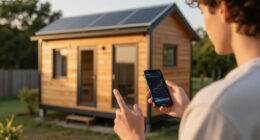
To live off-grid in a tiny house, start by installing solar panels to generate your power and store excess energy in batteries. Collect rainwater through gutters and use filtration systems for safe drinking water. Reuse greywater for irrigation and optimize your water catchment. Keep your renewable systems maintained for reliability. With thoughtful planning, you can enjoy independence, sustainability, and simplicity—if you want to discover more tips, you’ll find useful details ahead.
Key Takeaways
- Install and properly size solar panel systems to generate renewable electricity for your tiny house.
- Collect rainwater using gutters and tanks, then filter and purify for safe, sustainable water supply.
- Incorporate greywater recycling to reuse wastewater for irrigation, reducing overall water consumption.
- Regularly maintain solar and water systems to ensure efficiency, longevity, and water quality.
- Plan your off-grid setup with intentionality, focusing on sustainability, independence, and minimal environmental impact.
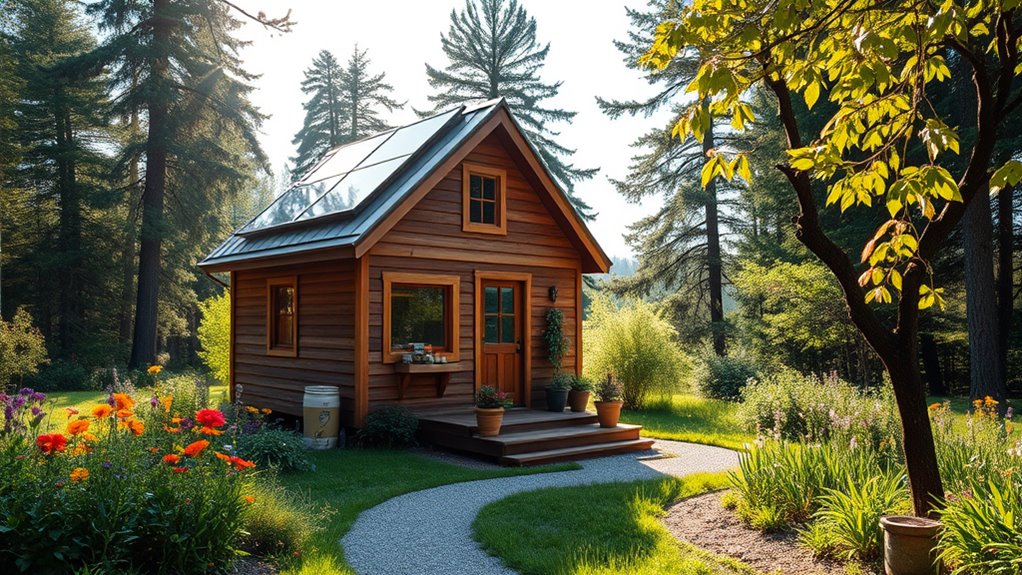
Living off-grid in a tiny house offers a lifestyle that emphasizes independence and simplicity. You get to escape the hustle of city life and create a self-sufficient environment tailored to your needs. The key is to harness natural resources efficiently, primarily through solar power and water harvesting systems. These elements form the backbone of your off-grid setup, ensuring you have energy and water without relying on traditional utilities.
Embrace independence by harnessing natural resources like solar power and water harvesting for a self-sufficient tiny house lifestyle.
Solar power is your best friend when living off-grid. Installing solar panels on your tiny house’s roof is a practical way to generate electricity. You’ll want to consider your energy needs carefully to determine the right size and number of panels. Once set up, solar power provides a clean, renewable source of energy, reducing your reliance on fossil fuels. With a properly installed system, you can power LED lights, charge devices, run small appliances, and even operate a refrigerator. Incorporating a battery storage system allows you to store excess energy for cloudy days or nighttime use, giving you a consistent power supply. Keep in mind that regular maintenance of your solar equipment guarantees maximum performance and longevity. Additionally, understanding the role of contrast ratio in projectors can help you create an optimal viewing environment when enjoying your entertainment setup.
Water harvesting is equally vital for off-grid living. You can collect rainwater using gutters and storage tanks, which provides a sustainable water source for drinking, cooking, and washing. Installing a filtration and purification system guarantees the water is safe and clean. Water harvesting reduces your dependence on external water sources and minimizes the impact on the environment. To maximize efficiency, you should position your rainwater catchment system in a location where it can capture the most runoff, especially during rainy seasons. Regularly inspecting and cleaning your gutters and filters prevents blockages and contamination, safeguarding your water quality. In addition to rainwater harvesting, you might consider installing greywater recycling systems to reuse water from sinks and showers for irrigation, further reducing your water consumption.
Living off-grid in a tiny house requires planning and intentionality, but it’s entirely achievable when you leverage renewable resources like solar power and water harvesting. These systems not only help you live sustainably but also give you peace of mind, knowing you’re less vulnerable to utility outages or rising costs. By investing in the right technology and maintaining it properly, you’ll create a resilient, eco-friendly home that aligns with your desire for independence and simplicity. With these tools at your disposal, you’ll confidently embrace a minimalist lifestyle that’s both rewarding and environmentally responsible.

Renogy 100W 12V Solar Panel Starter Kit, 100 Watt Monocrystalline Solar Panel, 30A LCD PWM Charger Controller, Adaptor Kit, Tray Cables, Z Brackets for RV, Camper, and Other Off Grid Applications
- High Efficiency Solar Panel: 22.5% cell efficiency for optimal power
- Reliable Power Generation: Average 500Wh daily output (sunlight dependent)
- Comprehensive Service Plan: 10-year panel, 2-year controller, 25-year output warranty
As an affiliate, we earn on qualifying purchases.
As an affiliate, we earn on qualifying purchases.
Frequently Asked Questions
How Do I Secure Reliable Internet Off-Grid?
To secure reliable internet off-grid, you should consider satellite internet for consistent coverage in remote areas. Additionally, cellular hotspots can provide flexible, high-speed access when cellular signals are strong. Combining both options guarantees connectivity even if one service drops. Invest in a good antenna and signal booster to maximize your signal strength. Regularly check coverage maps and test your setup to ensure reliable internet for your off-grid tiny house lifestyle.
What Are the Best Insurance Options for Tiny Off-Grid Homes?
Did you know that 60% of tiny house owners opt for specialized insurance? When choosing insurance options, look for policies that specifically cover tiny house insurance and off-grid living risks. Many providers now offer tailored plans that protect your structure, belongings, and liability. Comparing coverage and premiums guarantees you receive the best fit for your off-grid tiny home, giving you peace of mind as you enjoy your minimalist lifestyle.
How Do I Handle Waste Disposal Sustainably?
To handle waste disposal sustainably, you should install composting toilets to reduce water use and safely decompose waste. Additionally, practice greywater recycling by filtering and reusing water from sinks and showers for irrigation or cleaning. These methods minimize environmental impact, conserve resources, and keep your off-grid tiny house eco-friendly. Regular maintenance of composting systems and proper greywater management guarantee you stay sustainable and compliant with local regulations.
Can I Run a Small Business From My Tiny House?
Yes, you can run a small business from your tiny house, especially if you focus on off-grid entrepreneurship. Set up a dedicated workspace with reliable internet and power sources like solar panels. Use your tiny house as your base for a niche tiny house business, such as craft making, consulting, or online sales. This way, you maximize your off-grid lifestyle while building a successful tiny house business.
What Legal Restrictions Exist for Tiny Houses in Rural Areas?
You need to check local zoning regulations and building codes before placing your tiny house in a rural area. Some regions restrict tiny houses on certain land parcels or require specific permits. Building codes may dictate foundation types, minimum size, or utility hookups. It’s your responsibility to research and adhere to these rules to avoid legal issues. Always contact local authorities to ensure your tiny house project aligns with all legal restrictions.
Conclusion
Living off-grid in a tiny house might seem like freedom, but don’t forget—it’s also a full-time job. You’ll chase sunlight for power, hunt for water, and embrace solitude, all while trimming your belongings to fit your small space. So, enjoy the irony: in chasing simplicity, you’ll find you’ve signed up for a surprisingly busy life. But hey, at least you won’t have to argue over who gets the biggest closet anymore.