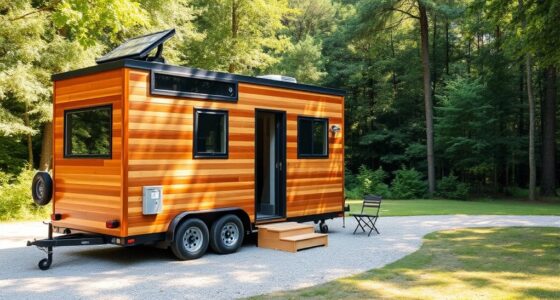
Whether you rent or own a tiny house, you need specialized insurance that covers its structure, belongings, and potential liabilities. Mobile home policies or tailored coverage options are often best, especially for tiny houses on wheels or foundations. Liability protection is especially important if you have guests or share your space. To guarantee you’re fully protected, explore policies designed specifically for tiny homes and discover tips for choosing the right coverage—continue to find out more.
Key Takeaways
- Insurance options vary for tiny house owners versus renters, including mobile home policies or renters coverage.
- Owners need coverage for the structure, belongings, and liability, especially on wheels or foundations.
- Renters should consider renters insurance that extends to tiny dwellings used as primary or seasonal homes.
- Specialized tiny house policies or endorsements can provide tailored coverage for unique structures and uses.
- Comparing policies designed specifically for tiny house living ensures comprehensive protection against damages, theft, and liability.
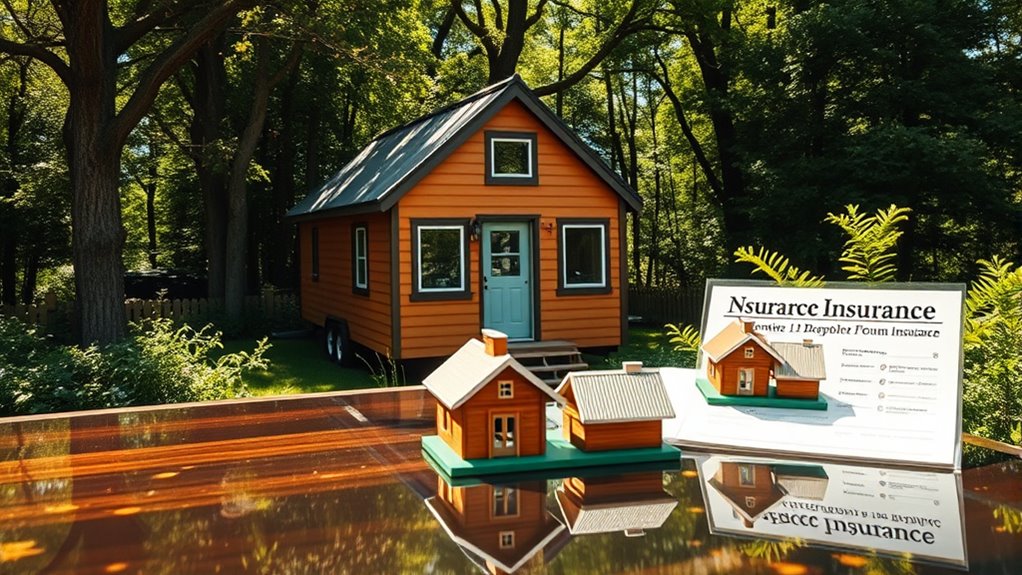
If you’ve recently downsized to a tiny house, securing the right insurance is vital to protect your investment and peace of mind. Whether your tiny home is on wheels or built on a foundation, understanding how insurance works for this unique living situation is key. Many tiny house owners use their property as a mobile home, which means you need coverage that suits that specific type of dwelling. Mobile home insurance is designed to protect against damages, theft, and liability, making it a practical choice if your tiny house is on wheels. This coverage often includes protection for the structure itself, your personal belongings, and liability coverage, which is essential if someone gets injured on your property or if you cause damage to someone else’s property.
Liability coverage is especially important because tiny houses are often in close proximity to neighbors or in shared communities. This part of your policy helps cover legal and medical expenses if someone sustains injuries or experiences property damage caused by you or your tiny house. Without adequate liability coverage, you could face significant out-of-pocket costs that could jeopardize your financial stability. Even if your tiny house isn’t on wheels, you still need protection from potential liabilities. Some homeowners’ policies include liability coverage for tiny houses built on foundations, but in many cases, you might need a specialized policy or an endorsement to guarantee full coverage.
Since tiny houses are often used as primary residences, vacation homes, or rental units, your insurance needs can vary. As a renter, you should look into renters insurance that extends to your tiny dwelling, covering personal property and liability. If you own your tiny house, investing in a broad policy that includes mobile home coverage and liability protection becomes even more vital. Insurance providers recognize that tiny houses are different from traditional homes, so you should shop around and compare policies tailored to tiny house living. Additionally, understanding the role of specialized policies can help ensure you get comprehensive coverage suited to your specific situation.
Life Insurance Policy Seller Salesagent Insurance Agent T-Shirt
- Message on Shirt: Educate and protect families
- Ideal For: Insurance agents and brokers
- Design Features: Lightweight, classic fit, durable
As an affiliate, we earn on qualifying purchases.
As an affiliate, we earn on qualifying purchases.
Frequently Asked Questions
Do Tiny House Insurance Policies Cover Personal Belongings?
Yes, tiny house insurance policies typically cover your personal property, but coverage limits vary. You should review your policy to understand how much protection you have for belongings like furniture, electronics, or clothing. If you have valuable items, consider increasing your coverage limits or adding an endorsement. This way, you guarantee your personal property is adequately protected against theft, damage, or loss.
Are There Specific Discounts Available for Tiny House Owners?
If you own a tiny house, you might qualify for tiny house discounts that can lead to insurance savings. For example, a tiny house owner in Oregon secured a 10% discount by bundling their coverage. Insurance providers often offer discounts for safety features, all-encompassing coverage, or bundling policies. Check with your insurer to see if you’re eligible for these tiny house discounts, helping you save money while staying protected.
How Does Tiny House Insurance Differ From Traditional Home Insurance?
Tiny house insurance differs from traditional home insurance because it specifically covers tiny house construction and portability issues. You might find the insurance claim process simpler due to its specialized policies, which focus on unique risks like trailer damage or custom builds. Unlike traditional policies, tiny house coverage often considers whether your tiny home is stationary or mobile, ensuring you’re protected regardless of how you use or move your tiny house.
Is Tiny House Insurance Necessary if Parked on Private Property?
Your tiny house parked on private property isn’t invincible—think of it as a tiny fortress needing protection. Even if you’re just RV parking, insurance requirements can still apply, and tiny house insurance offers essential coverage for damages or theft. Don’t wait for a disaster to strike; securing insurance is a smart move that shields your home, whether on the road or parked, giving you peace of mind every day.
Can Tiny House Insurance Be Transferred if I Move Locations?
Yes, your tiny house insurance can often be transferred when you move locations. You should contact your insurer to discuss moving policies and guarantee your coverage transfer is seamless. Many providers allow policy adjustments or transfers to new sites, but it’s essential to verify specific details with your insurer. This way, you keep your coverage intact and avoid gaps, no matter where your tiny house is parked.
Conclusion
Protecting your tiny home is essential, whether you’re renting or owning. Did you know that nearly 60% of tiny house owners insure their property? This shows a growing awareness of the importance of coverage. By choosing the right insurance, you safeguard your investment and peace of mind. Don’t wait until it’s too late—get covered today and enjoy your tiny home adventures with confidence, knowing you’re protected against life’s unexpected surprises.