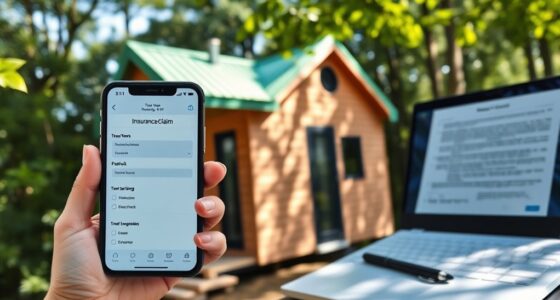

Understanding tiny house insurance coverage options helps you protect your mobile or fixed structure, personal belongings, liability, and legal costs. Mobile home insurance specifically covers tiny houses on wheels, offering extensive protection tailored to their unique needs. You can choose policies that include additional coverage for fixtures or appliances. Knowing these options guarantees you’re financially secure if accidents or damages happen. Keep exploring to learn how to select the best coverage for your tiny home situation.

Get compact home essentials delivered free — and shop member deals
- Fast, free delivery on millions of items
- Access to Prime Big Deal Days deals on October 6–7
- Prime Video, Amazon Music and more included
Key Takeaways
- Mobile home insurance for tiny houses covers structure, personal belongings, liability, and legal expenses, tailored for mobile or stationary setups.
- Liability protection is essential to safeguard against injuries or damages caused to others or neighboring properties.
- Policies vary based on whether the tiny house is on wheels or fixed, with specific requirements for each setup.
- Optional add-ons can include coverage for fixtures, appliances, or custom modifications, enhancing protection.
- Choose insurers specializing in mobile home coverage to ensure comprehensive protection and accurate policy details.

If you’re living in or planning to buy a tiny house, understanding your insurance options is essential. One of the key considerations is whether your tiny house qualifies as a mobile home, which can considerably influence your coverage choices. A mobile home insurance policy is designed specifically for structures that are built on wheels or can be moved easily. This type of policy typically provides coverage for the structure itself, personal belongings, and liability protection. Liability protection is indispensable because it shields you from financial responsibility if someone gets injured on your property or if you cause damage to someone else’s property. Since tiny houses are often placed on leased land or in communal settings, having adequate liability coverage can save you from costly legal claims.
When exploring mobile home insurance for your tiny house, you’ll find that many insurers recognize these structures as valuable, insurable property. They often bundle coverage for the structure, personal possessions, and liability into a single policy, making it more straightforward than trying to piece together separate plans. Keep in mind that some standard homeowners’ policies may not cover tiny houses, especially if they’re on wheels, so it’s wise to seek out providers that specifically offer mobile home insurance. This guarantees you’re protected whether your tiny house is stationary or on the move.
Liability protection within your mobile home insurance policy is equally crucial. It covers injuries that happen on your property, such as a visitor slipping or falling, and any damage you might accidentally cause to neighboring properties. For example, if a tree from your tiny house lot falls and damages a neighbor’s fence, liability coverage can help cover the repair costs. Without this protection, you could be responsible for substantial out-of-pocket expenses, which can be financially devastating. Many policies also include coverage for legal expenses if someone sues you over an injury or property damage.
Additionally, consider the specifics of your tiny house’s setup—whether it’s parked permanently or frequently moved. Insurers often have different requirements and premiums depending on how you use your tiny home. If your tiny house is on wheels and considered a mobile home, it’s essential to disclose this to your insurer so you get the right coverage. Some policies also offer optional add-ons, like protection for custom fixtures or appliances, which can be worth considering.
Ultimately, understanding your mobile home insurance options and guaranteeing comprehensive liability protection will give you peace of mind, knowing that your tiny house and your finances are well protected.
Frequently Asked Questions
Do Tiny House Insurance Policies Cover Personal Belongings?
Yes, tiny house insurance policies often cover personal property, but coverage limits vary. You should check your policy to see what personal belongings are included and whether you need additional coverage. Keep in mind that some policies have specific limits on personal property, so you might want to increase your coverage limits for valuable items. Always review your policy details to ensure your personal property is adequately protected.
Are There Specific Coverage Options for Tiny House on Wheels?
Imagine your tiny house on wheels, a cozy retreat that moves with you. Yes, insurers offer specific coverage options for tiny houses on wheels, considering their unique tiny house construction and mobility. These policies often comply with mobile home laws, ensuring your mobile sanctuary is protected against risks like theft, fire, or storms. You can customize your coverage to match your lifestyle, making sure your tiny house stays safe wherever you take it.
How Does Tiny House Insurance Differ From Standard RV Insurance?
Tiny house insurance differs from standard RV insurance mainly in tiny house valuation and insurance premium differences. You’ll find that tiny house policies often consider the actual value of your tiny home, including customizations, which can result in higher or lower premiums than traditional RV coverage. Unlike RV insurance, tiny house policies may also cover more permanent structures, so you should compare options carefully to find the best protection for your unique home.
Can Tiny House Insurance Be Bundled With Other Policies?
They say “don’t put all your eggs in one basket,” but bundling your tiny house insurance with other policies can be wise. You can often get bundling discounts and seamless policy integration, making it easier to manage coverage. Check with your insurer to see if they offer these options, as combining policies might save you money and provide extensive protection for your tiny home and beyond.
What Are the Common Exclusions in Tiny House Insurance Policies?
You should know that common exclusions in tiny house insurance policies often include landlord liabilities and damage from natural disasters. This means your policy might not cover injuries or legal issues related to renting out your tiny house, nor will it automatically protect against earthquakes, floods, or hurricanes. To stay fully protected, consider adding specific riders or coverage for these exclusions, so you’re not caught off guard when an incident occurs.
Conclusion
Now that you understand your tiny house insurance options, you can rest easy knowing you’re protected like a knight guarding his castle. Don’t forget, even in this fast-paced, tech-driven world, a solid policy is your trusty steed against unexpected storms. As you set out on this adventure, remember that smart coverage today keeps the dragons of uncertainty at bay tomorrow. So, saddle up and secure your tiny haven—your peace of mind is worth every silver piece.
Fall Picks
fall essentials
As an affiliate, we earn on qualifying purchases.