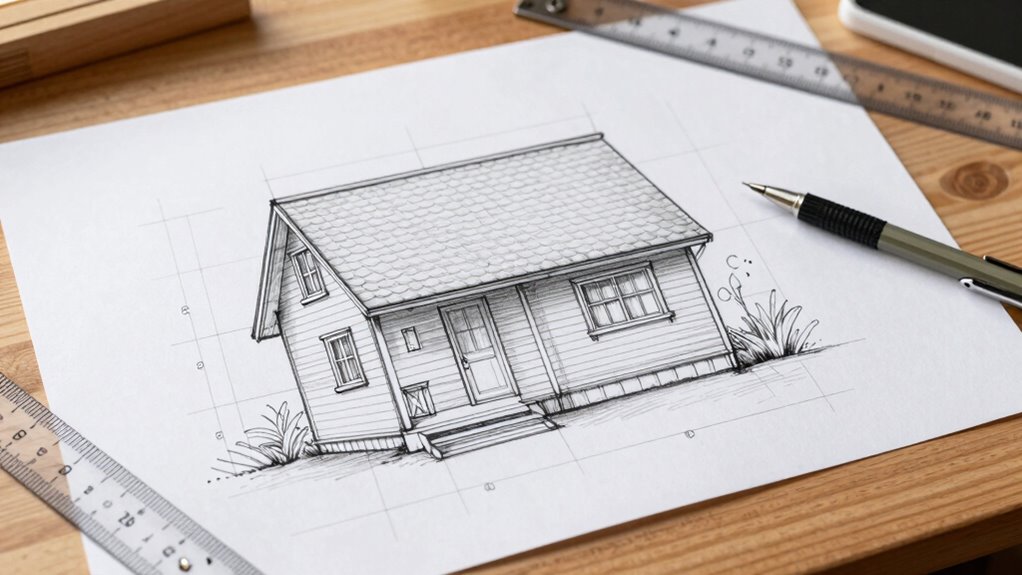

To sketch a tiny house elevation for better planning, start by visualizing its overall shape, proportions, and key features like windows, doors, and roofing. Choose materials early to influence texture and weight in your sketch. Add natural lighting elements such as large windows and skylights, using shading to create depth. Use clean lines and details, like trims and textures, to reflect materials. Regularly review and refine your sketch to guarantee accuracy, coherence, and realism—if you keep going, you’ll master the process entirely.
Key Takeaways
- Start with accurate proportions and overall shape to ensure a realistic representation of the tiny house.
- Choose and incorporate materials early to convey texture, weight, and visual impact.
- Use shading and lighting angles to add depth, shadows, and realism to the elevation.
- Draw clean, precise lines and add details like windows, trims, and textures for clarity.
- Regularly review and refine sketches from multiple angles to improve accuracy and coherence.
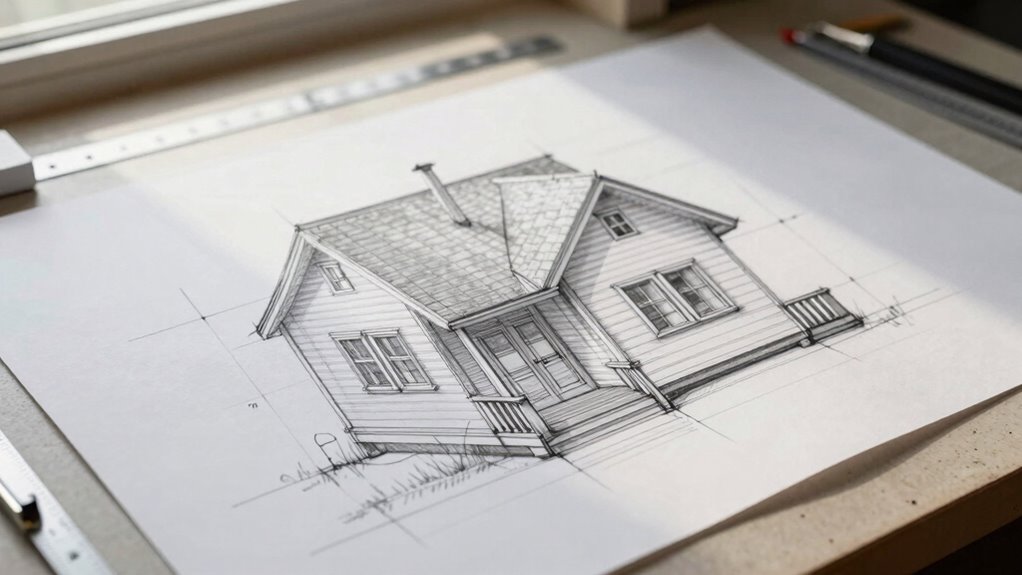
Sketching a tiny house elevation might seem challenging at first, but with a clear approach, it becomes an achievable task. Your first step is to focus on understanding the overall structure and proportions of the house. Visualize the shape, size, and key features, such as windows, doors, and roofing. This mental picture helps you translate the design onto paper accurately. As you begin, pay close attention to material selection, which influences the visual weight and texture of your elevation. Think about how different materials, like wood siding, metal panels, or brick, will look in real life. Incorporating these details into your sketch helps you communicate your design intent more effectively, making it easier to plan and make adjustments later. Considering material selection early on allows you to better represent the visual impact of your tiny house.
Lighting design is another essential element to consider early in your sketching process. It affects both the aesthetic appeal and functionality of your tiny house. Decide where natural light will enter, such as through large windows or skylights, and how this will impact the building’s appearance. By shading areas that receive more light or casting shadows, you can add depth and realism to your elevation. Keep in mind that good lighting can highlight architectural features and make your tiny house look inviting. Use your sketch to experiment with different lighting angles and intensities, which will help you visualize how your tiny house will look at various times of the day. Paying attention to cabling solutions can also influence the placement of lighting fixtures and electrical components, ensuring a cohesive design. Additionally, understanding visual perception can help you create more realistic and appealing representations of your elevation.
When sketching, maintain a clean and precise line work to guarantee your elevation is easy to interpret. Use light pencil strokes for initial outlines, then gradually add details such as window frames, trims, and textures that reflect your material choices. Pay attention to the roofline and how it interacts with the walls, especially if you’re working with mixed materials. Incorporating scale by including human figures or furniture, which will give a sense of proportion and usability. Remember, your goal is to create a clear and detailed representation that guides your planning and construction process. Regularly reviewing your sketch from different perspectives helps ensure accuracy and coherence, leading to a more refined and realistic elevation.
tiny house elevation sketching kit
As an affiliate, we earn on qualifying purchases.
As an affiliate, we earn on qualifying purchases.
Frequently Asked Questions
What Tools Are Best for Sketching Tiny House Elevations?
You should use tools like pencils, fineliner pens, and rulers for precise sketching. Digital tools like tablets with styluses can enhance your work with decorative shading and color application, making your tiny house elevations more detailed and visually appealing. Experiment with shading techniques to add depth, and use color to highlight different materials or design features. These tools help you create clear, professional elevations for better planning and presentation.
How Do I Choose the Right Scale for My Sketch?
You should choose a scale that balances detail with convenience, typically 1/4″ = 1′-0″ or 1/8″ = 1′-0″. Consider the size of your paper and the level of detail needed for your tiny house elevation. Proper scale selection guarantees proportion accuracy, allowing you to accurately represent features without clutter. Adjust your scale based on your project’s complexity and the level of detail you want to communicate.
What Materials Should I Use for Detailed Elevation Drawings?
You should use quality materials like tracing paper or vellum for detailed elevation drawings, as they allow precision and easy corrections. Pencils with different hardness levels help with shading and line weight, enhancing drawing techniques. Fine liners or ink pens add crisp detail, while rulers and scales ensure accuracy. Consider digital tools if you favor, as they offer versatility and easy adjustments, making your elevation sketches more professional and detailed.
How Can I Incorporate Sustainable Design Features Into My Elevation?
Imagine you’re a modern Leonardo, blending innovation with tradition. To incorporate sustainable features, focus on passive design principles that optimize natural light and airflow, reducing energy needs. Use renewable materials like reclaimed wood or recycled metal in your elevation details, highlighting eco-friendly choices. Incorporate green roofs or solar panels visually into your sketches to emphasize sustainability, making your tiny house not just stylish but also environmentally responsible.
What Are Common Mistakes to Avoid When Sketching Elevations?
When sketching elevations, avoid neglecting landscape integration, which can make your design look disconnected. Steer clear of poor color selection that clashes or doesn’t complement the surroundings; instead, choose harmonious hues. Also, don’t ignore proportion details, as they affect overall balance. Keep your lines clean, and regularly step back to evaluate how well your elevation blends with the environment. These mistakes can compromise both aesthetic appeal and functional planning.
Conclusion
By mastering the art of sketching a tiny house elevation, you reveal clarity, build confidence, and ignite creativity. Each line you draw brings your vision closer to reality, each detail adds depth to your dream, and every perspective sharpens your understanding. Keep practicing, keep refining, and keep believing in your design. Because with every sketch, you’re not just planning a tiny house—you’re shaping a space where memories will grow, comfort will reside, and your future will unfold.