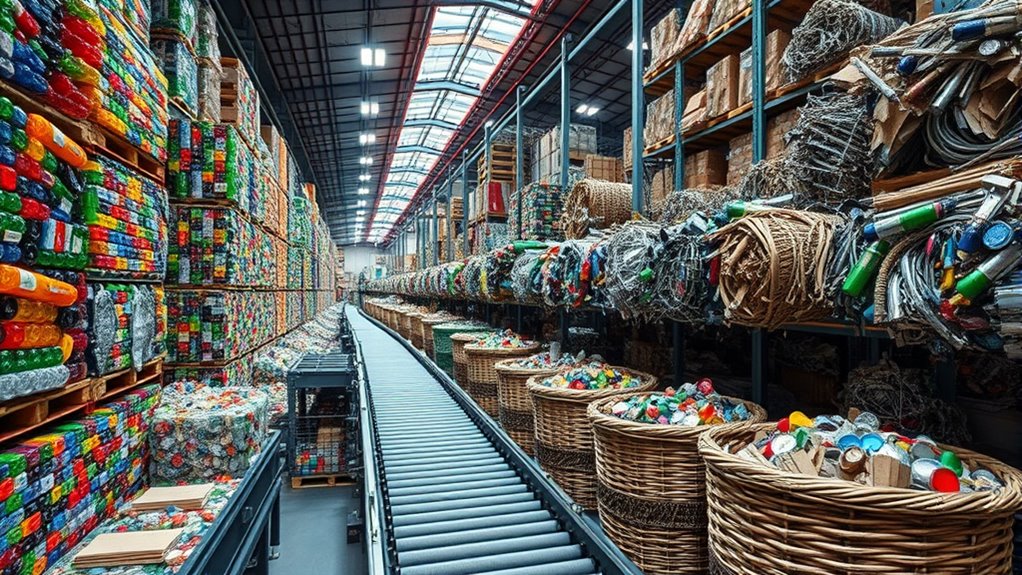

A recycled materials sourcing network is key to creating sustainable and responsible supply chains. It helps you find reliable partners who prioritize environmental standards and ethical practices, ensuring quality recycled content. By streamlining procurement, improving traceability, and fostering transparency, you can reduce costs, waste, and environmental impact. Building strong relationships and leveraging innovative technologies strengthen your supply chain’s resilience. Keep exploring to discover how developing these networks benefits your organization and the environment.
Key Takeaways
- Establish reliable partnerships with suppliers committed to sustainable and ethical sourcing practices.
- Utilize advanced tracking technology like blockchain to ensure material traceability and transparency.
- Continuously seek innovative sources of recycled materials to expand and strengthen supply networks.
- Collaborate with industry groups and certification bodies to align with best practices and standards.
- Prioritize transparency and accountability to build stakeholder and consumer trust in the supply chain.
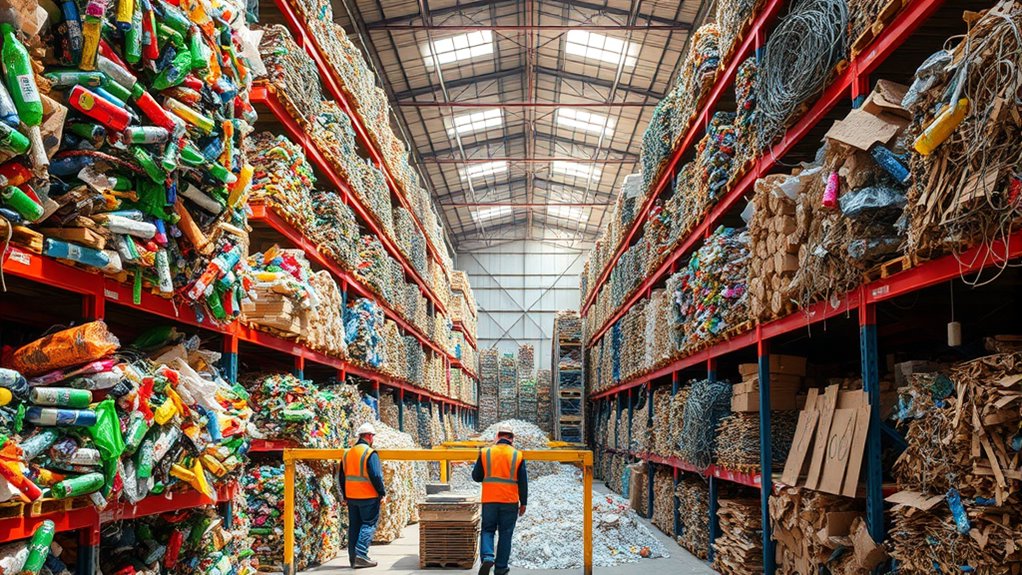
Recycled materials sourcing networks are fundamental for promoting sustainable practices and reducing waste in various industries. When you tap into these networks, you’re not just finding eco-friendly materials—you’re actively contributing to a more responsible and resilient supply chain. By integrating recycled materials, you help minimize the environmental impact of production processes while also aligning with consumer demand for ethically produced goods. The foundation of a successful recycled materials sourcing network lies in supply chain optimization. This means streamlining procurement processes, improving logistics, and ensuring that every link in the chain is efficient and transparent. You want to establish reliable partnerships with suppliers who prioritize quality and sustainability, which ultimately reduces delays and lowers costs. This optimization also involves tracking materials from collection to end use, ensuring traceability and accountability at every stage. When you focus on supply chain optimization, you minimize waste, reduce energy consumption, and prevent overproduction—all indispensable components of sustainable manufacturing. Incorporating traceability systems can significantly enhance transparency and trust within your supply chain.
Streamlining procurement and logistics enhances transparency and reduces waste in recycled materials sourcing networks.
Ethical sourcing plays a pivotal role in these networks, too. It’s not enough to simply use recycled materials; you need to guarantee that those materials come from sources that uphold fair labor practices and environmental standards. When you choose suppliers committed to ethical sourcing, you support communities and workers while reinforcing your brand’s integrity. This approach encourages transparency and fosters trust with consumers who increasingly scrutinize the origins of the products they purchase. Ethical sourcing also involves vetting suppliers for compliance with environmental regulations and social responsibility standards. By doing so, you’re not only promoting a sustainable supply chain but also mitigating risks associated with sourcing from unverified or unethical sources.
Building a recycled materials sourcing network requires a proactive approach. You should continuously seek new, innovative sources of recycled content and maintain strong relationships with trusted partners. Leveraging technology, such as blockchain or supply chain management software, can enhance traceability and accountability, making it easier to verify the origins of recycled materials. Furthermore, collaborating with industry groups or certification bodies can help you stay aligned with best practices and standards for sustainability and ethics. As you develop these networks, remember that transparency and accountability are key. They build confidence among stakeholders and consumers, reinforcing your commitment to responsible sourcing.
In essence, effective recycled materials sourcing networks blend supply chain optimization with a deep commitment to ethical sourcing. They allow you to create a more sustainable, efficient, and trustworthy supply chain—benefiting your business, your customers, and the planet. By prioritizing these elements, you position yourself as a leader in responsible manufacturing and contribute to a circular economy that values reuse and regeneration over waste.

Business Source 3-Ring Plain Index Divider – Set of 5 Tabs – White ( Package May vary )
Set of 5 tabs
As an affiliate, we earn on qualifying purchases.
As an affiliate, we earn on qualifying purchases.
Frequently Asked Questions
How Do Sourcing Networks Ensure the Quality of Recycled Materials?
You guarantee the quality of recycled materials through rigorous quality assurance processes and supplier verification. You assess suppliers by checking their standards, certifications, and track record, making sure they meet your quality criteria. Regular audits and testing confirm the materials’ integrity, consistency, and safety. By maintaining strong relationships and clear communication, you keep quality standards high, ensuring the recycled materials you source are reliable and suitable for your needs.
What Are the Main Challenges in Establishing Sourcing Networks?
Ever wonder what makes establishing sourcing networks tough? You face major challenges like supplier coordination, where aligning multiple providers can be complex. Logistical hurdles also arise, such as transportation delays and inconsistent supply chains. These issues hinder smooth operations and risk quality. Do you have strategies to overcome these obstacles? Building strong relationships, streamlining logistics, and maintaining clear communication help you navigate these challenges effectively and create reliable sourcing networks.
How Do Recycling Standards Vary Across Different Regions?
You’ll find that recycling standards vary widely across regions due to differing regional regulations and certification discrepancies. Some areas have strict rules, requiring specific certifications, while others have more lenient standards. This inconsistency can make it challenging for you to guarantee recycled materials meet global benchmarks. To navigate this, you’ll need to stay informed about regional regulations and verify certifications carefully, ensuring your sourcing aligns with international sustainability and quality standards.
What Role Do Technology Platforms Play in Sourcing Networks?
Technology platforms play a vital role in sourcing networks by enhancing digital traceability, allowing you to track recycled materials throughout their journey. They streamline supplier verification, ensuring you’re working with reliable partners. These platforms enable real-time data sharing and transparency, which helps you make informed decisions, reduce risks, and improve efficiency. By leveraging such technology, you can build a more sustainable, trustworthy, and organized sourcing network for recycled materials.
How Can Small Businesses Access Recycled Materials Efficiently?
You can access recycled materials efficiently by building strong local supplier relationships, like planting seeds in fertile soil. Visit nearby recycling centers or attend community markets to discover sustainable procurement strategies tailored for small businesses. Use online platforms to connect directly with local vendors, reducing delays and costs. Visualize a steady stream of eco-friendly resources flowing into your business, helping you grow sustainably while making a positive impact on your community.

Blockchain for Supply Chain: Traceability, Compliance, and Trust
As an affiliate, we earn on qualifying purchases.
As an affiliate, we earn on qualifying purchases.
Conclusion
By tapping into recycled materials sourcing networks, you open yourself to a more sustainable and resourceful future. Embracing these connections gently guides you toward environmentally friendly practices without feeling restrictive. With each mindful choice, you contribute to a greener world, turning what might seem like challenges into opportunities for growth. Remember, every small step you take in this network helps craft a more balanced and vibrant planet for generations to come.

KALI LINUX OSINT 2025: Master Open Source Intelligence with High Performance Tools (KALI LINUX & Frameworks USA)
As an affiliate, we earn on qualifying purchases.
As an affiliate, we earn on qualifying purchases.
recycled content procurement platform
As an affiliate, we earn on qualifying purchases.
As an affiliate, we earn on qualifying purchases.