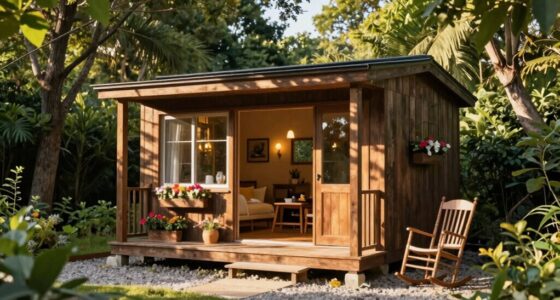

A guide to sustainable tiny architecture helps you design eco-friendly, energy-efficient homes that blend renewable energy, eco-conscious materials, and smart strategies. It teaches you how to optimize solar panels, choose sustainable building supplies, and maximize natural light and insulation. This book balances style with sustainability, showing you how to create small spaces that reduce environmental impact while reflecting your values. Keep exploring to discover more about building greener, smarter tiny homes.

Get compact home essentials delivered free with Prime
- Fast, free delivery on millions of items
- Prime Video, Amazon Music and more included
- Member-only deals all year
Key Takeaways
- Highlights innovative solar integration techniques tailored for tiny home design.
- Recommends sustainable materials like reclaimed wood and natural insulation for eco-friendly construction.
- Provides case studies demonstrating successful application of green building strategies.
- Offers practical guidance on maximizing natural light and energy efficiency in small spaces.
- Emphasizes balancing aesthetic appeal with environmental responsibility in tiny architecture.
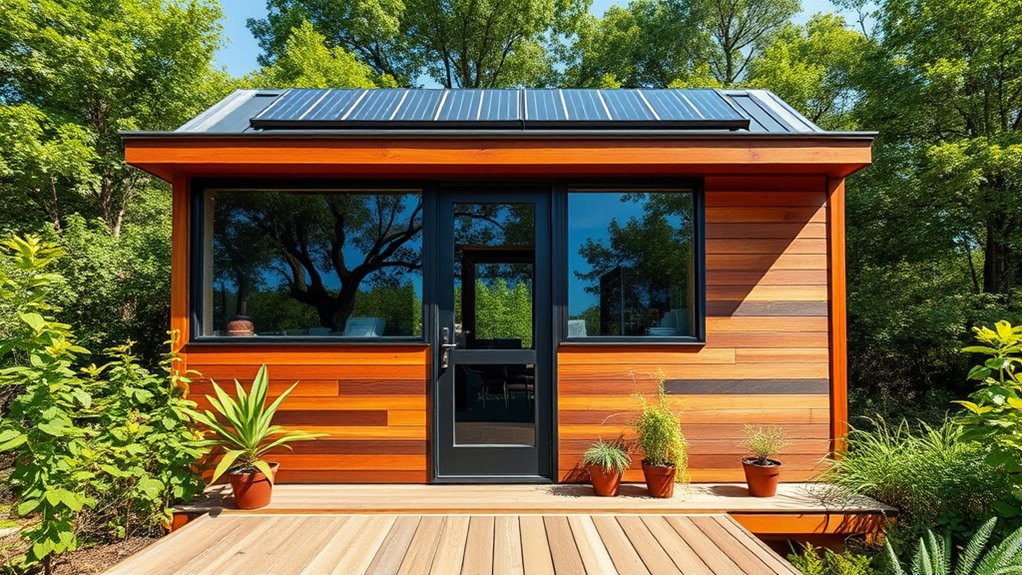
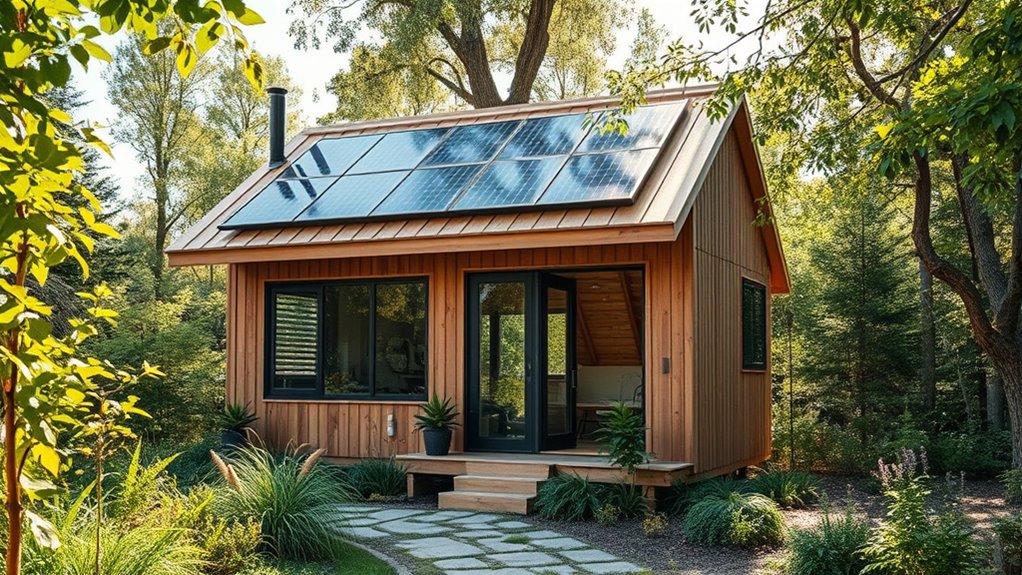
Ever wondered how tiny homes can be both eco-friendly and stylish? The secret lies in thoughtful design choices that prioritize sustainability without sacrificing aesthetics. When exploring sustainable tiny architecture, one key aspect to contemplate is solar design. By integrating solar panels into your tiny home’s roof or exterior, you can harness renewable energy to power your daily needs. This not only reduces your carbon footprint but also offers significant savings on energy costs over time. Modern solar design isn’t just about slapping panels on the roof — it’s about optimizing their placement and orientation to maximize efficiency. Many books on tiny architecture highlight innovative ways to incorporate solar solutions seamlessly into your home’s overall design, ensuring that the technology complements rather than detracts from your home’s style. Incorporating sustainable materials further enhances the eco-friendliness of your tiny home, making it more durable and environmentally responsible.
Equally important is the use of eco friendly materials. When building or renovating a tiny home, choosing sustainable materials means selecting options that have minimal environmental impact. Think reclaimed wood, recycled metal, and low-VOC paints that improve indoor air quality. These materials often lend a rustic, authentic charm to tiny homes, making them cozy yet environmentally responsible. A good guide will show you how to identify high-quality eco friendly materials that are durable, affordable, and easy to source locally. By prioritizing these materials, you can reduce waste during construction and ensure your home remains eco-conscious throughout its lifespan. Many books also emphasize the importance of natural insulation, such as sheep’s wool or cork, which helps keep your tiny space comfortable year-round without relying on energy-intensive heating or cooling systems.
Designing a tiny home with sustainability at the forefront requires balancing functionality and style. You’ll learn how to incorporate solar design elements seamlessly, from skylights that maximize natural light to shading devices that prevent overheating. Simultaneously, selecting eco friendly materials allows you to craft a space that feels warm and inviting while being gentle on the planet. The best guides on tiny architecture provide practical advice on sourcing these materials and integrating renewable energy solutions into your design. They often include real-world examples or case studies that show how tiny homes can be both visually appealing and environmentally responsible. Ultimately, adopting these principles helps you create a home that aligns with your values and contributes positively to the environment, proving that sustainability and style can go hand in hand in the world of tiny architecture.
As an affiliate, we earn on qualifying purchases.
Frequently Asked Questions
Are Sustainable Tiny Homes More Affordable Long-Term?
Yes, sustainable tiny homes are more affordable long-term because they offer significant cost savings through energy efficiency and reduced utility bills. By using eco-friendly materials and efficient systems, you’ll spend less on maintenance and energy costs over time. Plus, their smaller size means lower initial investment and fewer expenses for repairs. Overall, their focus on sustainability makes them a financially smart choice for long-term affordability.
What Are the Biggest Challenges in Tiny House Sustainability?
You face formidable flaws in tiny house sustainability, like faulty fixtures and fleeting finishes. Balancing brilliant material selection with boosting energy efficiency proves tricky, often sacrificing comfort for conservation. You struggle with sourcing sustainable supplies that suit small spaces and ensuring systems operate harmoniously. These hurdles demand diligent design decisions, making it essential to prioritize eco-friendly options, optimize insulation, and choose durable, low-impact materials to overcome sustainability struggles effectively.
Can Tiny Architecture Be Customized for Different Climates?
Yes, you can customize tiny architecture for different climates by incorporating climate-specific design and adaptable building techniques. You’ll want to tailor insulation, window placement, and ventilation to suit hot, cold, or humid environments. By choosing materials and construction methods suited to your location, you guarantee your tiny home remains comfortable and energy-efficient year-round. This personalized approach helps maximize sustainability and comfort, regardless of your climate zone.
How Do Zoning Laws Affect Tiny Sustainable Homes?
Zoning laws and building codes considerably impact your tiny sustainable home plans. Zoning restrictions may limit where you can place your tiny house or require specific setbacks, while building codes ensure safety and standards. You’ll need to research local regulations, possibly obtain permits, and guarantee your design complies. Staying informed and working with local authorities helps you navigate zoning laws smoothly, making your eco-friendly tiny home a reality without legal issues.
Are There Eco-Friendly Materials Specific to Tiny Homes?
Imagine building a tiny home with materials that breathe with you. You’ll find eco-friendly options like recyclable insulation and natural finishes that reduce your carbon footprint. These materials not only support sustainability but also create healthier indoor environments. For example, using cork flooring and reclaimed wood offers durability and beauty. Choosing eco-friendly materials guarantees your tiny home is both sustainable and comfortable, helping you live harmoniously with nature.
Conclusion
By exploring sustainable tiny architecture, you’ll discover that smaller homes can be both eco-friendly and stylish. Many believe tiny spaces sacrifice comfort, but innovative designs prove otherwise. With the right approach, you can minimize your environmental impact while maximizing functionality. Embracing tiny living isn’t just a trend—it’s a conscious choice backed by proven sustainability benefits. So, consider how this movement could transform your life and the planet, one small step at a time.
Halloween Picks
halloween
As an affiliate, we earn on qualifying purchases.