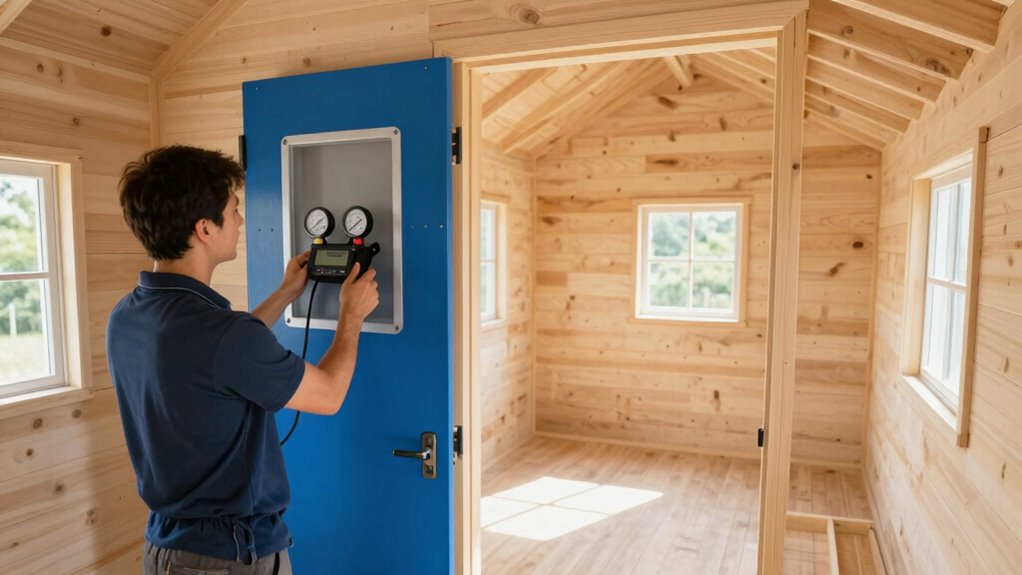
Blower door tests reveal how airtight your tiny house truly is by identifying leaks around windows, doors, and other gaps. They show how small cracks can impact insulation, energy efficiency, and indoor comfort. The results, measured in ACH50, guide you on where to seal gaps and improve insulation. Regular testing helps you stay on top of performance and saves energy costs. Keep exploring to discover more ways these tests can make your tiny home even better.
Key Takeaways
- Blower door tests identify and quantify air leaks that impact insulation and energy efficiency.
- They reveal how small gaps affect indoor temperature stability and HVAC performance.
- Test results, like ACH50, indicate overall airtightness and guide sealing improvements.
- Regular testing helps monitor sealing effectiveness and long-term home performance.
- The tests demonstrate how proper sealing enhances comfort, reduces energy costs, and improves indoor air quality.
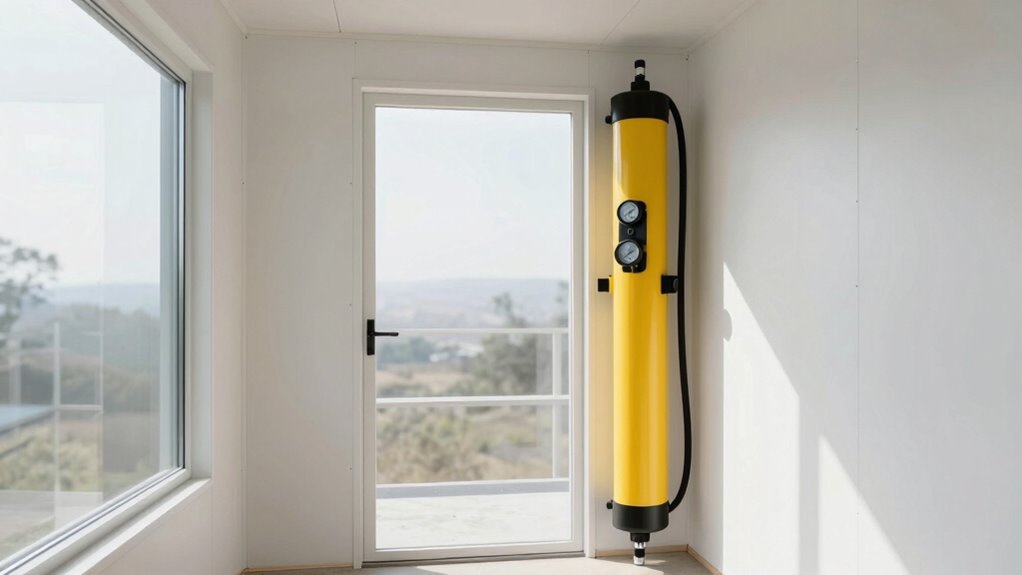
If you’re building or living in a tiny house, ensuring its energy efficiency is essential, and blower door tests are a key tool in that process. These tests help you identify and quantify air leakage, which is crucial because even small gaps can significantly compromise your home’s insulation and heating or cooling efficiency. Tiny houses, by their very nature, have a limited volume to heat or cool, so controlling air movement becomes even more critical. When you perform a blower door test, you essentially simulate a pressure difference across your tiny house’s envelope, revealing how much air sneaks in or escapes through cracks, gaps, and poorly sealed joints.
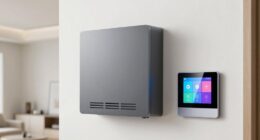
Air leakage is one of the leading causes of energy inefficiency in tiny houses. If your home isn’t airtight, you’ll find it harder to maintain a consistent temperature, leading to higher energy bills and increased wear on your heating and cooling systems. A blower door test pinpoints exactly where these leaks are happening, giving you a clear picture of your home’s airtightness. This insight allows you to focus your sealing efforts on the most problematic areas, whether it’s around windows, doors, or the roofline. Addressing air leakage not only improves energy efficiency but also enhances overall comfort, preventing drafts and cold spots. Properly sealing and insulating your tiny home is essential for maintaining indoor air quality and reducing indoor pollutants. Regularly inspecting and improving your building envelope can further optimize your tiny house’s performance and durability. Additionally, making use of smart home devices can help monitor and control indoor conditions more effectively.
Reducing air leakage improves energy efficiency and comfort by preventing drafts and cold spots.
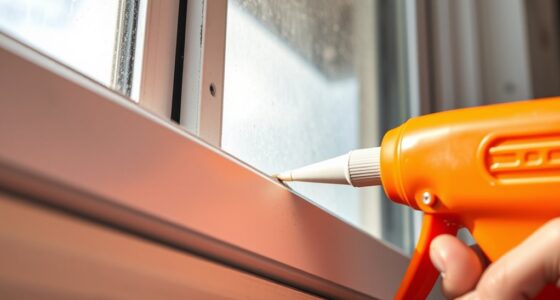
The results from a blower door test are expressed as a measurement called ACH50, which indicates how many air changes occur per hour at a specific pressure. A lower ACH50 number means your tiny house is more airtight, and consequently, more energy-efficient. If your test reveals high ACH50 values, you’ll know it’s time to tighten up your construction or sealing strategies. This might involve adding weatherstripping, caulking gaps, or installing better insulation. The process is straightforward, but its impact on your tiny house’s performance is significant. It ensures that your home stays cozy during winter and cool during summer without constantly overworking your HVAC systems. Additionally, considering the presence of microplastics in dust and other indoor pollutants, improving airtightness can also contribute to a healthier indoor environment. Maintaining proper air barrier systems is essential for long-term durability and energy savings.
In the end, blower door tests serve as a vital diagnostic tool for tiny house owners committed to maximizing energy efficiency. They give you tangible data to guide improvements, helping you create a more comfortable, cost-effective, and sustainable home. By reducing air leakage, you’re not just saving money—you’re also reducing your environmental footprint. Conducting regular blower door tests can keep your tiny house performing at its best, ensuring you enjoy a cozy, energy-efficient living space for years to come.
blower door test kit for tiny houses
As an affiliate, we earn on qualifying purchases.
As an affiliate, we earn on qualifying purchases.
Frequently Asked Questions
How Long Does a Typical Blower Door Test Take for a Tiny House?
A typical blower door test for a tiny house takes about 15 to 30 minutes. During this time, you’ll measure air leakage and assess insulation efficiency. You’ll notice how well the tiny house seals, which affects energy savings and comfort. The test is quick but provides valuable insights into potential drafts and insulation issues, helping you improve the overall energy performance of your tiny home.
What Are the Cost Implications of Blower Door Testing for Tiny Houses?
Blower door testing typically costs between $300 and $500, making it a cost-effective strategy to improve tiny house energy efficiency. You can save money by choosing testing equipment options that suit your budget, such as DIY kits or hiring professionals. Investing in blower door tests helps identify leaks early, reducing long-term energy costs. Overall, these tests are a smart expense to guarantee your tiny house is comfortable and energy-efficient.
Can Blower Door Tests Be Performed During Construction or Only After Completion?
You can perform blower door tests during construction or after completion, depending on your construction timing and testing procedures. Doing the test during construction allows you to identify and fix leaks early, saving time and costs. Once the tiny house is finished, testing confirms overall airtightness. It’s often best to schedule multiple tests at different stages to ensure maximum energy efficiency and comfort throughout the building process.
How Often Should Tiny House Owners Conduct Blower Door Tests?
You should conduct blower door tests periodically, ideally every few years, to guarantee your tiny house maintains peak energy efficiency and ventilation quality. Regular testing helps you catch leaks or drafts early, saving on energy costs and improving comfort. If you notice increased drafts or higher utility bills, it’s a good idea to perform another test. Staying proactive keeps your tiny house energy-efficient and ensures good indoor air quality.
Are There Specific Standards or Certifications for Blower Door Testing in Tiny Houses?
They say, “A chain is only as strong as its weakest link,” and that’s true for tiny house insulation. While there aren’t specific standards or certifications solely for blower door testing in tiny houses, certification requirements typically follow general building codes and standards like RESNET or ACH50. Testing procedures involve precise measurements of air leakage, ensuring your tiny home’s energy efficiency and comfort meet established benchmarks.

Ninsula 33Ft Door Weather Stripping, (1/2in x 1/4in), Strong Adhesive, Sound Proof, Door Insulation, Weatherproof Foam Tape for Doors, Weatherstripping for Doors Frames, Windows
Extra Long Size: You'll get a 33FT door weather stripping (1/2in x 1/4in). Easy to install, no tools…
As an affiliate, we earn on qualifying purchases.
As an affiliate, we earn on qualifying purchases.
Conclusion
Blower door tests reveal the true heart of your tiny house—its warmth, comfort, and efficiency. They’re the silent guardians guarding you against drafts and energy waste. Think of these tests as a lighthouse guiding your home toward perfection, ensuring every breath you take inside is filled with coziness and peace. Don’t overlook their power; they’re your secret weapon for creating a sanctuary that feels just right—because your tiny house deserves nothing less than excellence.

DAP 18425, White Caulk, 10.1 oz, 10.1 Fl Oz, Whites
This product adds a great value
As an affiliate, we earn on qualifying purchases.
As an affiliate, we earn on qualifying purchases.
ACH50 blower door testing equipment
As an affiliate, we earn on qualifying purchases.
As an affiliate, we earn on qualifying purchases.