In your tiny house energy plan, backup power keeps you comfortable and independent, ensuring essential appliances stay on during outages or off-grid living. By integrating renewable sources like solar and wind, and storing energy in batteries, you can boost resilience and sustainability. Monitoring systems help optimize performance, so your setup remains reliable. If you want to discover how to build an efficient, adaptable backup power system for your tiny home, there’s more to explore.
Key Takeaways
- Backup power ensures essential appliance operation and comfort during outages or off-grid living.
- Integrating renewable sources like solar and wind enhances energy independence and system resilience.
- Proper battery storage guarantees reliable power availability during low-generation periods.
- Monitoring tools optimize system performance, ensuring consistent and efficient backup power.
- A well-planned backup system supports sustainable, off-grid living with minimal reliance on external grids.
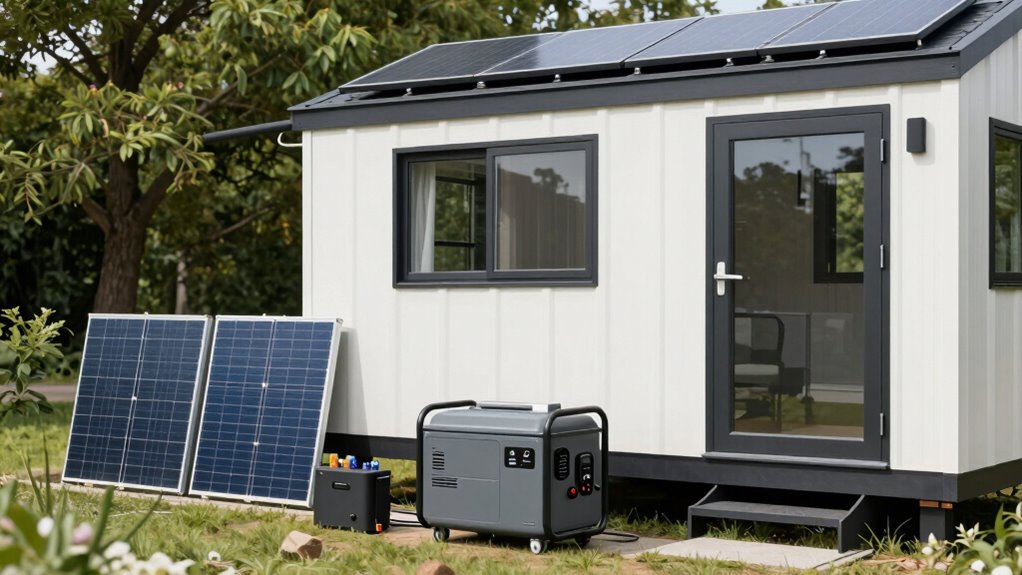
When living in a tiny house, having reliable backup power isn’t just a convenience—it’s a necessity. Tiny homes are often off-grid or semi-off-grid, which means you need a plan for power when the sun isn’t shining or the wind isn’t blowing. Backup power ensures you can operate essential appliances, keep food fresh, and maintain comfort without interruption. To create an effective energy plan, you should consider integrating renewable sources like solar panels or small wind turbines. These sources can contribute to your overall energy independence, reducing reliance on the grid and lowering your carbon footprint. With renewable sources, you generate power sustainably, making your tiny house more self-sufficient and environmentally friendly.
Reliable backup power is essential for tiny homes, ensuring comfort and independence off-grid or during outages.
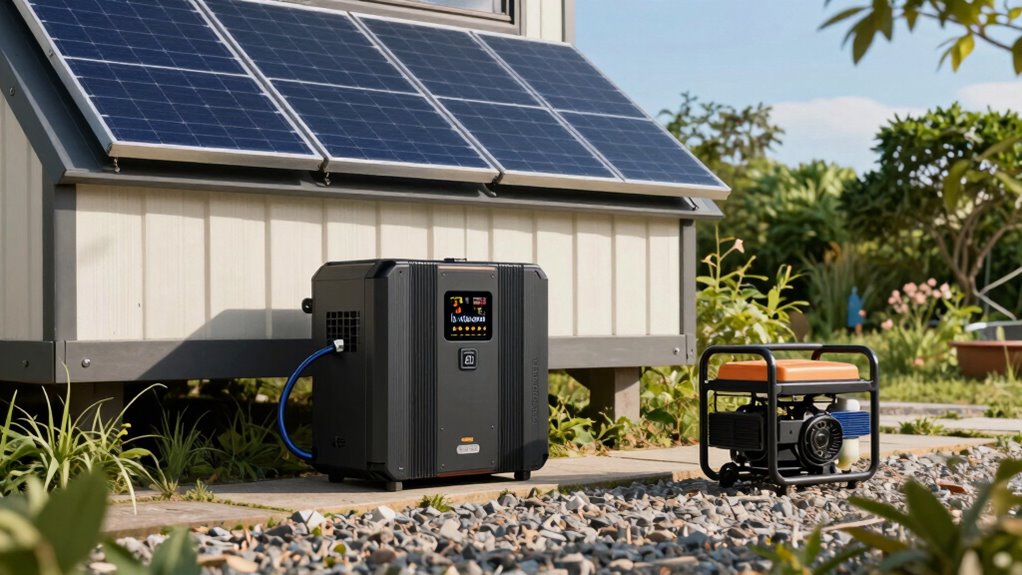
Having a backup power system means you can handle emergencies or unexpected outages smoothly. For instance, if a storm knocks out power, your backup system kicks in, keeping your refrigerator running and your lights on. This peace of mind allows you to enjoy your tiny home without constant worry about power disruptions. When planning your backup power, think about storage options—batteries are essential for storing excess energy from renewable sources. Lithium-ion batteries are popular for their efficiency and longevity, but other options like lead-acid batteries can also work well depending on your budget and needs.
Your goal should be to maximize your energy independence by combining renewable sources with reliable backup solutions. Solar panels can provide the bulk of your power during sunny days, but in cloudy weather or at night, your batteries will supply energy. Wind turbines can supplement solar, especially if you’re in a windy area. When these renewable sources work together, you create a resilient system that minimizes your need for external power. Additionally, understanding the importance of a high contrast ratio can help you optimize the placement and efficiency of your home’s lighting and projector setup, especially in a tiny space. Incorporating power quality monitoring into your system can help you track and maintain optimal performance, ensuring your system remains reliable over time.
A well-designed backup power plan allows you to use your tiny house off-grid with confidence. You’ll be able to enjoy modern comforts, operate appliances, and even work remotely without concerns about power loss. By prioritizing renewable sources and energy independence, you’re making a smart investment in your lifestyle. It’s about creating a seamless energy system that adapts to your needs, reduces your environmental impact, and gives you the freedom to live minimally yet comfortably. In the end, reliable backup power isn’t just about convenience—it’s about empowering your tiny house living experience with resilience and sustainability.
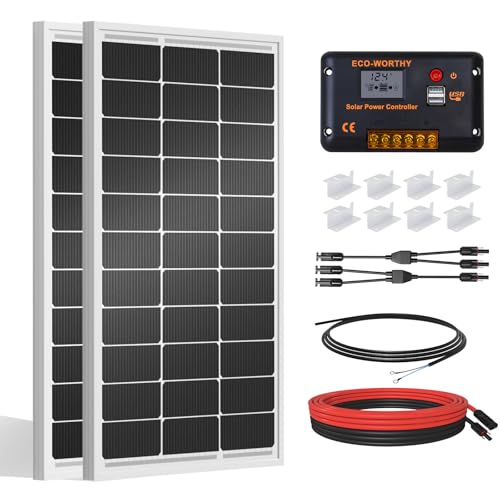
ECO-WORTHY 200 Watts 12 Volt/24 Volt Solar Panel Kit with High Efficiency Monocrystalline Solar Panel and 30A PWM Charge Controller for RV, Camper, Vehicle, Caravan and Other Off Grid Applications
[Wide Application]: Daily Output 800wh/day under 4 hours full sunshine condition. Perfect for RV, Caravan, Marine, Camper, Electric…
As an affiliate, we earn on qualifying purchases.
As an affiliate, we earn on qualifying purchases.
Frequently Asked Questions
How Much Does Backup Power Installation Typically Cost for a Tiny House?
Backup power installation in a tiny house typically costs between $3,000 and $10,000, depending on your system size and components. You should consider battery lifespan, which affects long-term costs, and do a cost comparison of different options. Higher-quality batteries last longer but are more expensive upfront. Balancing initial costs with lifespan helps you choose the best backup power system for your tiny house needs.
Can Backup Power Systems Be Integrated With Off-Grid Solar Setups?
Yes, backup power systems can be integrated with off-grid solar setups, enhancing your grid independence and supporting renewable integration. You’ll connect batteries and inverters to your solar array, allowing seamless switching between solar power and backup sources when needed. This setup guarantees continuous energy supply, especially during cloudy days or at night, giving you reliable backup power while maximizing your tiny house’s renewable energy use and reducing reliance on the grid.
What Maintenance Is Required for Backup Power Systems in Tiny Houses?
You need to perform routine inspections on your backup power system regularly to guarantee everything functions smoothly. Check for corrosion, loose connections, and battery health. Keep an eye on your batteries’ lifespan and replace them when they near the end of their expected life. Proper maintenance helps prevent unexpected failures, extends your system’s efficiency, and guarantees reliable power when you need it most in your tiny house.
How Long Can Backup Power Sustain Essential Appliances During an Outage?
You can expect backup power to sustain essential appliances for several hours to a day, depending on your system’s battery longevity and load. To maximize runtime, prioritize power redundancy by using efficient appliances and a well-sized battery bank. Regularly maintain your backup system to guarantee reliability. Keep in mind, larger batteries and lower energy consumption extend how long your backup power can keep your critical devices running during an outage.
Are There Portable Backup Power Options Suitable for Tiny Houses?
Yes, there are portable backup power options suitable for tiny houses. You can choose between portable generators, which provide immediate power but require fuel, and battery banks, which store energy for quieter, maintenance-free operation. Both options are compact and flexible, allowing you to easily move or store them. Your choice depends on your energy needs, budget, and preference for noise and emissions, ensuring your tiny house remains functional during outages.
lithium-ion battery for off-grid power
As an affiliate, we earn on qualifying purchases.
As an affiliate, we earn on qualifying purchases.
Conclusion
In the end, backup power acts as the safety net that keeps your tiny house’s energy plan from unraveling during outages. Think of it as a trusty lighthouse guiding your home through stormy nights. With the right backup system, you’ll enjoy peace of mind knowing your essentials stay on, no matter what. Embrace backup power as the steady heartbeat of your tiny home’s energy strategy, ensuring you’re always ready to weather any storm.
small wind turbine for tiny home
As an affiliate, we earn on qualifying purchases.
As an affiliate, we earn on qualifying purchases.
backup power system for tiny house
As an affiliate, we earn on qualifying purchases.
As an affiliate, we earn on qualifying purchases.