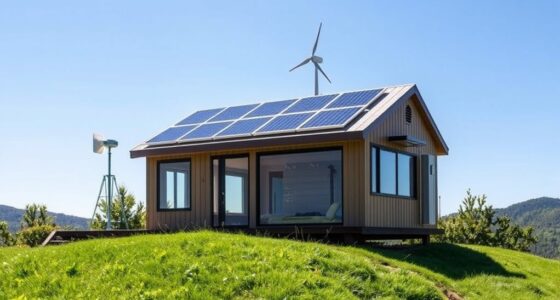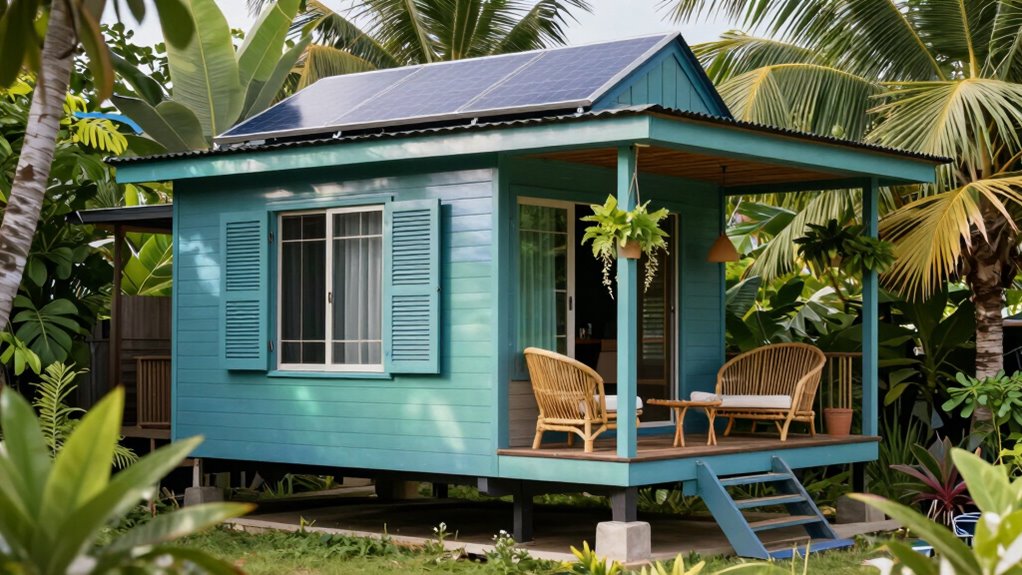

To design a tiny house for hot and humid climates, focus on incorporating shade with reflective roofing and strategically placed windows for natural ventilation. Use light-colored surfaces to bounce sunlight and prevent heat buildup. Guarantee proper insulation with moisture-resistant materials, seal gaps, and maximize cross-ventilation for airflow. Implement moisture management techniques to prevent mold and mildew. To discover more ways to create a comfortable, durable tiny home in this environment, keep exploring helpful tips.

Get compact home essentials delivered free with Prime
- Fast, free delivery on millions of items
- Prime Video, Amazon Music and more included
- Member-only deals all year
Key Takeaways
- Incorporate solar shading and reflective roofing to minimize heat gain and reduce cooling needs.
- Use high-quality insulation and moisture-resistant materials to prevent mold and maintain comfort.
- Strategically place operable windows and vents for optimal cross-ventilation and natural cooling.
- Design roofs with high or vaulted ceilings to improve air circulation and hot air escape.
- Apply climate-responsive principles, combining shading, insulation, and ventilation for a comfortable indoor environment.
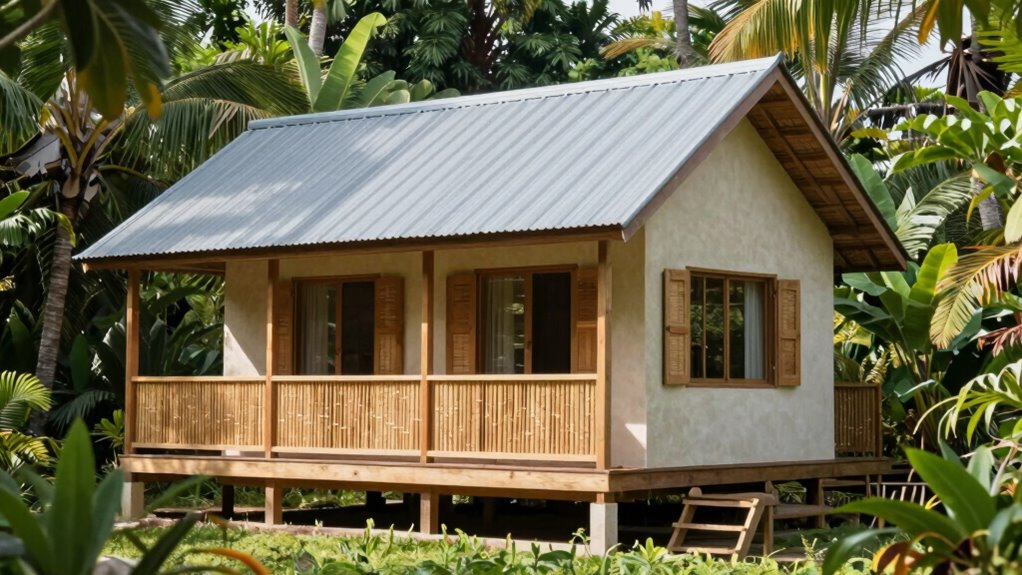
Alongside solar shading, implementing effective insulation strategies is essential. In humid climates, insulation isn’t just about keeping the cold out; it also helps manage indoor humidity levels. You want materials that resist mold and mildew, so choose closed-cell foam or spray foam insulation, which provide better moisture barriers. Proper insulation along walls, ceilings, and floors minimizes heat transfer, maintaining a cooler indoor environment and preventing moisture buildup that can lead to mold growth. Don’t forget to seal gaps around windows and doors carefully, as these are common points for air and moisture infiltration.
Effective insulation with mold-resistant materials keeps your tiny house cool and prevents indoor moisture buildup.
Your window placement also plays a big role. Position windows to maximize cross-ventilation, allowing breezes to flow through and cool the interior naturally. Use operable windows on opposite sides of your tiny house to facilitate this process. Consider installing screens to keep out insects while still enjoying the breeze. When designing your tiny house, think about the roof design carefully. A high or vaulted ceiling can promote better air circulation, and incorporating roof vents or vents at the peak can help hot air escape, further reducing indoor temperatures.
Materials matter, too. Opt for light-colored or reflective roofing and wall surfaces to bounce sunlight away, keeping your tiny house cooler. Additionally, choose breathable interior finishes that won’t trap moisture, helping to maintain a comfortable humidity level inside. Incorporating natural ventilation strategies, such as placing windows and vents strategically, works hand-in-hand with solar shading and insulation to create a balanced, comfortable environment. Understanding climate-responsive design principles can further enhance your tiny house’s performance in hot and humid environments. Incorporating appropriate insulation materials that are specifically suited for humid conditions can further improve durability and energy efficiency. Paying attention to moisture management techniques is crucial for long-term comfort and structural integrity, especially when considering moisture-resistant materials for exterior and interior surfaces.
reflective roofing for tiny houses
As an affiliate, we earn on qualifying purchases.
As an affiliate, we earn on qualifying purchases.
Frequently Asked Questions
How Can I Reduce Humidity Inside My Tiny House Effectively?
You can reduce humidity inside your tiny house by using dehumidifier options suited for small spaces, like portable or built-in units. Additionally, install moisture-resistant insulation to prevent moisture buildup and improve overall airflow. Keep vents open when possible, use exhaust fans in kitchens and bathrooms, and avoid drying clothes indoors. These steps help maintain a comfortable, dry environment, making your tiny house more livable in hot, humid conditions.
What Are the Best Paint Colors for Hot and Humid Climates?
Choose light, reflective paint colors like whites, pastels, or cool blues to keep your tiny house cooler. Opt for exterior wall textures that reflect sunlight and reduce heat absorption. Consider roof color options such as white or light gray to enhance reflectivity and minimize heat gain. These choices help keep your space cooler, reduce energy costs, and improve comfort in hot, humid climates.
How Should I Handle Pests in a Tiny, Humid Environment?
Imagine a gentle breeze stirring through your tiny home as you tackle pest control. You should install screens on windows and doors to keep mosquitoes out naturally. Use mosquito-repellent plants like citronella nearby, and eliminate standing water to prevent breeding. For termite prevention, keep wood away from soil and consider treated lumber. Regular inspections and sealing cracks will further protect your cozy space from unwelcome pests, ensuring comfort in the humid climate.
Are There Specific Flooring Materials Suitable for Humid Conditions?
You should choose moisture-resistant flooring and consider bamboo flooring options, as both perform well in humid conditions. Moisture-resistant materials prevent warping and mold growth, keeping your tiny house durable. Bamboo flooring is a sustainable, stylish choice that handles humidity better than traditional wood. Make certain proper sealing and ventilation to enhance longevity. These options help you maintain a comfortable, pest-free environment in your tiny house amidst hot, humid weather.
What Are the Best Ventilation Options for Small, Humid Spaces?
To optimize ventilation in small, humid spaces, you should prioritize strategic window placement to encourage cross-ventilation and keep air flowing. Additionally, install exhaust fans in key areas like the kitchen and bathroom to remove excess moisture and odors. Combining these options helps maintain a cooler, drier environment, preventing mold and mildew. Regularly opening windows and running exhaust fans guarantees continuous airflow, making your tiny house more comfortable and healthier.
Conclusion
By embracing thoughtful design, you turn your tiny house into a sanctuary amid relentless heat and humidity. Prioritize ventilation, shading, and moisture control—these aren’t just features but your shield against nature’s fury. Just as a sturdy tree withstands storms, your mindful choices create a resilient haven. Remember, in the dance with climate, your home isn’t just built; it’s a proof to your adaptability and ingenuity, standing firm like a silent, steadfast guardian in the relentless heat.
Halloween Picks
halloween
As an affiliate, we earn on qualifying purchases.