
Finding the best 12-well culture plates requires balancing quality, sterility, and cost. The best overall pick is the Nest Scientific 712001 Polystyrene 12 Well Cell Culture Plate for its reliable tissue culture treatment and consistent performance. The 12 Well Cell Culture Plate with Lid and Flat Bottom offers excellent value for routine lab work, while the WATSON-BIO-LAB, 197-12CPS-min stands out for its Japanese manufacturing quality and durability. Most buyers face tradeoffs between price, sterility, and treatment type, making it crucial to prioritize your specific application. Continue reading for a detailed breakdown of each option and how to choose the right one for your needs.
Key Takeaways
- The top-ranked options combine high-quality tissue culture treatment with reliable sterility features.
- Price varies significantly, with bulk packs offering better value for high-volume labs.
- Individual packaging and lids are key for maintaining sterility and ease of use in sensitive experiments.
- Premium options often feature advanced surface treatments and manufacturing quality, suitable for demanding research.
- Choosing between treated and non-treated plates depends heavily on the cell type and experimental protocol.

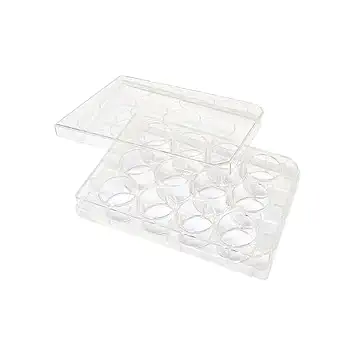


More Details on Our Top Picks
12 Well Bacterial Culture Dishes Tissue Culture Dish Polystyrene Petri Dish with Lids Educational Petri Plates for Lab Science Experiment, Pack of 10,Sterile
This pack of 10 sterile polystyrene dishes stands out for its sturdy, flat-bottom design, providing reliable stability during handling and consistent results. Compared with the WATSON-BIO-LAB plates, these include lids that help minimize contamination, making them ideal for educational and research settings where ease of use and sterile conditions are vital. The individual letter and number markings streamline sample organization, especially in busy labs. While the thick, durable construction offers longevity, the main tradeoff lies in the non-treated surface, which could require additional coating for specialized cell cultures. This product makes the most sense for labs seeking high-quality, versatile plates that can be used across multiple applications without complex preparation.
Pros:- Sturdy, durable construction ensures longevity and stable handling
- Flat bottom design promotes uniform cell growth and easy observation
- Includes lids for contamination prevention and better environmental control
- Letter and number markings facilitate sample identification
Cons:- Non-treated surface may require additional coating for some cell types
- Bulk pack of only 10 plates might be limiting for large-scale experiments
Best for: Research labs and educational institutions needing reliable, sterile plates with clear organization features
Not ideal for: Labs requiring surface treatments for specific cell types, as these are non-treated and may need additional preparation
- Wells:12
- Material:Polystyrene
- Sterility:Sterile
- Bottom Type:Flat Bottom
- Pack Quantity:10
- Lid Features:Condensation ring, vent hole
Bottom line: This pick is perfect for labs that prioritize durability, organization, and versatility in their culture plates.
SPL Culture Plate 12 Wells – Non-Treated Flat Bottom Sterile (50/Case)
Compared with the WATSON-BIO-LAB plates, the SPL Culture Plates offer a cost-effective solution for high-volume applications, providing 50 sterile, non-treated plates per case. Their non-pyrogenic, DNase/RNase-free properties make them suitable for general cell culture use, though the non-treated surface means they’re less ideal for sensitive adherent cell types without additional coating. The flat bottom design ensures uniform cell distribution, and the effective gas exchange lid helps maintain optimal culture conditions. The main tradeoff involves the non-treated surface, which limits their use in specialized applications requiring surface modifications. This product aligns well with labs that need a high quantity of basic culture plates for routine experiments or educational purposes without the need for surface treatment.
Pros:- Bulk quantity offers excellent value for high-volume needs
- Sterile and non-toxic, ensuring reliable cell culture environment
- Flat bottom promotes even cell growth and observation
- Effective gas exchange lid helps maintain proper culture conditions
Cons:- Non-treated surface limits use with certain sensitive cell types
- Limited to general cell culture applications, not suitable for specialized surface-dependent experiments
Best for: Large laboratories or educational facilities seeking bulk plates for general, non-sensitive cell culture work
Not ideal for: Research requiring surface treatments for specific cell adhesion, as these plates are non-treated and may need additional coating
- Wells per Plate:12
- Surface Treatment:Non-Treated
- Bottom Type:Flat Bottom
- Sterility:Sterile
- Quantity per Case:50
Bottom line: Ideal for budget-conscious labs performing routine cell culture tasks on a large scale, where surface treatment isn’t critical.
WATSON-BIO-LAB, 197-12CPS-min, Cell Culture Plate 12-Well, 5pcs, Indivisual Packing, Perimeter Groove, Madein Japan/Kobe
This set of five plates from WATSON-BIO-LAB emphasizes optical clarity and precision, with high-quality, plasma-treated surfaces that support a variety of cell types. Their frosted perimeter markings improve visibility and handling, especially under microscopes, making them a favorite for detailed observation. Compared with the B0D46RSG1T plates, these plates excel in optical quality and are manufactured to rigorous standards in Japan, offering consistent reproducibility for research demanding high precision. The tradeoff is the smaller pack size, which might be limiting for extensive experiments. These plates are an excellent choice for labs focused on microscopy and detailed imaging, where optical clarity and surface uniformity are essential.
Pros:- High optical clarity enhances microscopic observation
- Frosted perimeter markings improve handling and sample identification
- Plasma-treated surfaces support adherence of various cell types
- Made in Japan with strict quality control standards
Cons:- Limited to small packs of 5 plates, less convenient for large experiments
- Higher cost per plate compared to bulk options
Best for: Research and educational labs requiring high optical clarity and precise cell observation
Not ideal for: Large-scale experiments or bulk testing, due to the limited pack size of five plates
- Wells:12
- Material:High-Quality Plastic
- Surface Treatment:Plasma Treated
- Optical Clarity:Excellent
- Perimeter Markings:Frosted, alphanumeric
- Pack Quantity:5
Bottom line: This choice is tailored for labs prioritizing microscopy quality and precise cell imaging, despite the smaller quantity.
12-Well Cell Culture Plate (Lab Grade) – Pack of 1 for Research and Education
This sterile, lab-grade 12-well plate offers high-quality standards suitable for research and educational purposes, with a focus on consistency and reliability. Sold individually, it’s well-suited for experiments requiring single-use or small-scale testing. While it guarantees high sterility, it’s not approved for diagnostic or therapeutic applications, which should be considered by users with clinical goals. The absence of surface treatment limits its use with certain adherent cells, but its straightforward design makes it a reliable choice for general lab research. Compared with multi-pack options, this single plate prioritizes quality over quantity, making it ideal for precise, small-batch experiments.
Pros:- High-grade, sterile construction ensures reliability in research
- Suitable for various scientific experiments and biotech startups
- Individually packaged for convenience and contamination control
- Lab-grade standards meet rigorous research requirements
Cons:- Limited to a single plate per purchase, less cost-effective for bulk use
- Not approved for diagnostic or therapeutic applications
Best for: Research and educational labs needing high-grade, sterile plates for precise experiments
Not ideal for: Large-scale or clinical diagnostic applications, due to lack of specific clinical approvals
- Wells:12
- Pack Quantity:1
- Sterility:Yes
- Grade:Laboratory
- ASIN:B0FT724JSV
Bottom line: This plate is a reliable choice for high-precision research and educational use where quality and sterility are paramount.
12-Well Tissue Culture Plate with Lid – Flat Bottom, Individually Wrapped (Pack of 10)
This pack of 10 individually wrapped tissue culture plates combines high transparency with thoughtful design features like letter markings and vented lids, making sample identification and evaporation control straightforward. The thin walls, while facilitating cell observation, require careful handling to avoid damage. Compared with the B0D46RSG1T plates, these emphasize transparency and organization, ideal for microscopy-based studies and educational demonstrations. The limited pack size can be a drawback for large experiments, but the convenience of individual wrapping ensures contamination prevention during transport and storage. This product makes the most sense for labs needing clear visualization and simple sample management in a compact pack.
Pros:- High transparency allows for easy sample observation
- Letter-marked wells simplify sample identification
- Vented lids with condensation rings reduce evaporation and condensation issues
- Individually wrapped for contamination control
Cons:- Small pack size limits scalability for large experiments
- Thin walls may require extra care during handling
Best for: Educational and research labs focused on microscopy or sample observation requiring organized, individually wrapped plates
Not ideal for: High-volume or large-scale culture work, due to small pack size and thin-walled design
- Wells:12
- Material:Polystyrene
- Lid Features:Condensation ring, vent hole
- Pack Size:10
- Transparency:High
Bottom line: This product is best suited for microscopy-focused research and teaching where clarity and organization are key, despite the smaller pack size.
Cell Culture Plates, 12-Well
This plate excels in providing a flat-bottom design made of prime virgin polystyrene, which enhances thermal consistency and allows for clearer microscopic imaging compared to the 12 Well Tissue Culture Plate with Lid. The TC-treated surface promotes optimal cell attachment, making it a versatile choice for delicate cell cultures. Its included lid helps prevent contamination, though the single-piece format might be limiting for larger experiments. Compared to the 12 Well Cell Culture Plates, Pack of 50 – Tissue Culture Treated, this option offers a more focused, high-quality surface for detailed analysis but at a potentially higher cost per unit. The flat-bottom and treated surface make it ideal for high-resolution microscopy, but the single-piece quantity can be a drawback for high-throughput needs. This pick makes the most sense for researchers prioritizing cell attachment and imaging clarity in small to medium-scale experiments.
Pros:- Flat-bottom design enhances microscopic clarity
- TC-treated surface promotes strong cell adhesion
- Includes lid to prevent contamination
- Made of prime virgin polystyrene for durability
Cons:- Limited to single-piece quantities, less suitable for large experiments
- Higher cost per plate compared to bulk options
Best for: Researchers needing precise microscopic analysis and high cell adhesion in small to medium batches
Not ideal for: Large-scale high-throughput labs that require bulk quantities for screening purposes
- Material:Virgin Polystyrene
- Surface Treatment:TC-treated
- Design:Flat-bottom
- Includes:Lid
- Quantity:1 piece
- First Available:April 11, 2025
Bottom line: This plate is perfect for detailed microscopy work and experiments needing strong cell attachment, especially in small batches.
12 Well Culture Plate with Lid and Flat Bottom – Individual Pack (Pack of 10)
This product offers a high-quality, transparent polystyrene construction with beveled corners, which simplifies handling and reduces sample spillage compared to the Cell Treat Scientific Products 12-Well Cell Culture Plate with Lid. The gamma-irradiated individual packaging ensures sterility, making it an excellent choice for sensitive cell cultures. Its condensation ring minimizes evaporation, a feature not always present in standard plates. However, the pack of 10 may be excessive for small labs, and its compatibility depends on specific lab equipment. Unlike the 12 Well Cell Culture Plates, Pack of 50 – Tissue Culture Treated, these plates focus on sterility and handling convenience but lack tissue culture treatment, limiting their use with adherent cells. This makes it ideal for applications requiring sterile handling and minimal evaporation during short-term experiments. Best suited for labs prioritizing sterility and ease of handling in small to medium batches.
Pros:- Gamma-irradiated sterile individual packaging
- Beveled corners for easy handling
- Condensation ring reduces evaporation
- Transparent design for easy observation
Cons:- Limited to small batch sizes (pack of 10)
- Lacks tissue culture treatment for adherent cells
Best for: Labs needing sterile, individually packaged plates for delicate or short-term cultures
Not ideal for: High-throughput or large-scale cell culture projects requiring tissue culture treatment for adherent cell growth
- Material:High-quality Polystyrene
- Design:Flat-bottom with beveled corners
- Sterility:Gamma-irradiated
- Packaging:Individually packed
- Quantity:Pack of 10
- First Available:September 30, 2025
Bottom line: This plate is ideal for sterile handling and short-term experiments with a focus on contamination prevention.
Cell Treat Scientific Products 12-Well Cell Culture Plate with Lid (100 per Case)
This case of 100 plates is tailored for suspension cultures, with raised rims that minimize evaporation and cross-contamination, unlike the flat-bottom plates designed for adherent cells. The clear polystyrene makes sample visualization straightforward, and gamma sterilization guarantees contamination-free use. The stacking ring adds stability for handling tall stacks, but the untreated surface may not support all cell attachment needs, making it less suitable for adherent cell studies. Compared to the Ucallm 12 Well Cell Culture Plate, Non-TC Treated, these plates excel in suspension applications but lack tissue culture treatment, limiting their versatility. The large case size suits high-volume labs but can be excessive for smaller operations. This product is best for those working with suspension cells who need reliable, sterile, and stable plates in bulk. Ideal for large-scale suspension cell experiments requiring stable, sterile plates.
Pros:- Raised rim reduces evaporation and cross-contamination
- Gamma sterilized for sterility
- Stacking ring provides stability
- Clear polystyrene for easy sample viewing
Cons:- Untreated surface limits attachment for adherent cells
- Bulk case may be excessive for small labs
Best for: High-volume labs working with suspension cell cultures needing stable, sterile plates
Not ideal for: Research involving adherent cells or small labs with limited storage capacity
- Number of Wells:12
- Material:Polystyrene
- Sterilization:Gamma Irradiation
- Lid Included:Yes
- Package Quantity:100 plates
- First Available:April 25, 2025
Bottom line: This plate set is best for large-scale suspension cell work needing stable, sterile, and easy-to-handle plates.
12 Well Cell Culture Plate, Non-TC Treated Cell Culture Plates, Clear Sterile Tissue Culture Plate, Individually Wrapped, 50Pcs/Case
This set of 50 individually wrapped plates provides a versatile, non-treated option suitable for both adherent and suspension cells, with high transparency for visual monitoring. The non-tissue culture surface offers flexibility for various experimental needs, unlike the TC-treated plates such as the Cell Culture Plates, 12-Well. Its compatible dimensions fit most incubators and lab equipment, making it suitable for general research and educational environments. The individual wrapping ensures sterility and reduces contamination risk during handling, but the untreated surface limits its use with adherent cell lines that require surface treatment. Compared to the Cell Treat Scientific Products 12-Well Plate, these plates are more adaptable but less specialized for adhesion-dependent cultures. The large case size makes it suitable for busy labs but can be overkill for small projects. This product is ideal for versatile research applications where both adherent and suspension cells are used, and handling convenience is a priority.
Pros:- Versatile non-treated surface for different cell types
- Individually wrapped for sterility
- High transparency for microscopy
- Compatible with standard lab equipment
Cons:- Untreated surface limits adhesion for some cell lines
- Bulk pack may be more than needed for small-scale work
Best for: Research labs needing flexible, sterile plates for diverse cell types and applications
Not ideal for: labs focused exclusively on adherent cell culture without surface treatment
- Number of Wells:12
- Material:Polystyrene
- Sterility:Sterile
- Treatment:Non-TC Treated
- Quantity:50 plates
- First Available:April 25, 2025
Bottom line: This plate set offers broad compatibility and convenience for diverse research needs in a sterile, easy-to-handle format.
4E’s USA 12 Well Cell Culture Plate with Lid, Tissue Culture Treated Plate, Sterile, Individual Packing, Pack of 5 Plates
This 4E’s USA plate stands out for its high clarity, tissue culture treatment, and sterile packaging, making it a solid choice for routine cell culture experiments. Compared with the Nest Scientific option, it offers comparable sterility but adds the convenience of individual packing, reducing contamination risks during transfer. Its non-pyrogenic, DNase/RNase-free surface ensures compatibility with sensitive assays. However, this model is less suitable for high-throughput labs where larger quantities are needed, as it only comes in packs of five. The tissue culture surface promotes cell adhesion, but the limited pack size could increase costs for large-scale work. The high-quality sterile packing and surface treatment make this an excellent pick for medium-sized labs prioritizing quality and convenience.
Pros:- High clarity for microscopic examination
- Sterile, individually packed to prevent contamination
- Tissue culture treated for optimal cell adhesion
- Non-pyrogenic, DNase/RNase free surfaces
Cons:- Limited to small pack size, increasing per-unit cost for large projects
- Only five plates per pack, less economical for high-volume needs
Best for: research labs requiring reliable, sterile plates with individual packing for moderate throughput.
Not ideal for: large industrial manufacturing or high-volume screening labs where bulk packs are more cost-effective.
- Sterility:Sterile, individually packed
- Treatment:Tissue culture treated
- Pyrogen-Free:Yes
- Number of Plates:5
- Material:High clarity non-Pyrogenic polystyrene
- Surface Type:Tissue culture surface
Bottom line: Ideal for medium-sized laboratories prioritizing sterile, individually packed plates with reliable surface treatment.
12-Well Polystyrene Cell Culture Plates with Lids, Individual Wrapped Plates, Sterile, Tissue Culture Treated Plate for Laboratory Chemical Reaction, Case of 50
This case of 50 plates from BIOLOGIX offers a durable, clear, and sterile option, ideal for laboratories handling high sample volumes. Its virgin polystyrene construction provides excellent clarity and strength, comparable to the Nest Scientific plates but at a more economical case price, making it suitable for large-scale projects. The tissue culture treatment promotes cell adhesion, supporting consistent growth, while the raised rim design minimizes evaporation during incubation. Each plate is individually wrapped and gamma sterilized, ensuring sterility and ease of handling. However, the large case size may be excessive for small labs or occasional users, and storage can be a challenge without dedicated space. The plates are designed for ease of microscopic observation, but the bulk packaging makes it less practical for small or infrequent experiments.
Pros:- High clarity and durable virgin polystyrene
- Sterile, individually wrapped, gamma-irradiated
- Excellent for high-volume cell culture and microscopy
- Raised rim design prevents evaporation
Cons:- Bulk case of 50 may be excessive for small labs
- Less convenient for low-volume or occasional use
Best for: large research facilities and high-throughput labs needing bulk sterile plates at a competitive price.
Not ideal for: small clinics or educational settings with low sample volumes, due to bulk packaging and storage considerations.
- Material:Virgin polystyrene
- Sterility:Gamma sterilized, individually wrapped
- Treatment:Tissue culture treated
- Number of Plates:50
- Clarity:High clarity
- Design:Raised rim to prevent evaporation
Bottom line: Best suited for large labs that need reliable, sterile plates in bulk for extensive cell culture work.
Nest Scientific 712001 Polystyrene 12 Well Cell Culture Plate, Flat Bottom, Tissue Culture Treated, Sterile, Clear, 1 per Pack, 50 per Case
This Nest Scientific plate emphasizes batch traceability with clear lot markings, making it especially suitable for regulated environments like clinical research. Its sterilization by E-beam and gamma irradiation ensures sterility, comparable to the BIOLOGIX plates, but adds a layer of traceability. The flat bottom and high clarity support detailed microscopic analysis, while the individually wrapped packaging maintains sterility during handling. Its non-pyrogenic, DNase/RNase-free surface makes it compatible with sensitive assays. Compared to the other options, this plate offers an advantage in traceability but might lack some surface treatments that enhance cell adhesion. Its bulk case of 50 suits high-volume labs but may be less appealing for small-scale research. The well markings facilitate experimental design and organization, which is a plus for structured workflows.
Pros:- High clarity for microscopy
- Lot number markings for traceability
- Sterilized by E-beam and gamma irradiation
- Individually wrapped for sterility
Cons:- Lacks specific tissue culture surface treatment details
- Bulk case of 50 may be excessive for some users
Best for: clinical research and regulated laboratories needing batch traceability and documentation.
Not ideal for: small academic labs or educational settings where traceability is less critical and cost per plate matters more.
- Sterility:E-beam and gamma sterilized
- Traceability:Lot number markings
- Material:High clarity polystyrene
- Number of Plates:50
- Surface Treatment:Not specified, suitable for general use
- Design:Flat bottom with well markings
Bottom line: Excellent for high-volume, regulated environments that require traceability and strict documentation of each batch.

How We Picked
I evaluated these 12-well culture plates based on several criteria crucial for laboratory use. Performance factors included surface treatment (tissue culture treated vs. untreated), sterility, and overall build quality. Usability features such as individual packaging, lids, and flat bottoms were also considered, as they influence ease of handling and contamination control. Cost-effectiveness played a role, especially for bulk purchases, but was balanced against quality. Finally, I prioritized products with consistent manufacturing standards and positive user feedback, ensuring the ranking reflects real-world reliability and value.Factors to Consider When Choosing Best 12-well Culture Plates
Selecting the right 12-well culture plate involves understanding your specific experimental needs and how different features impact performance. Beyond basic quality, factors like surface treatment, packaging, and material influence cell growth, contamination risk, and workflow convenience. Being aware of common pitfalls—such as choosing non-treated plates for sensitive cells or buying in bulk without considering packaging—can save time and money. Here are key considerations to guide your decision.Surface Treatment and Cell Compatibility
The primary factor in choosing a culture plate is whether it is tissue culture treated. Treated plates promote better cell adhesion and growth, essential for most adherent cell lines. Non-treated plates are suitable for suspension cells or when surface modification is unnecessary, often at a lower cost. Matching the treatment to your cell type prevents wasted resources and suboptimal results.
Sterility and Packaging
Sterility is vital to prevent contamination, especially in sensitive experiments. Individual wrapping and sterile lids help maintain aseptic conditions during storage and use. Bulk packs may be more cost-effective but require careful handling to avoid contamination. Consider your workflow and whether pre-sterilized, individually wrapped plates will streamline your process.
Material and Bottom Design
Most culture plates are made from polystyrene, which offers good optical clarity and chemical resistance. Flat bottoms are standard for microscopy and imaging, while other designs may support specific assay types. The material quality influences durability and chemical compatibility, especially if you plan to use aggressive reagents or coatings.
Size, Cost, and Bulk Options
Cost varies widely depending on pack size, brand, and treatment. Larger packs often provide better value, but consider storage space and usage rates. For smaller labs or occasional use, smaller or individual packs may be more practical. Balance your budget against the need for consistent, high-quality plates to avoid costly repeat experiments.
Additional Features and Compatibility
Some plates come with lids, perimeter grooves, or specific well configurations for specialized applications. Lids prevent evaporation and contamination, while well design can influence fluid handling. Ensure compatibility with your existing lab equipment, such as incubators or microscopes, to avoid costly adjustments or replacements.
Frequently Asked Questions
Are tissue culture treated plates necessary for all cell types?
Not all cell types require tissue culture treatment; many suspension cells or non-adherent lines can thrive on untreated plates. However, adherent cells generally benefit from treated surfaces that enhance attachment and growth. Choosing the right surface treatment based on your cell line ensures better results and reduces the need for additional coating steps.
How important is individual packaging for my culture plates?
Individual packaging helps maintain sterility and makes handling more convenient, particularly in environments with strict contamination controls. For sensitive experiments or when working with pathogenic samples, pre-sterilized, individually wrapped plates reduce contamination risk. Bulk packs may save money but require careful handling to preserve sterility.
Can I use non-treated plates for long-term cell culture?
While non-treated plates can be used for short-term or suspension cultures, they are generally not suitable for long-term adherent cell growth. Cells may not attach or proliferate effectively, leading to unreliable results. For sustained experiments, treated plates are typically a better investment to ensure cell viability and experimental consistency.
What should I consider when buying in bulk?
Bulk purchases often offer cost savings but come with storage and handling considerations. Ensure that the packaging maintains sterility and that the plates are compatible with your lab equipment. Also, verify the quality and treatment consistency across large batches to avoid variability in your experiments.
Are there compatibility issues with specific brands or designs?
Most culture plates are designed to meet standard laboratory specifications, but some brands may have slight variations in well dimensions or bottom design. Confirm compatibility with your incubators, microscopes, and other accessories. Reading user reviews or manufacturer specifications can help identify potential fit issues before purchase.
Conclusion
For most labs seeking a reliable, all-around performer, the Nest Scientific 712001 Polystyrene 12 Well Cell Culture Plate offers a strong blend of quality and affordability. Beginners or small-scale researchers might prefer the 12-Well Cell Culture Plate with Lid and Flat Bottom for ease of use, while larger or more demanding labs should consider premium options like the WATSON-BIO-LAB, 197-12CPS-min for superior manufacturing standards. Budget-conscious buyers should prioritize bulk packs with proven sterility features, whereas those working with sensitive cell lines should opt for tissue culture treated, individually wrapped plates. Tailor your choice to your specific workflow and cell type to ensure the best results.