
TL;DR

Get compact home essentials delivered free — and shop member deals
- Fast, free delivery on millions of items
- Access to Prime Big Deal Days deals on October 6–7
- Prime Video, Amazon Music and more included
Livingetc reports that centuries-old Swedish ceramic stoves, known as kakelugnar, are attracting more interest from British interior designers. Their heat-retaining design can provide warmth for 12 to 24 hours after one burn, according to a stove specialist, but costs, installation requirements and emissions depend on the model and fuel.
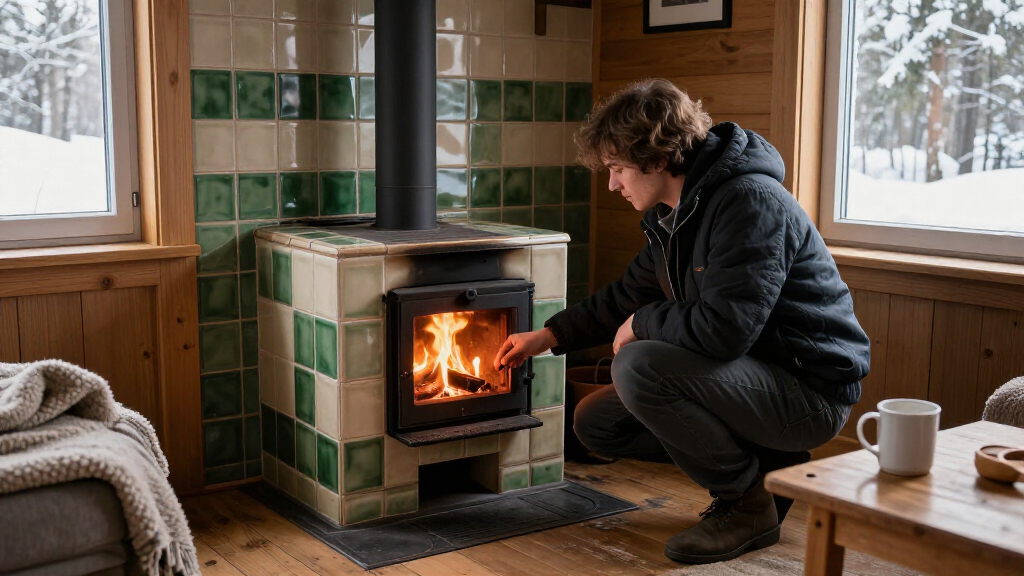
Swedish ceramic stoves, known as kakelugnar, are drawing attention from British interior designers as an alternative to conventional woodburners, according to a Livingetc report. The stoves combine a tiled, sculptural design with heat-retaining masonry, but the report’s claims about efficiency and emissions come from industry sources and should not be treated as a guarantee for every installation.
Alan Hills, director of The Ceramic Stove Company, told Livingetc that a ceramic stove can deliver heat for 12 to 24 hours after one hot burn, using fewer logs than a conventional woodburner. He said the fire burns at a higher temperature, allowing more particulates to combust in the firebox and producing fewer emissions. The report did not provide independent measurements or a comparison across specific stove models.
Designers cited in the article described the stoves as both heating appliances and room focal points. Interior designer Henri Fitzwilliam-Lay called them beautiful objects and said they can bring a sense of history and craftsmanship to a room. Examples in the report include a pink custom stove in a Finnish designer’s home, a gas-fitted model in an east London terrace, and a tiled stove in a London-designed apartment.
The article says prices start at several thousand pounds, with cost varying by project. Installation may involve building a masonry structure and applying ceramic tiles on site. Hills advised planning the work after wet trades such as plastering are finished; some installations may also require a reinforced base. The report says modular models can sometimes be assembled within a couple of days, though it gives no project-specific schedules.
Heat Storage Meets Interior Design
The appeal described in the report is twofold: longer-lasting radiant heat and an appliance that can serve as a permanent architectural feature. A stove that releases stored warmth after its fire has gone out may suit households seeking a different heating rhythm from a conventional open hearth, while its tiled exterior offers a prominent design element.
That potential does not establish that every ceramic stove is cleaner or cheaper to run. Performance depends on the appliance, fuel, installation and use, and the source provides no emissions tests, fuel-cost analysis or independent efficiency data. The reported purchase price and building work also make this a substantial home project rather than a simple swap-in for an existing stove.
As an affiliate, we earn on qualifying purchases.
A Northern European Heating Tradition
Kakelugn is the Swedish term for a ceramic stove; the German term is kachelofen. Livingetc describes the technology as a centuries-old northern European tradition that is now being adopted by some British design studios. The report frames that interest against tighter clean-air expectations and continuing questions about the environmental effects of burning wood.
The examples show that installations are not limited to large historic houses. Designer Olivia Outred told the magazine she chose a gas-fitted stove for an east London terrace, citing local air-quality rules. Other projects use custom colors, patterned tiles or contemporary surroundings to make the stove part of a room’s design. These examples demonstrate varied design choices, not a universal suitability or regulatory approval for all properties.
“They are much more efficient than open fires.”
— Alan Hills, director of The Ceramic Stove Company, speaking to Livingetc
Performance Depends on the Installation
The source does not identify a publication date, provide independent efficiency or emissions tests, or compare ceramic stoves with named conventional woodburners under the same conditions. The 12-to-24-hour heat claim is attributed to a stove company director; the report does not specify the models, fuel amounts, room sizes or test methods behind it.
It is also unclear what a typical installed price would be beyond the article’s statement that prices start at several thousand pounds. Requirements for a reinforced base, chimney or flue suitability, permits and compliance can vary by property and appliance. The report’s gas-fitted London example does not establish that a similar configuration is available or permitted in every location.
Check Costs and Local Rules
The Livingetc report does not announce a product launch, policy change or scheduled industry milestone. For homeowners considering a ceramic stove, the next step is to seek model-specific information from qualified installers: expected heat output, fuel use, emissions certification, structural requirements and the full installation cost.
Local air-quality rules and building requirements should be checked before choosing a fuel or commissioning work. Any emissions or savings claims should be weighed against independent product documentation and the conditions of the home; the report leaves those comparisons open.
Key Questions
What is a Swedish ceramic stove?
A Swedish ceramic stove, or kakelugn, is a tiled heating appliance built to store and release heat. The German name for a related type is kachelofen.
How long can a ceramic stove retain heat?
Alan Hills of The Ceramic Stove Company told Livingetc that one hot burn can provide heat for 12 to 24 hours. The article does not give independent test data or conditions for that estimate.
Are ceramic stoves more efficient than conventional woodburners?
The report presents that as an industry claim, citing Hills, but includes no independent, model-by-model comparison. Actual performance depends on the stove, fuel, installation and operation.
How much does a ceramic stove cost?
Livingetc says prices start at several thousand pounds. It does not give a typical installed total, which may vary with the stove, masonry work and the requirements of the property.
Can a ceramic stove be installed in a city home?
The report describes a gas-fitted example in an east London terrace, but that does not establish suitability for every urban home. Check local rules and have the property and installation requirements assessed before proceeding.
Source: rss
Halloween Picks
halloween
As an affiliate, we earn on qualifying purchases.