
TL;DR

Get compact home essentials delivered free with Prime
- Fast, free delivery on millions of items
- Prime Video, Amazon Music and more included
- Member-only deals all year
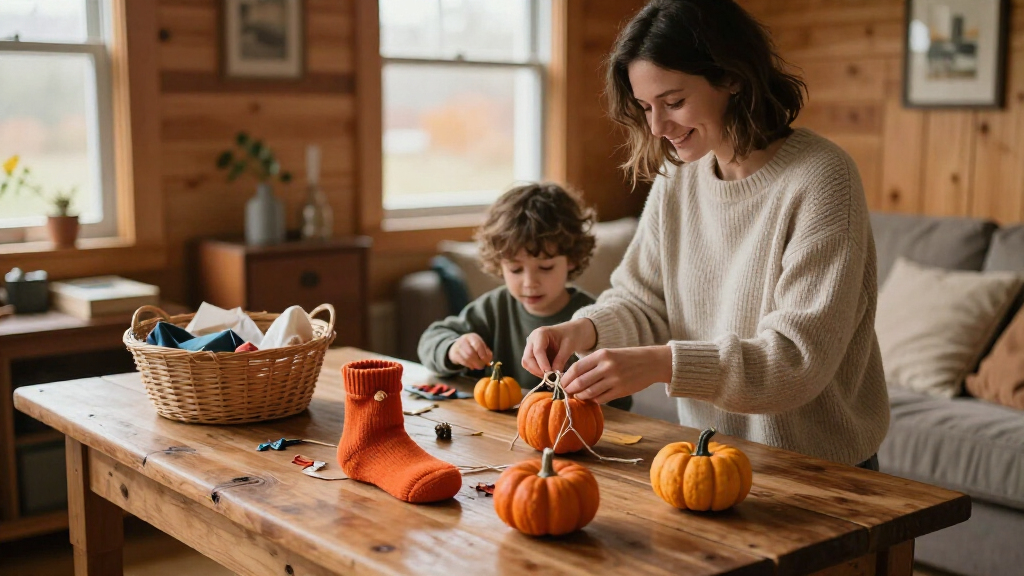
Hunker reports on a simple fall craft that repurposes old socks as decorative pumpkins. The project uses a sock, stuffing and twine or yarn; the finished decorations can be stored and reused, though their durability depends on the materials and construction.
Hunker has outlined a fall craft that turns old socks into small decorative pumpkins using stuffing and twine or yarn. The project offers a way to reuse socks that are no longer being worn and make seasonal decorations that, unlike fresh pumpkins, can be packed away for another autumn.
The instructions call for a sock that is worn out but still intact, without holes or runs, along with filling such as polyfill pillow stuffing. Cotton balls are another option; dried beans or rice can also be used, though Hunker says those fillings will give the finished pumpkin a different feel. Twine or yarn is used to form the pumpkin’s ridges.
To make one, cut off the sock’s calf section at the heel and fill the remaining foot area, leaving about an inch near the opening. Twist the opening closed and shape the stuffed fabric into a ball, with the twisted end forming a stem. The instructions then call for wrapping or tying twine around the stem and sewing through the pumpkin’s center from top to bottom in a starburst pattern, pulling the thread tight to create ridges.
The stem can be finished with more twine or yarn. Hunker suggests adding dried or felt leaves, felt triangles or googly eyes, and says ribbon can replace the twine or yarn. Different sock colors and patterns offer options for customizing the decorations without painting or carving a fresh pumpkin.
A Second Use for Worn Socks
The craft combines reuse with seasonal decorating: socks that are no longer suitable to wear can become display pieces rather than being discarded. It also offers an alternative to fresh gourds for people who want decorations that can be stored after the season and brought out again.
Hunker says the fabric pumpkins will not rot like fresh pumpkins and can be put away until the next autumn. That makes them suitable for repeat seasonal use, although the source does not provide testing or a lifespan estimate. Because the project uses readily available materials and can be personalized with different fabrics and embellishments, it may also suit households looking for a small, adaptable craft.
As an affiliate, we earn on qualifying purchases.
How the Sock Craft Works
The project relies on the shape of a sock’s foot to create a rounded body. Once filled and closed, the fabric is divided into sections by stitching through the center and tightening the thread, forming the ridges associated with a pumpkin. The twisted sock opening acts as the stem, which can be covered or decorated with twine, yarn or ribbon.
The source presents this as an alternative to buying or harvesting pumpkins for a seasonal display, not as a replacement for every kind of fall decoration. Hunker also suggests displaying the sock pumpkins alongside linen-wrapped DIY pumpkins. No measurements, required stitch count or specialized tools are specified beyond a needle for forming the ridges.
““Cute DIY pumpkins are a genius way to reuse old socks and get long-lasting home decor.””
— Hunker
Materials and Durability Vary
The source does not specify how long the decorations will last, how best to store them, or whether particular fillings are preferable for long-term use. It says cotton balls, beans and rice can work, but does not compare how those materials affect the pumpkin’s shape or weight over time. Durability will depend on the sock, filling and stitching, and the report provides no independent testing.
The instructions also leave some practical details open, including how much stuffing to use for different sock sizes and what type of needle or thread works best. The source describes a sewn starburst pattern but does not show a full set of measurements or a defined stitch sequence in the supplied material.
Make and Store the Decorations
Readers who want to try the project can begin by choosing an intact sock and deciding whether to use pillow stuffing, cotton balls, dried beans or rice. After shaping and stitching the stuffed sock, they can add a stem covering and optional leaves or face details. The source does not announce a follow-up or additional product release; the next step is simply to complete the craft and decide how to incorporate it into a fall display.
After the season, the pumpkins can be stored for possible reuse, as Hunker suggests. The source does not give specific storage directions, so readers will need to choose a dry storage place appropriate for the materials they used.
Key Questions
What do I need to make a sock pumpkin?
You need an intact old sock, filling such as polyfill or cotton balls, twine or yarn, and a needle and thread to sew the ridges. Optional decorations include felt, dried leaves, googly eyes or ribbon.
Can I use rice or beans instead of pillow stuffing?
Hunker says dried beans or rice can be used, though they give the finished pumpkin a different feel. The source does not compare the options’ durability.
How are the pumpkin ridges made?
Sew through the center from the top to the bottom in a starburst pattern, pulling the thread tight. This divides the stuffed sock into sections that create pumpkin-like ridges.
Can the decorations be used again next year?
Hunker says the fabric pumpkins can be stored and brought out for another autumn, unlike fresh pumpkins that can rot. The source does not provide a durability estimate or storage instructions.
Source: rss
Columbus Day / Indigenous Peoples' Day Picks
long weekend sales
As an affiliate, we earn on qualifying purchases.