
Designing your home for aging in place means creating a space that’s safe, accessible, and adaptable. It’s about anticipating your future needs and making small changes today that can have a big impact tomorrow. You can maintain independence longer, avoid costly renovations, and enjoy comfort at every stage of life. But where should you start, and what simple adjustments will truly make a difference?
Key Takeaways
- Incorporate universal design features like wider doorways and low-threshold showers for adaptability.
- Integrate smart home technology for automation, safety monitoring, and remote management.
- Use small, strategic modifications such as grab bars and accessible counters to enhance safety gradually.
- Plan for future needs by choosing easy-to-install smart devices and flexible layout options.
- Focus on creating an aesthetically pleasing, accessible environment that supports independence long-term.

Are you considering how to make your home safer and more comfortable as you age? If so, aging-in-place design offers practical solutions that let you enjoy your space for years to come. One of the most effective ways to future-proof your home is by integrating smart home technology. These devices can automate lighting, control thermostats, and even monitor your safety through sensors and cameras. For example, smart locks and doorbells improve security, while voice-activated assistants help you manage daily tasks effortlessly. Such technology not only enhances convenience but also provides peace of mind, knowing that you can summon help or check on your home remotely if needed.
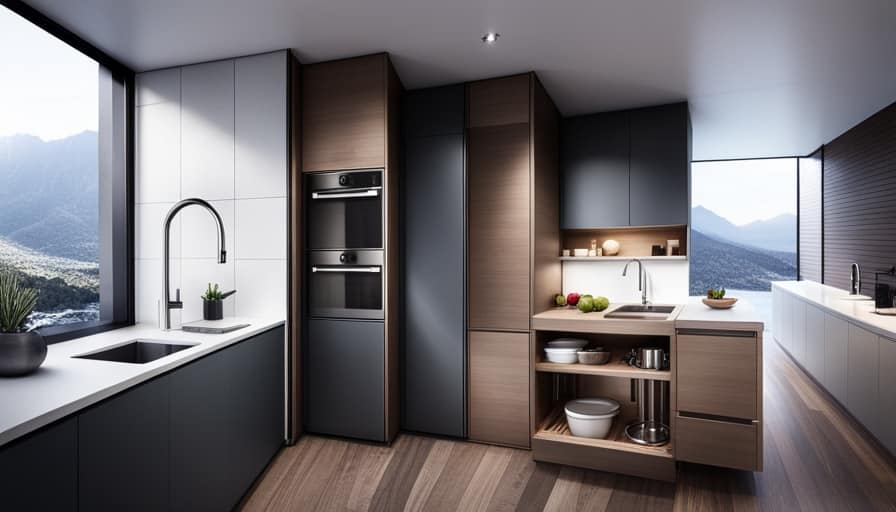
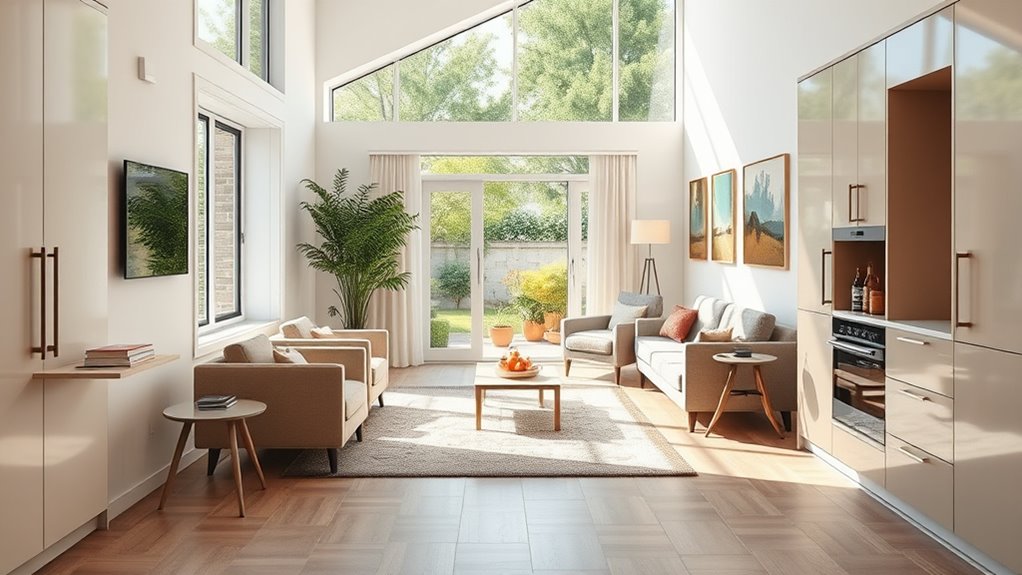
Alongside smart home tech, applying universal design principles transforms your house into a more accessible and adaptable environment. Universal design emphasizes creating spaces that are usable by everyone, regardless of age or ability. Think wider doorways to accommodate mobility aids, lever-style door handles instead of knobs, and low-threshold showers that eliminate tripping hazards. These modifications don’t compromise style; instead, they blend seamlessly with your existing décor while making daily life safer and easier. For instance, installing a step-free entrance ensures easy access for wheelchairs or walkers and benefits visitors with different abilities.
Universal design creates stylish, accessible spaces for all ages and abilities.
Implementing these principles doesn’t mean tearing apart your entire home. Small changes, like installing grab bars in bathrooms or adjusting kitchen counters to a more accessible height, can greatly improve safety and comfort. When you combine universal design with smart home technology, you create a connected environment that adapts to your evolving needs. For example, motion sensors can light your way at night, reducing fall risks, while voice commands allow you to control lighting or appliances without bending or reaching.
Planning ahead with these upgrades is essential. Many smart devices are easy to install and can be integrated gradually, giving you the flexibility to upgrade over time. When you adopt universal design principles, you’re not just preparing for aging; you’re enhancing your home’s functionality for everyone who lives there. This proactive approach enables you to remain independent longer and maintain your quality of life. Ultimately, making your home safer and more comfortable with smart technology and thoughtful design isn’t just about aging in place—it’s about creating a space that adapts to your life today and in the future.
Top picks for "place design future"
Open Amazon search results for this keyword.
As an affiliate, we earn on qualifying purchases.
Conclusion
By embracing aging-in-place design now, you’re planting seeds for a future where your home adapts as easily as a chameleon changes colors. Small modifications like wider doorways and smart tech create a flexible, safe haven that grows with you. Think of it as building a sturdy bridge—ready to carry you smoothly through life’s changes. Invest today, and you’ll enjoy a home that’s as resilient and welcoming as an old friend, no matter what tomorrow brings.