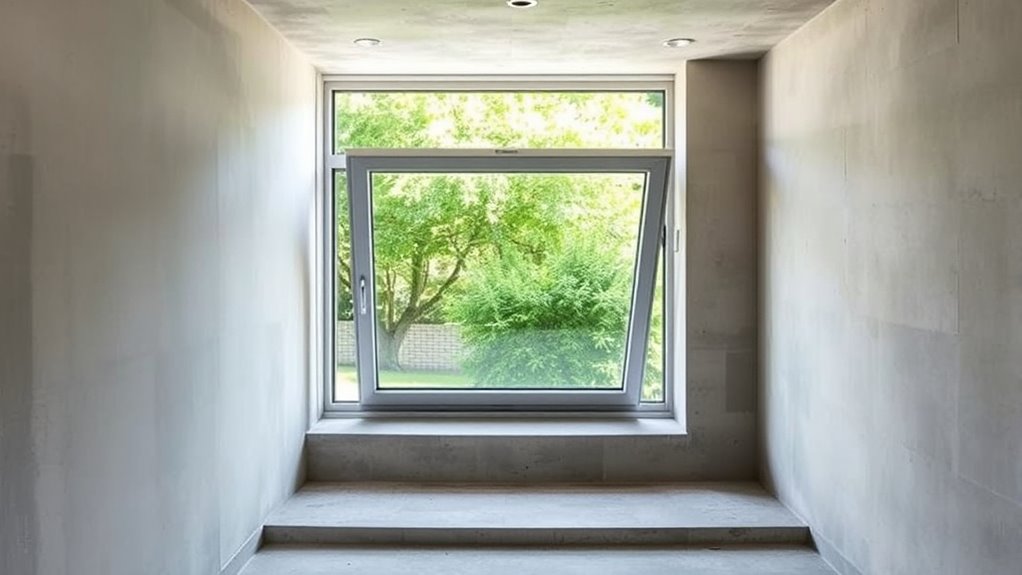

When you’re considering basement egress windows, understanding the legal and safety requirements is vital. These windows aren’t just about light and ventilation—they serve as critical escape routes during emergencies. Knowing the specific size, height, and operation standards can help you avoid costly mistakes and guarantee your space complies with local codes. But what exactly do these regulations entail, and how can you ensure your windows meet them?
Key Takeaways
- Building codes require egress windows to have a minimum opening size of 5.7 sq ft for safe escape.
- Sill heights must not exceed 44 inches from the floor to ensure easy access during emergencies.
- Windows should open inward or outward without obstruction, using easy-to-operate mechanisms.
- Proper installation, including sealing and secure anchoring, is essential for safety and code compliance.
- Non-compliance can lead to fines, failed inspections, and increased safety risks during emergencies.
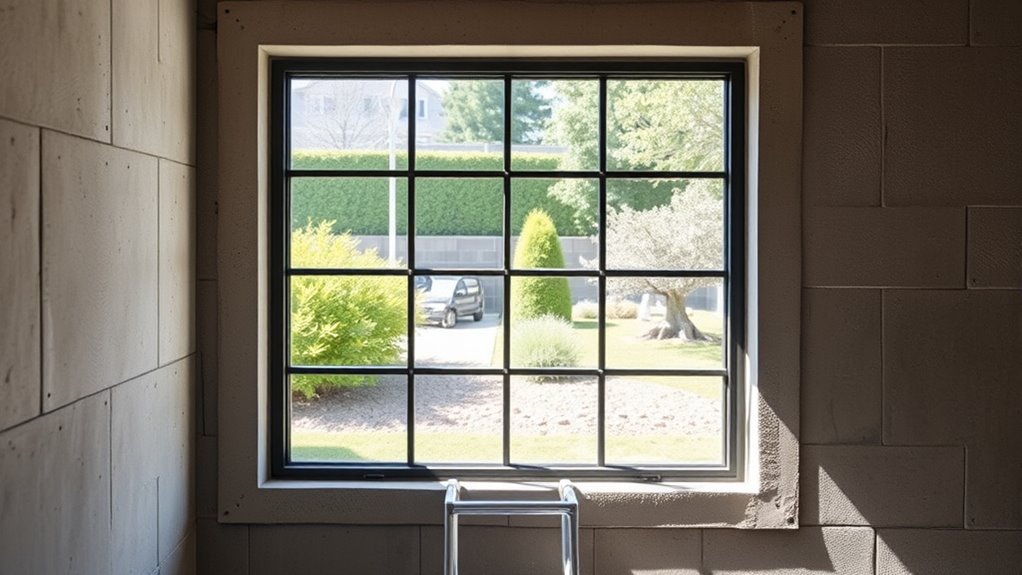
Basement egress windows are essential safety features that provide a quick escape route in case of emergencies. If you’re planning to install or upgrade these windows, understanding the importance of proper window installation and adherence to building codes is imperative. Building codes set the minimum standards for safety, which means your egress windows must meet specific size, height, and operational requirements. Failing to comply can not only compromise your safety but also cause issues if you decide to sell your home or need insurance coverage. It’s essential to consult local building codes before starting any installation to guarantee you meet all legal standards.
Proper installation and compliance with building codes are crucial for safe, legal basement egress windows.
When it comes to window installation for egress purposes, precision matters. The window must be large enough to allow a person to escape comfortably—generally, a minimum opening size of 5.7 square feet, with a window height of at least 24 inches and a width of at least 20 inches. This means choosing windows that can be easily opened without tools and that open inward or outward without obstruction. Installing these windows properly involves framing the opening correctly, ensuring the window is securely anchored, and sealing it to prevent leaks and drafts. Proper installation not only guarantees safety but also prolongs the window’s lifespan and maintains energy efficiency.
Building codes also specify the window’s height from the floor, typically requiring a maximum sill height of 44 inches to make escape easy for everyone, including children and those with mobility challenges. You should also consider the window’s operation mechanism; it needs to be easy to open without special tools or excessive force. For safety, screens should be removable from the inside, so you can exit quickly in an emergency. When planning your window installation, it’s wise to work with professionals familiar with local codes and standards. They’ll help you select the right type of window and ensure it’s installed correctly, saving you time and potential legal hassles later. Additionally, understanding the importance of safety features can guide you in selecting the best options for your home.
Ignoring these legal and safety requirements can lead to costly fines, failed inspections, or worse—danger in an emergency. Staying informed about building codes and prioritizing proper window installation means you’re taking proactive steps to protect your loved ones. Remember, an egress window isn’t just a legal requirement; it’s a critical safety feature that can make all the difference during a fire or other emergency. By investing in quality windows and professional installation, you’re guaranteeing your basement remains a safe, compliant, and accessible part of your home.
Conclusion
Ensuring your basement egress windows meet legal standards, ensuring safety, ensuring accessibility, and ensuring peace of mind. By choosing compliant windows, installing them properly, and staying informed about local codes, you protect yourself and your loved ones. Don’t overlook the importance of safety, don’t skip professional installation, and don’t ignore the rules. Stay proactive, stay prepared, and keep your basement safe and secure for emergencies. Your peace of mind depends on it.