For tiny-house owners comparing coolers and freezers, the best fit depends on whether you need bulk frozen storage, flexible fridge-freezer use, or food cooling away from the kitchen. I rank the Midea 3.5 Cu. Ft. Convertible Chest Freezer first for its changeable mode and space-conscious capacity. The Whynter upright mini freezer is a strong choice when easy access matters, while the Dometic CFX5 dual-zone cooler suits mobile setups that need separate cooling zones. The main tradeoffs are storage volume versus floor space, fixed versus adjustable use, and household power versus portability. Read on for the full comparison and guidance on matching a model to your layout.

Get compact home essentials delivered free with Prime
- Fast, free delivery on millions of items
- Prime Video, Amazon Music and more included
- Member-only deals all year
Key Takeaways
- The Midea convertible chest freezer leads because switching between freezer and refrigerator modes gives a tiny household flexibility without committing to one use.
- Chest models offer more storage in a simple footprint, but their top-opening design needs clear space above and makes items at the bottom harder to reach.
- The Whynter upright trades some bulk-storage convenience for access; shelves make everyday organization easier than in a chest, especially in a compact kitchen.
- The Dometic CFX5 and VEVOR portable unit serve a different job from household freezers: they suit mobile or flexible cooling needs, not necessarily as the only food-storage appliance.
- The Igloo mini fridge is the mixed-use pick for people who want refrigerated items and a freezer compartment together, while the smallest standalone models prioritize a limited footprint over capacity.
| Climate Choice 4.0 Cu. Ft. Chest Freezer, Gray | 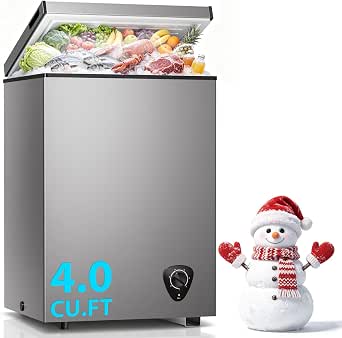 | Best Balanced Choice for Tiny Homes | Capacity: 4.0 cu. ft. | Temperature settings: 7 | Temperature range: -7.6°F to 21.2°F | VIEW ON AMAZON | See Our Full Breakdown |
| Compact Chest Freezer, 1.8 Cubic Feet, Red |  | Best for Ultra-Cold Storage in Tight Spaces | Type: Chest freezer | Capacity: 1.8 cu. ft. | Temperature range: 14°F to -40°F | VIEW ON AMAZON | See Our Full Breakdown |
| KRIB BLING 3.5 Cu. Ft. Chest Freezer, Black |  | Best Compact Chest Freezer | Capacity: 3.5 cu. ft. | Temperature settings: 7 | Noise level: Less than 40 dB | VIEW ON AMAZON | See Our Full Breakdown |
| VEVOR 10 Qt Portable Car Refrigerator and Freezer |  | Best for Mobile Tiny-House Living | Capacity: 10 qt | Temperature range: -4°F to 68°F | Cooling method: Compressor | VIEW ON AMAZON | See Our Full Breakdown |
| KRIB BLING 5.0 cu. ft. Compact Chest Freezer, Black |  | Best for Maximum Chest-Freezer Storage | Capacity: 5.0 cu. ft. | Temperature settings: 7 modes | Defrost type: Manual | VIEW ON AMAZON | See Our Full Breakdown |
| Dometic CFX5 95L Dual-Zone Electric Cooler and Freezer |  | Best for Off-Grid Dual-Zone Storage | Capacity: 95 liters | Temperature range: -7°F to 68°F (-22°C to 20°C) | Cooling zones: 2 | VIEW ON AMAZON | See Our Full Breakdown |
| Whynter CUF-301BK Upright Mini Freezer, 3.1 cu. ft., Black |  | Best Upright Freezer for Small Kitchens | Capacity: 3.1 cu. ft. | Type: Freestanding upright freezer | Defrost: Manual | VIEW ON AMAZON | See Our Full Breakdown |
| Midea 3.5 Cu. Ft. Convertible Chest Freezer | 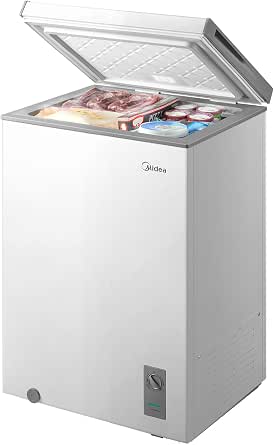 | Best Convertible Chest Freezer | Capacity: 3.5 cu. ft. | Operating modes: Freezer and refrigerator | Garage range, refrigerator mode: 38°F to 110°F | VIEW ON AMAZON | See Our Full Breakdown |
| Igloo 3.2 cu. ft. Compact Mini Fridge with Freezer |  | Best Compact Fridge-Freezer Combo | Capacity: 3.2 cu. ft. | Cooling range: 32–50°F | Freezer: Separate compartment | VIEW ON AMAZON | See Our Full Breakdown |
| Erivess 2.0 Cu. Ft. Compact Freezer with 7-Level Thermostat |  | Best Small Dedicated Freezer | Capacity: 2.0 cu. ft. | Temperature range: -7.6°F to 6.8°F (-14°C to -22°C) | Thermostat settings: 7 | VIEW ON AMAZON | See Our Full Breakdown |
| coolers freezers tiny house | Capacity | Temperature range | Dimensions | Weight |
|---|---|---|---|---|
| Climate Choice 4.0 Cu. Ft. Che | 4.0 cu. ft. | -7.6°F to 21.2°F | 16.34" D × 20.67" W × 32.52" H | 40 lbs |
| Compact Chest Freezer | 1.8 cu. ft. | 14°F to -40°F | — | — |
| KRIB BLING 3.5 Cu. Ft. Chest F | 3.5 cu. ft. | — | 20.47 × 16.73 × 28.54 inches (D × W × H) | 40 lbs |
| VEVOR 10 Qt Portable Car Refri | 10 qt | -4°F to 68°F | — | — |
| KRIB BLING 5.0 cu. ft. Compact | 5.0 cu. ft. | — | 20.47 × 16.73 × 31.69 inches (D × W × H) | 45 lbs |
| Dometic CFX5 95L Dual-Zone Ele | 95 liters | -7°F to 68°F (-22°C to 20°C) | 37.87 × 20.87 × 28.58 inches | 33,300 g |
| Whynter CUF-301BK Upright Mini | 3.1 cu. ft. | — | — | — |
| Midea 3.5 Cu. Ft. Convertible | 3.5 cu. ft. | — | 17.6 in. D × 21.5 in. W × 33.5 in. H | 47.8 pounds |
| Igloo 3.2 cu. ft. Compact Mini | 3.2 cu. ft. | — | — | — |
| Erivess 2.0 Cu. Ft. Compact Fr | 2.0 cu. ft. | -7.6°F to 6.8°F (-14°C to -22°C) | — | — |
More Details on Our Top Picks
Climate Choice 4.0 Cu. Ft. Chest Freezer, Gray
The Climate Choice pairs 4.0 cu. ft. of capacity with a small-space-friendly footprint, making it a balanced pick for tiny-house owners who want more room than a compact backup freezer offers. Its seven temperature settings span -7.6°F to 21.2°F, giving more adjustment options than the KRIB BLING 5.0 cu. ft. model’s listing, which specifies seven modes but no temperature range. A removable basket keeps frequently used items near the top, while the drain makes manual defrosting and cleanup less awkward. At below 40 dB and 0.469 kWh per 24 hours, it also suits living areas where noise and power use matter. The tradeoff is its top-opening layout and modest capacity: it holds less than the larger KRIB BLING, and its temperature range may not fit every freezing requirement.
Pros:- 4.0 cu. ft. capacity offers a practical middle ground for compact homes.
- Seven settings across a stated -7.6°F to 21.2°F range allow temperature adjustment.
- Removable basket and built-in drain simplify access and defrost cleanup.
- Below-40-dB operation and stated energy use suit noise- and power-conscious spaces.
Cons:- Top-opening design needs overhead clearance and makes items at the bottom less accessible.
- 4.0 cu. ft. may be too limited for bulk storage or larger households.
- The listed temperature range may not meet every deep-freezing need.
Best for: Tiny-house residents who want a quiet, moderately sized freezer with stated temperature settings and easier defrost cleanup.
Not ideal for: Households stocking large quantities of food or buyers who need a temperature range colder than -7.6°F.
- Capacity:4.0 cu. ft.
- Temperature settings:7
- Temperature range:-7.6°F to 21.2°F
- Dimensions:16.34″ D × 20.67″ W × 32.52″ H
- Noise level:Below 40 dB
- Energy consumption:0.469 kWh per 24 hours
- Weight:40 lbs
- Installation:Freestanding, top-opening
Our verdict“Choose the Climate Choice if you want a quiet, organized 4.0 cu. ft. chest freezer with a stated temperature range for a compact home.”
Compact Chest Freezer, 1.8 Cubic Feet, Red
This red chest freezer makes a different compromise from the Climate Choice: it gives up capacity for a compact footprint and a listed temperature range reaching -40°F. That unusually broad range may suit buyers who need very cold storage in a tiny-house utility nook, while its two removable baskets help separate smaller items without adding shelves that take up floor space. At 38 dB, it is also specified as quiet enough for a home environment. Its drain port supports easier cleaning, another useful detail when the unit is tucked into a small room. The limitation is substantial: 1.8 cu. ft. is backup-scale capacity, not a replacement for the 4.0 cu. ft. Climate Choice or 5.0 cu. ft. KRIB BLING. Choose it for specialized, limited-volume storage; skip it for routine family meal storage.
Pros:- Listed range reaches -40°F for buyers with unusually low-temperature storage needs.
- Compact 1.8 cu. ft. size fits spaces that may not accommodate larger chest freezers.
- Two removable baskets help sort smaller items.
- 38 dB operation and an easy-clean drain port suit indoor use and maintenance.
Cons:- Very limited capacity compared with the Climate Choice and KRIB BLING chest freezers.
- The supplied specs do not include dimensions, making fit planning less certain.
- Its narrow storage volume makes it a poor choice as the only freezer for most households.
Best for: Tiny-house owners who need a small, quiet freezer for a limited supply of very cold or specialty frozen items.
Not ideal for: People planning to store bulk groceries, meal-prep portions, or food for a household as their main freezer.
- Type:Chest freezer
- Capacity:1.8 cu. ft.
- Temperature range:14°F to -40°F
- Noise level:38 dB
- Storage baskets:2 removable plastic baskets
- Color:Red
Our verdict“Pick this model for compact, very cold storage of a small inventory, not as a household’s primary freezer.”
KRIB BLING 3.5 Cu. Ft. Chest Freezer, Black
The KRIB BLING 3.5 cu. ft. model is the space-first choice among the standard chest freezers here. Its 20.47 × 16.73-inch footprint is smaller than the listed footprint of the 5.0 cu. ft. KRIB BLING, which helps when every bit of floor area matters, while still offering more room than the 1.8 cu. ft. red freezer. Seven temperature settings and insulation designed to retain cold air give it useful everyday flexibility, and the included movable basket and frost scraper add basic organization and maintenance tools. Below-40-dB operation is a sensible fit near living areas. The tradeoff is clear: it holds less than the Climate Choice 4.0 cu. ft. and much less than its 5.0 cu. ft. sibling. Its top lid also requires overhead clearance, so a tight alcove may not work.
Pros:- Compact listed footprint saves floor space compared with the KRIB BLING 5.0 cu. ft. model.
- 3.5 cu. ft. capacity is larger than the 1.8 cu. ft. red compact freezer.
- Seven temperature settings offer adjustment for different frozen goods.
- Movable basket and frost scraper are included, with operation below 40 dB.
Cons:- Less storage than the Climate Choice 4.0 cu. ft. and KRIB BLING 5.0 cu. ft. models.
- Top-opening lid needs usable space above the freezer.
- The supplied specs do not state a temperature range or energy consumption.
Best for: Tiny-house residents prioritizing a smaller floor footprint while still wanting more than a minimal backup freezer.
Not ideal for: Bulk shoppers or anyone placing a chest freezer beneath a low counter, shelf, or other overhead obstruction.
- Capacity:3.5 cu. ft.
- Temperature settings:7
- Noise level:Less than 40 dB
- Dimensions:20.47 × 16.73 × 28.54 inches (D × W × H)
- Weight:40 lbs
- Power:70 watts, 110 volts
- Included components:Movable basket, frost scraper
- Installation:Freestanding, top-opening
Our verdict“Choose this KRIB BLING when floor space matters more than maximum storage and you can accommodate a top-opening lid.”
VEVOR 10 Qt Portable Car Refrigerator and Freezer
Unlike the chest freezers in this roundup, the VEVOR is built around portable, dual-power use rather than storing a household’s frozen groceries. Its 10-quart capacity is small, but the compressor is listed as cooling from 68°F to -4°F in 15 minutes, making it useful for keeping a limited set of provisions cold or frozen during a drive or while moving between power sources. AC and vehicle DC adapters, three-level battery protection, and ECO and MAX modes give it more flexibility on the road than the stationary Climate Choice or KRIB BLING models. A USB port and reversible door add convenience in confined setups. The tradeoff is capacity: even the 1.8 cu. ft. red freezer offers far more storage. The listing also gives conflicting AC voltage details, so verify power compatibility before buying.
Pros:- Portable compressor design supports both cooling and freezing.
- Includes AC and 12/24V DC power options for home and vehicle use.
- Three-level battery protection helps manage vehicle battery draw.
- ECO and MAX modes, USB charging, and a reversible door add setup flexibility.
Cons:- 10 qt capacity is far smaller than even the 1.8 cu. ft. chest freezer.
- The listing gives conflicting AC voltage details, so power compatibility needs confirmation.
- Portable format is less suited to storing a household’s regular frozen food supply.
Best for: Tiny-house travelers and van-based residents who need a portable cooler-freezer that can run from home or vehicle power.
Not ideal for: Buyers seeking a stationary primary freezer, substantial food storage, or a clearly specified AC input without confirming the details.
- Capacity:10 qt
- Temperature range:-4°F to 68°F
- Cooling method:Compressor
- Listed cooling time:68°F to -4°F in 15 minutes
- Power input:12/24V DC; 120/240V AC adapters listed
- Modes:ECO and MAX
- Battery protection:Three levels
- Additional features:Touch controls, USB port, reversible door, automatic defrost
Our verdict“Choose the VEVOR for mobile cooling and limited frozen storage, not as a replacement for a full-size compact chest freezer.”
KRIB BLING 5.0 cu. ft. Compact Chest Freezer, Black
Among these stationary chest freezers, the KRIB BLING 5.0 cu. ft. offers the most listed capacity, making it the better fit for tiny-house owners who freeze meals or buy groceries in larger batches. It has 5.0 cu. ft. of storage in a listed footprint of 20.47 × 16.73 inches, the same floor dimensions as the 3.5 cu. ft. KRIB BLING; the extra capacity comes with a taller cabinet. That makes it a more storage-focused alternative to the smaller Climate Choice, though the Climate Choice provides a stated temperature range and energy-consumption figure that this listing does not. A movable basket helps keep small items reachable, but the unit is still a manual-defrost, top-opening freezer with only one included basket. It suits buyers willing to trade extra maintenance and limited organization for greater capacity.
Pros:- 5.0 cu. ft. capacity exceeds the other stationary chest freezers in this batch.
- Listed floor dimensions match the smaller 3.5 cu. ft. KRIB BLING while providing more capacity.
- Seven temperature modes provide adjustment options.
- Movable basket and frost scraper are included.
Cons:- Manual defrosting requires periodic maintenance.
- Only one basket is listed, limiting separation of smaller foods.
- The supplied specs do not state a temperature range or energy consumption.
Best for: Tiny-house households that need the most listed frozen-food capacity among these compact chest freezers and can handle manual defrosting.
Not ideal for: Buyers with low overhead clearance, a strict need for low-maintenance defrosting, or a requirement for a stated temperature range.
- Capacity:5.0 cu. ft.
- Temperature settings:7 modes
- Defrost type:Manual
- Dimensions:20.47 × 16.73 × 31.69 inches (D × W × H)
- Weight:45 lbs
- Power:70 watts, 110 volts
- Included components:Movable basket, frost scraper
- Installation:Freestanding, top-opening
Our verdict“Choose this model when storage volume matters more than easier defrosting, extensive organization, or a published temperature range.”
Dometic CFX5 95L Dual-Zone Electric Cooler and Freezer
The Dometic CFX5 is the most flexible choice here for tiny-house owners who need both chilled and frozen food without installing separate appliances. Its two independently useful cooling zones and -7°F to 68°F range let you refrigerate drinks while freezing provisions, while AC, 12/24V DC, and compatible solar setups suit cabins or mobile living. Battery protection helps reduce the risk of draining a vehicle battery. Compared with the Whynter CUF-301BK, this is a portable, power-flexible cooler rather than a stationary household freezer. That versatility comes with a serious footprint: at nearly 38 inches long and 33.3 kg, it is harder to fit and move than compact options. The compatible Dometic battery and solar equipment are separate power options, so off-grid operation may require additional gear.
Pros:- Two cooling zones support refrigerated and frozen food at the same time.
- AC and 12/24V DC inputs suit household and vehicle power.
- Compatible solar setups support off-grid use.
- Battery protection helps guard against draining a vehicle battery.
Cons:- Its 37.87-inch length and 33.3 kg weight make it difficult to place and carry in a tiny home.
- Compatible Dometic batteries and solar panels are separate power options.
- Its portable-cooler format may be less convenient than a dedicated upright freezer for permanent indoor storage.
Best for: Tiny-house owners, van dwellers, and off-grid campers who need refrigerator and freezer storage in one appliance and can accommodate its large footprint.
Not ideal for: People with very limited floor or counter space, or buyers seeking a lightweight cooler or an all-in-one system that includes its optional battery and solar equipment.
- Capacity:95 liters
- Temperature range:-7°F to 68°F (-22°C to 20°C)
- Cooling zones:2
- Power input:AC 110–240V; DC 12/24V
- Dimensions:37.87 × 20.87 × 28.58 inches
- Weight:33,300 g
- Insulation:Vacuum insulated panels
- Warranty:2 years
Our verdict“Choose the CFX5 if you need dual-zone food storage and off-grid power flexibility and have room for a large, heavy unit.”
Whynter CUF-301BK Upright Mini Freezer, 3.1 cu. ft., Black
The Whynter CUF-301BK earns its place as a compact, dedicated freezer for tiny houses where an upright layout makes stored food easier to see and reach. Its reversible door gives more placement flexibility in a tight kitchen, and the removable shelf lets you adjust the interior for taller items. A keyed lock can help keep contents secure in a shared space. Unlike the Midea 3.5 Cu. Ft. Convertible Chest Freezer, this model is freezer-only and uses vertical shelving rather than a top-opening bin; that can make routine access simpler, but it gives up the Midea’s refrigerator mode and outage protection details. The Whynter is Energy Star rated and described as quiet, but its manual defrost requires periodic maintenance, and its 3.1 cu. ft. capacity may not cover bulk storage for a household.
Pros:- Upright format and removable shelf make stored food easier to organize and reach.
- Reversible door gives more options for tight room layouts.
- Keyed cylinder lock helps secure freezer contents.
- Energy Star rating and quiet compressor cooling suit indoor use.
Cons:- Manual defrost requires periodic maintenance.
- Freezer-only operation lacks the Midea’s convertible refrigerator mode.
- Its 3.1 cu. ft. capacity may be restrictive for substantial household food storage.
Best for: Tiny-house cooks who want a dedicated upright freezer with a reversible door, adjustable shelf, and lock for a compact kitchen.
Not ideal for: Buyers who want refrigerator and freezer modes in one appliance, dislike manual defrosting, or need chest-freezer capacity for large bulk purchases.
- Capacity:3.1 cu. ft.
- Type:Freestanding upright freezer
- Defrost:Manual
- Door:Reversible
- Lock:Keyed cylinder lock
- Energy:Energy Star rated
- Color:Black
- Warranty:One-year limited manufacturer warranty
Our verdict“Pick the Whynter if an accessible, lockable upright freezer fits your tiny-house layout better than a convertible chest model.”
Midea 3.5 Cu. Ft. Convertible Chest Freezer
The Midea is the most adaptable stationary chest option in this group: switch between freezer and refrigerator modes as food-storage needs change, without dedicating the floor space to two appliances. Its stated garage operating ranges give tiny-house owners more flexibility in a utility area with wider temperature swings than a living room. The removable basket keeps frequently used items near the top, while up to 48 hours of power-outage protection can help preserve frozen food during an interruption. Compared with the upright Whynter CUF-301BK, the Midea offers a refrigerator setting and outage protection, but chest access means items at the bottom can be less convenient to reach. Its 3.5 cu. ft. capacity is still modest for bulk storage, and the top-opening lid needs clear space above it.
Pros:- Freezer and refrigerator modes let one appliance serve changing storage needs.
- Specified garage operating ranges accommodate a broad range of room temperatures.
- Power-outage protection is stated to keep food frozen for up to 48 hours.
- Removable basket helps separate frequently reached items.
Cons:- The top-opening layout needs overhead clearance and can make bottom-stored food harder to reach.
- Its 3.5 cu. ft. capacity may be too small for larger households or bulk storage.
- At 47.8 pounds, moving it can be awkward in a compact home.
Best for: Tiny-house residents who want one stationary appliance that can switch between freezer and refrigerator duty, especially in a garage or utility room.
Not ideal for: People with no room for a top-opening lid, buyers who need easy access to every item, or households needing a large-capacity chest freezer.
- Capacity:3.5 cu. ft.
- Operating modes:Freezer and refrigerator
- Garage range, refrigerator mode:38°F to 110°F
- Garage range, freezer mode:0°F to 110°F
- Power outage protection:Up to 48 hours
- Dimensions:17.6 in. D × 21.5 in. W × 33.5 in. H
- Weight:47.8 pounds
- Voltage:115 volts
Our verdict“Choose the Midea if mode flexibility and outage protection matter more than upright access or larger chest capacity.”
Igloo 3.2 cu. ft. Compact Mini Fridge with Freezer
The Igloo is the most straightforward pick here for tiny-house owners who need everyday chilled food plus a separate freezer compartment in one compact appliance. Its 3.2 cu. ft. capacity, glass shelves, and door storage support the kind of organized access a mini fridge offers, rather than the deeper, less visible storage of the Midea 3.5 Cu. Ft. Convertible Chest Freezer. The Midea can switch between refrigerator and freezer modes and is built for broader garage temperatures; the Igloo instead keeps both functions together for routine indoor use. Its adjustable mechanical thermostat adds basic control, and automatic defrost avoids the manual upkeep of the Whynter CUF-301BK. The tradeoff is a limited freezer compartment, while static cooling without a fan may deliver less even air circulation than buyers expect.
Pros:- Separate freezer compartment keeps frozen items available alongside refrigerated food.
- Glass shelves and door storage provide organized space for small groceries.
- Adjustable thermostat offers basic temperature control.
- Automatic defrost avoids the manual upkeep required by the Whynter.
Cons:- The 3.2 cu. ft. total capacity limits both refrigerated and frozen storage.
- Static cooling has no fan, so air is not circulated by a fan-assisted system.
- Unlike the Midea, it does not offer a convertible chest-freezer mode or specified outage protection.
Best for: One- or two-person tiny-house households that want a compact everyday refrigerator with a separate freezer compartment and organized shelving.
Not ideal for: People who need a large freezer for bulk food, garage-temperature flexibility, or fan-assisted air circulation.
- Capacity:3.2 cu. ft.
- Cooling range:32–50°F
- Freezer:Separate compartment
- Cooling system:Compressor, static cooling with no fan
- Temperature control:Adjustable mechanical thermostat
- Shelves:2 glass shelves
- Door shelves:2
- Defrost system:Automatic
Our verdict“Choose the Igloo for compact, everyday refrigeration with a separate freezer compartment, not for substantial frozen-food storage.”
Erivess 2.0 Cu. Ft. Compact Freezer with 7-Level Thermostat
For the tightest tiny-house footprints, the Erivess trades capacity for a compact 2.0 cu. ft. freezer with a reversible door and removable basket. Seven thermostat settings give owners a range of adjustments, while adjustable feet can help with placement on an uneven floor. The stated under-40 dB operation may suit a living area where compressor noise matters, though those figures are product claims rather than independently verified performance here. Compared with the Whynter CUF-301BK, the Erivess is smaller and provides a stated temperature range down to -7.6°F, but it offers less room and no listed keyed lock or Energy Star rating. It also cannot replace a fridge-freezer combo like the Igloo; this is a dedicated freezer for a limited supply of frozen food.
Pros:- Compact 2.0 cu. ft. footprint suits spaces where larger upright units will not fit.
- Seven thermostat settings and a stated -7.6°F to 6.8°F range allow temperature adjustment.
- Reversible door and adjustable feet support flexible placement.
- Removable basket helps organize small frozen items.
Cons:- Its 2.0 cu. ft. capacity is smaller than the Whynter’s 3.1 cu. ft. storage.
- It is a freezer-only appliance, unlike the Igloo fridge-freezer combo.
- The stated noise and energy-use figures are product claims, and the supplied data does not establish independent performance.
Best for: Tiny-house residents, office users, or RV owners who need a small dedicated freezer and can manage with 2.0 cu. ft. of storage.
Not ideal for: Households buying frozen food in bulk, anyone wanting refrigeration as well as freezing, or buyers who require independently verified noise or energy performance.
- Capacity:2.0 cu. ft.
- Temperature range:-7.6°F to 6.8°F (-14°C to -22°C)
- Thermostat settings:7
- Noise level:Under 40 dB
- Energy consumption:0.6 kWh per day
- Compressor:R600a
- Door:Reversible, single door
- Storage:Removable basket
Our verdict“Pick the Erivess when a small dedicated freezer is the priority and its limited capacity is enough for your household.”
How We Picked
I ranked these options for the constraints common in tiny houses: limited floor area, tight access, modest storage needs, and the possibility that one appliance must do more than one job. I compared the listed capacity and format, whether the unit offers convertible or dual-zone operation, how its layout affects daily access, and whether it is designed for household placement or portable use. The product lineup includes chest freezers, an upright freezer, a compact fridge-freezer, and portable electric coolers, so I judged each against its intended role rather than treating them as interchangeable.
The top position goes to the Midea because its convertible format offers the broadest household flexibility among the listed options. The Whynter and Igloo follow for buyers who value easier organization or combined refrigeration and freezing; the chest models rank well for straightforward frozen storage but differ in capacity and footprint. Portable models rank for mobility rather than as universal kitchen replacements, while smaller freezers make sense when space matters more than volume. I have not treated unlisted specifications such as energy use, noise, or exact installation clearances as verified facts; buyers should confirm those details with the manufacturer before purchase.
Factors to Consider When Choosing Coolers Freezers Tiny House
In a tiny house, choosing an appliance is a layout decision as much as a food-storage decision. I would start with where it can sit, how often I need to reach the contents, and whether it must cover refrigeration as well as freezing. These broader checks can prevent a compact appliance from creating daily friction.
Measure the Whole Appliance Zone
Measure the intended floor area, doorway, and route into the room before choosing a freezer by its listed capacity. A chest freezer also needs usable room above its lid, while an upright needs enough clearance for its door to open without blocking a walkway. Leave the ventilation clearance specified by the manufacturer rather than squeezing the unit into a cabinet-sized gap. In a tiny house, a few inches can determine whether drawers, doors, or circulation paths remain usable. Check the appliance dimensions in the product manual, since capacity alone does not reveal its footprint.
Match Storage Style to How You Cook
Buyers who batch-cook or store larger frozen items may prefer the open volume of a chest, but should plan how to separate foods so frequently used items do not end up buried. Upright shelves and baskets can make everyday access more direct, though the internal layout may constrain the shape of what fits. Before buying, estimate the kinds of packages you keep rather than relying only on a cubic-foot figure. If your household stores mostly small portions, organization may matter more than maximum capacity. A simple set of bins can help, but it should not block airflow or prevent the lid or door from closing.
Decide Whether One Appliance Must Do Two Jobs
A convertible freezer or a fridge-freezer can help when a tiny home has no room for separate appliances, but flexibility is only useful if you will actually change modes or need both types of storage. Check how the product defines its modes and whether it offers simultaneous refrigeration and freezing; a convertible unit and a dual-zone cooler are not the same thing. Switching a freezer between modes may require moving food and waiting for temperatures to stabilize. If you need reliable access to both frozen and fresh food every day, a combined design with separate zones may suit you better than a single-mode appliance. For occasional extra capacity, a dedicated freezer can be the simpler choice.
Check Power, Placement, and Operating Conditions
Small homes can have limited electrical capacity, especially when several appliances share a circuit or the house runs on an off-grid system. Confirm the unit’s electrical requirements and ask the manufacturer for operating consumption data before assuming a compact appliance will be suitable. Portable coolers may offer placement flexibility, but they still need a compatible power source and a stable spot for use. Account for heat, ventilation, and the room conditions permitted by the manufacturer, particularly if the appliance will sit in a utility nook or vehicle. Planning these details early is safer than discovering that the appliance conflicts with the home’s power setup.
Choose Household Storage or Portable Cooling
A portable electric cooler is suited to trips, flexible placement, or adding cooling capacity where a fixed appliance would be awkward. It may not replace a household chest or upright freezer when the goal is storing a steady supply of frozen food in the kitchen. Think about how often you will move it, whether it needs to serve more than one location, and how much of your food it must hold at once. A fixed freezer generally makes more sense for a permanent food-storage role, while portability has value when your routine includes travel or outdoor use. Avoid paying for mobility you will rarely use if floor-space efficiency is your main concern.
Prioritize Maintenance and Long-Term Fit
Ask how the appliance defrosts, how its interior is cleaned, and whether the seals and controls are easy to reach. Manual defrosting can take time and requires somewhere to move frozen food, so plan for that task before choosing a chest model. Compact appliances also need occasional cleaning and space around them; a unit that is difficult to pull out can become harder to maintain in a built-in-looking nook. Check warranty terms, service access, and replacement-part availability in your region. In a small home, a model that is easy to keep clean and operate can be a better fit than one with more capacity but a poor service location.
Frequently Asked Questions
Can a portable cooler replace a freezer in a tiny house?
It can work for some households, but I would not assume every portable cooler is a full replacement for a fixed freezer. Compare its usable capacity, temperature range, intended duty cycle, and power requirements with the amount of frozen food you keep. The Dometic and VEVOR options in this roundup are portable products, while the chest and upright models are designed for stationary storage. If you need dependable bulk storage at home, a household freezer is the more direct fit. If mobility or temporary cooling matters most, a portable unit may better match your routine.
Is a chest freezer or an upright freezer easier in a very small kitchen?
The answer depends on the space around the appliance, not only its footprint. A chest model needs room for the lid to open and can make bottom-stored food less accessible, while an upright needs a clear door swing and may be easier to organize by shelf. Measure the full opening path and nearby counters, cabinets, and walkways. If the freezer sits where overhead clearance is tight, an upright may be simpler; if a door would block a narrow aisle, a chest may work better. The Whynter and chest models in this lineup illustrate that access style is a major difference.
Should I choose a convertible freezer if I have room for only one cold-storage appliance?
A convertible model can be useful when your food-storage needs change or you need to switch between refrigerator and freezer use. It does not automatically provide separate fresh-food and frozen-food zones at the same time, so check the operating modes carefully. The Midea is the standout convertible pick in this comparison, but the Igloo mini fridge may suit buyers seeking refrigeration and a freezer compartment together. Think through your normal weekly food mix before choosing. If you rely on both types of storage every day, simultaneous zones may matter more than the ability to switch modes.
How much freezer capacity should a tiny-house household choose?
Start with the food you already store and the frequency of your shopping or meal preparation, rather than selecting the largest unit that fits. Batch cooking and bulk purchases can justify more capacity, but unused volume takes up valuable room and may complicate placement. A compact 1.8- or 2.0-cubic-foot model may be enough for limited frozen staples, while a larger chest can suit households that store more. Keep in mind that stated capacity does not describe how easily you can organize or retrieve items. Check internal dimensions and consider whether your regular packages will fit.
What should I verify before using a freezer in an off-grid tiny house?
Confirm the appliance’s voltage, startup and running power needs, and manufacturer-provided energy data, then compare them with your inverter and battery capacity. Do not estimate suitability from the word compact or from capacity alone. Ask the manufacturer about operation under the temperatures expected where the unit will sit, and follow its ventilation instructions. Also account for other appliances that may share the electrical system at the same time. If the power budget is tight, get guidance from a qualified installer before committing to a model.
Conclusion
For most tiny-house buyers who want flexibility in a fixed appliance, I would start with the Midea 3.5 Cu. Ft. Convertible Chest Freezer as the best overall pick. The Climate Choice 4.0 Cu. Ft. Chest Freezer is a practical value choice for straightforward frozen storage, while the Dometic CFX5 is the best premium-style option for buyers who need portable, dual-zone cooling. Beginners who want familiar refrigerator access may prefer the Igloo mini fridge with freezer; shoppers focused on organized frozen storage should compare the Whynter upright. For very limited storage needs, consider the smaller Compact Chest Freezer or Erivess, and choose the VEVOR when portability is the main requirement. I would pick by layout and use first: a freezer that fits the way you live is more useful than extra capacity that makes the room harder to use.
Halloween Picks

Kalolary 12ft Halloween Witch Haunted House Inflatable Archway

Fun Costumes Creepy Twin Boys Halloween Animatronic

HOPOCO Halloween Pumpkin Fog Machine with 12 LED Colors & 4 Light Modes
As an affiliate, we earn on qualifying purchases.