
To set up refrigeration in your tiny house for grid and off-grid use, focus on combining energy-efficient appliances with proper insulation, placement, and ventilation. Use solar panels and reliable battery banks for off-grid power, and position the fridge in the coolest spot away from heat sources. Proper sealing and insulation minimize energy use, while smart management guarantees the fridge runs mainly when solar energy is available. Keep exploring for more tips on creating a sustainable, reliable setup.

Get compact home essentials delivered free — and shop member deals
- Fast, free delivery on millions of items
- Access to Prime Big Deal Days deals on October 6–7
- Prime Video, Amazon Music and more included
Key Takeaways
- Use energy-efficient mini-fridges connected to the grid or low-power coolers powered by solar panels off-grid.
- Incorporate high-quality insulation and strategic placement to minimize energy consumption and maintain stable temperatures.
- Implement solar power systems with reliable batteries to ensure continuous off-grid refrigeration, especially during cloudy days or nighttime.
- Optimize ventilation and positioning to prevent heat buildup, enhancing cooling efficiency and appliance lifespan.
- Select appliances with low energy requirements and manage their operation to align with solar energy availability.
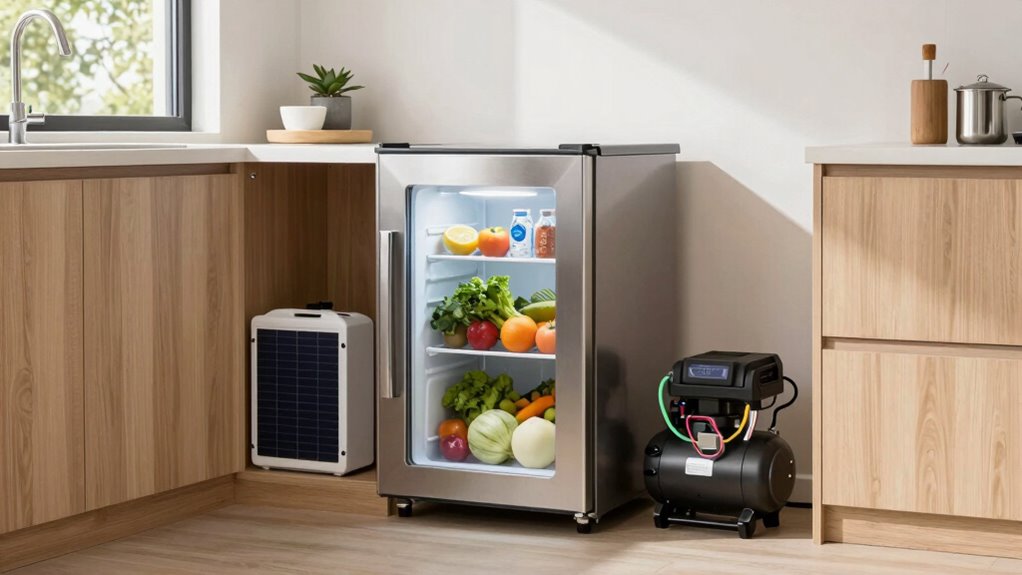
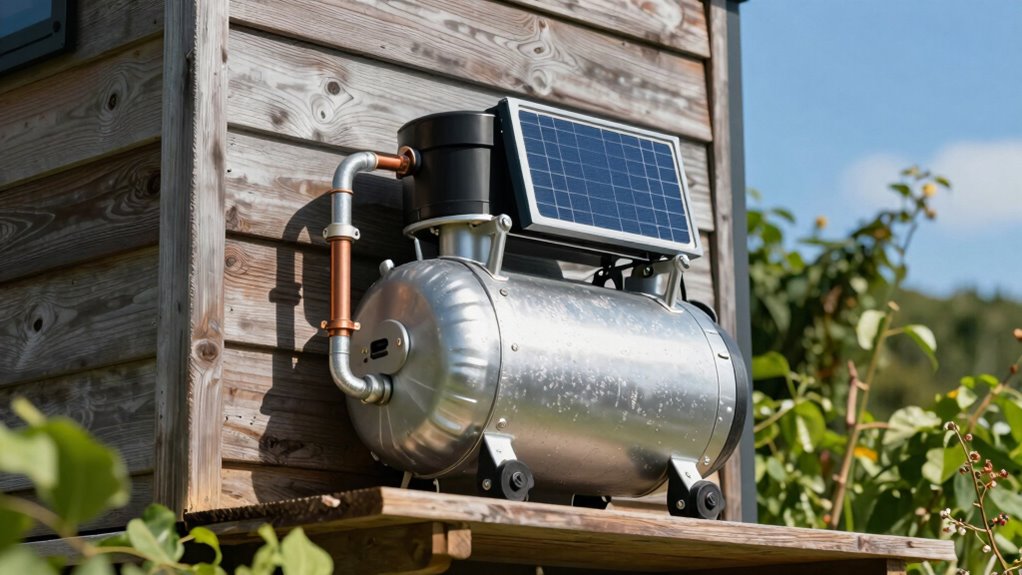
Living in a tiny house means maximizing every inch of space, especially when it comes to refrigeration. You need a setup that’s efficient, reliable, and suited to your energy sources. Whether you’re hooked up to the grid or living off-grid, your goal is to keep your food fresh without sacrificing valuable space or power. Solar power becomes a game-changer for off-grid living, allowing you to harness the sun’s energy to run a compact refrigerator or cooler. You’ll want to invest in a high-quality solar panel system with enough wattage to meet your refrigeration needs, coupled with a reliable battery bank to store excess energy for nighttime or cloudy days. This setup guarantees you have consistent power, reducing the risk of spoilage and keeping your food fresh even when the sun isn’t shining.
Harness solar power and reliable batteries to keep your tiny house food fresh off-grid.
Insulation techniques play an essential role in your tiny house refrigeration efficiency. Proper insulation minimizes temperature fluctuations, reducing the workload on your cooling system and conserving energy. Using materials like spray foam insulation, rigid foam panels, or even reflective barriers helps maintain a stable interior temperature. When your tiny house is well-insulated, your refrigerator doesn’t have to work as hard to keep food cold, which saves energy—especially necessary when relying on solar power off-grid. Additionally, strategic placement of your refrigerator in the coolest part of your tiny house can further improve efficiency. Keep it away from heat sources like windows or heating vents, and consider installing a small vent or exhaust fan to prevent heat buildup around the unit. Incorporating renewable energy sources like solar panels ensures your refrigeration remains sustainable and reduces reliance on traditional power grids. Understanding energy efficiency standards can help you select appliances that maximize your power savings. Moreover, choosing appliances with low power consumption can further enhance your setup’s sustainability and cost-effectiveness. Investing in proper ventilation around your refrigerator can also prevent heat buildup and improve cooling performance. Proper sealing and airtight construction of your tiny house can also enhance overall insulation, making your refrigeration setup even more effective.
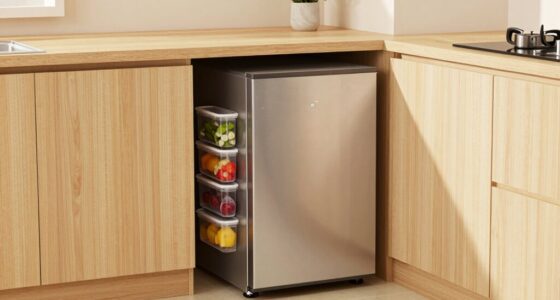
For grid-connected tiny house owners, a standard energy-efficient mini-fridge often suffices, but pairing it with good insulation still pays off. You can connect your fridge to your home’s main power, which is typically more stable and dependable. However, even in this scenario, investing in insulation techniques can reduce your energy bills and extend your appliance’s lifespan. If you’re off-grid, you might opt for a compressor-based cooler designed to run on low power or a thermoelectric cooler that uses minimal energy. These options work best with your solar setup, especially when combined with smart energy management—like setting your fridge to run only when solar power is abundant. Properly managing your energy consumption can significantly improve your refrigerator’s performance and longevity.
In all cases, sealing your tiny house thoroughly and choosing energy-efficient appliances will make your refrigeration setup more sustainable. Whether you’re relying on solar power or grid electricity, smart insulation techniques and energy-conscious choices help you keep your food fresh, your space uncluttered, and your energy use optimized.
energy-efficient mini fridge for off-grid tiny house
As an affiliate, we earn on qualifying purchases.
As an affiliate, we earn on qualifying purchases.
Frequently Asked Questions
How Much Power Does a Tiny House Refrigerator Typically Consume?
A typical tiny house refrigerator consumes about 100 to 200 watts, depending on its energy efficiency and compressor type. Energy-efficient models with advanced compressor types, like inverter compressors, use less power and run more smoothly. You’ll want to contemplate the size and insulation as well, since well-designed units can considerably reduce power consumption, making them more suitable for both grid-connected and off-grid setups.
Can Solar Panels Efficiently Power Off-Grid Refrigeration?
Solar panels can indeed power off-grid refrigeration efficiently if you choose high solar panel efficiency systems and reliable battery storage solutions. With the right setup, your panels harness sunlight to run your fridge smoothly, even during cloudy days. Modern batteries store excess energy, ensuring your refrigeration stays operational 24/7. Proper planning and quality components make this a realistic, sustainable solution, turning your tiny house into a self-sufficient oasis of cool comfort.
What Maintenance Is Required for Tiny House Refrigeration Units?
You need to keep up with regular maintenance schedules to guarantee your tiny house refrigeration unit stays energy-efficient. Check and clean the condenser coils monthly to prevent dust buildup, which can reduce efficiency. Inspect door seals for gaps and replace them if needed. Also, defrost the freezer periodically if it’s not frost-free. Proper maintenance helps your unit run smoothly, saves energy, and extends its lifespan.
Are There Eco-Friendly Refrigerant Options Suitable for Tiny Homes?
You’ll be glad to know eco-friendly refrigerants are available for sustainable cooling in tiny homes. About 90% of refrigerants used worldwide are harmful to the environment, so choosing alternatives matters. Options like hydrofluoroolefins (HFOs) and natural refrigerants such as propane or isobutane provide effective cooling while reducing environmental impact. They’re safe, energy-efficient, and perfect for small spaces, making your tiny house both eco-conscious and functional.
How Do Temperature Fluctuations Affect Off-Grid Refrigeration Performance?
Temperature fluctuations can greatly impact your off-grid refrigeration performance. When temperatures vary, maintaining temperature stability becomes harder, and your system must work harder to keep things cool. Good insulation efficiency minimizes these effects by reducing heat exchange. To guarantee reliable operation, you should regularly monitor your fridge’s temperature, improve insulation where possible, and choose energy-efficient cooling methods. This approach helps keep your food fresh, even during extreme temperature swings.
Conclusion
Just like the steady heartbeat of a home, your refrigeration setup keeps your tiny house alive and well. Whether you’re connected to the grid or venturing off-grid, choosing the right system guarantees your food stays fresh and your journey stays smooth. Think of it as the silent guardian, much like the lighthouse guiding ships safely ashore. With the right setup, you’ll enjoy the comfort of home, wherever your adventures lead, in a dance of ingenuity and independence.
Evergreen bestsellers Picks
bestsellers
As an affiliate, we earn on qualifying purchases.