
A secondary freezer makes sense in a tiny lifestyle when you want to store bulk or seasonal foods, save trips to the store, and maximize space. It frees up room in your main fridge or pantry, keeps clutter down, and boosts energy efficiency. If you shop sales or preserve seasonal harvests, a second freezer can be a game-changer. To discover more about how it can fit your space and needs, keep exploring.

Get compact home essentials delivered free — and shop member deals
- Fast, free delivery on millions of items
- Access to Prime Big Deal Days deals on October 6–7
- Prime Video, Amazon Music and more included
Key Takeaways
- When bulk shopping or preserving seasonal foods to reduce frequent trips and save space.
- If energy efficiency and lower electricity bills are priorities in a compact living environment.
- To maximize storage for homemade meals, bulk items, or specialized diets without clutter.
- When optimizing small space and improving organization with stacking or compact freezer options.
- If supporting meal planning and reducing impulse buys enhances your tiny lifestyle.
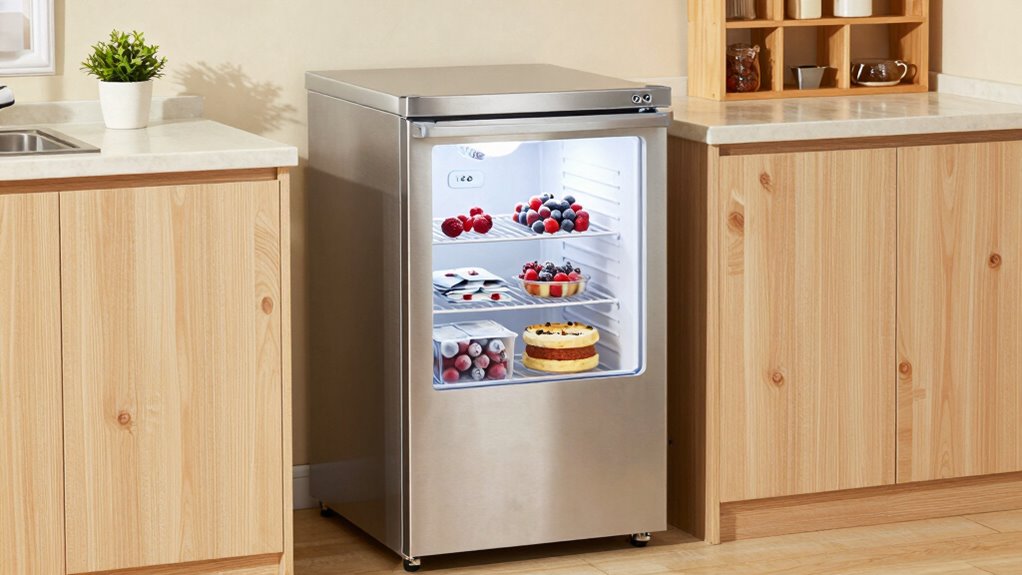
Ever wonder if adding a secondary freezer is worth it in a tiny lifestyle? It’s a question many people ask when they’re trying to maximize limited space without sacrificing convenience. The truth is, a secondary freezer can be a game-changer, especially if you’re keen on improving your energy efficiency and space optimization. While it might seem counterintuitive to add more appliances in a small home, a thoughtfully chosen freezer can actually help you save energy and free up space in smarter ways.
A secondary freezer can boost space efficiency and energy savings in tiny living.
When you consider energy efficiency, a second freezer may seem like a drain on resources at first glance. However, if you plan properly, it can actually reduce your overall energy consumption. For example, having a dedicated freezer for bulk shopping means you won’t need to run a full-sized refrigerator constantly or turn to inefficient methods of storage. Plus, modern freezers are designed to be energy-efficient, consuming less power than older models. By keeping your frozen goods organized and accessible, you cut down on the time your appliance runs, which can lead to lower electricity bills and a smaller carbon footprint. Understanding contrast ratio in your appliances can also help you select models that optimize energy use.
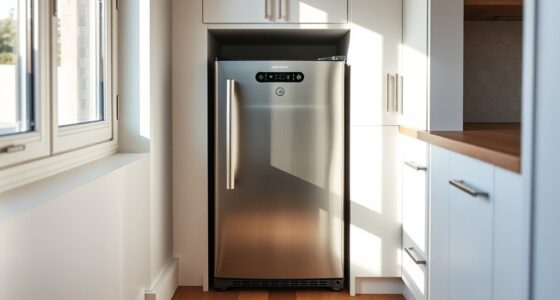
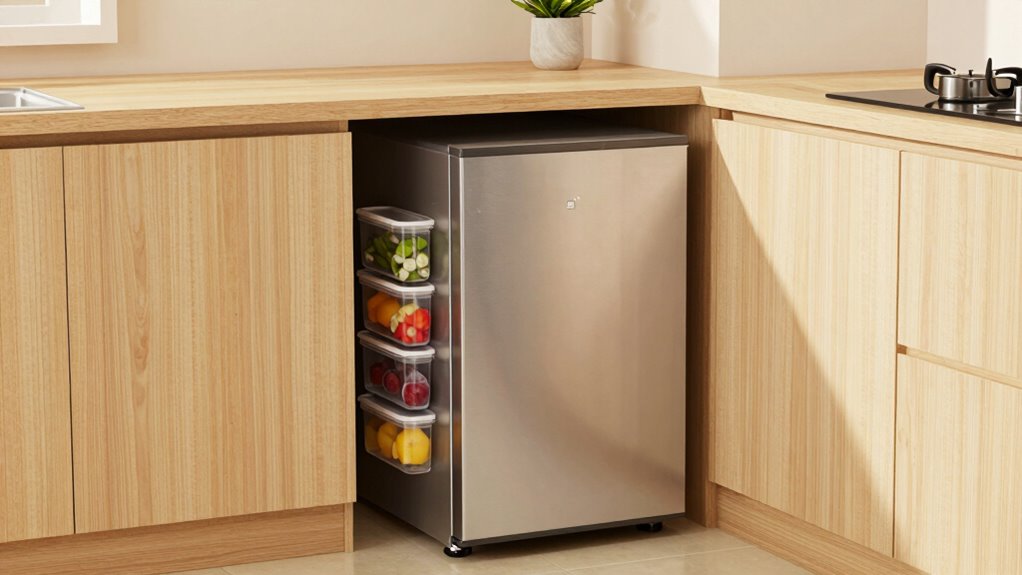
Space optimization is another significant benefit. In tiny living, every square inch counts, and a secondary freezer can help you make better use of limited space. Instead of cluttering your main refrigerator or pantry with bulk items, you can store them in the freezer. This keeps your living area tidy and reduces the need for multiple small storage containers taking up counter or shelf space. Compact freezers are available in various sizes and styles, making it easier to find one that fits snugly into a corner or under a counter. Mounting or stacking options also help you utilize vertical space effectively. Additionally, appliance placement can dramatically influence how efficiently you utilize your available space. Proper storage solutions can further enhance your setup and ensure you’re making the most of every inch. Incorporating space-saving features like adjustable shelving or door storage can optimize your freezer’s capacity even more.
A secondary freezer also offers flexibility that’s hard to match in small homes. It allows you to buy in bulk during sales, store seasonal items, or preserve homemade meals without worry. This means fewer shopping trips, less impulse buying, and more savings over time. Additionally, it enables you to plan meals better and avoid frequent trips to the grocery store, which is a huge plus in a tiny lifestyle where every outing counts. Proper organization techniques can make your freezer even more efficient and accessible.
In the end, adding a secondary freezer isn’t just about extra storage; it’s about making your limited space work smarter. When chosen carefully, it enhances energy efficiency by reducing unnecessary appliance running times and boosts space optimization by helping you organize your belongings more effectively. If you’re looking to maximize your tiny living setup, a secondary freezer might just be the strategic addition you need.
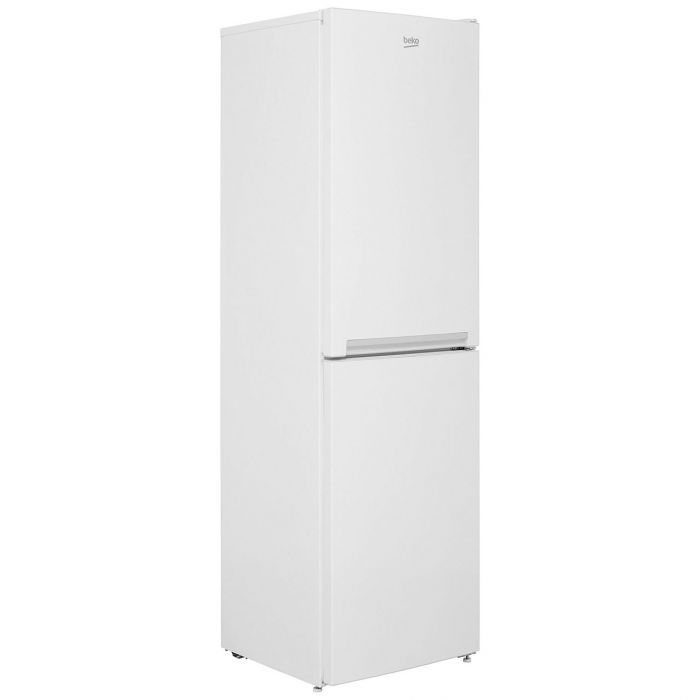
compact energy-efficient freezer
As an affiliate, we earn on qualifying purchases.
As an affiliate, we earn on qualifying purchases.
Frequently Asked Questions
How Much Space Does a Secondary Freezer Typically Require?
A secondary freezer typically needs about 3 to 4 cubic feet of space, making it manageable in small living areas. You’ll want to take into account its temperature maintenance capabilities to ensure your food stays fresh and monitor noise levels so it doesn’t disturb your environment. Compact models are designed to fit tight spots, providing ample storage without overwhelming your space, while still maintaining efficient temperature control and quiet operation.
What Are the Energy Costs Associated With Running Two Freezers?
You might worry about high energy costs, but a secondary freezer can be quite energy-efficient if you choose an ENERGY STAR model and optimize appliance placement. Running two freezers increases electricity use, but smart placement—keeping them in cool, ventilated areas—reduces energy consumption. With proper maintenance and efficient models, the incremental costs stay manageable, making a secondary freezer a practical solution without *considerably* raising your utility bills.
Can a Secondary Freezer Be Powered During a Power Outage?
A secondary freezer can be powered during a power outage if you have alternative energy sources like a generator or solar power. To maximize efficiency, guarantee proper freezer organization to prevent excessive door openings, which helps maintain cold temperatures longer. Keep a backup plan ready, such as a portable generator, and organize your frozen items so you can access what you need quickly, reducing energy loss and keeping your food safe during outages.
What Are the Safety Considerations for a Secondary Freezer in Small Spaces?
You need to prioritize safety with your secondary freezer by keeping food organized and easy to access, minimizing the risk of spills or cross-contamination. Make certain proper temperature regulation, maintaining it below 0°F to prevent spoilage. Place the freezer in a well-ventilated area, away from direct sunlight and heat sources. Regularly check for frost buildup and make sure the door seals tightly to avoid energy waste and temperature fluctuations.
How Do I Choose the Right Size and Type of Freezer for Tiny Living?
Did you know that 70% of tiny home dwellers find that storage organization boosts space efficiency? To choose the right size and type of freezer, consider your typical food volume and storage needs, opting for a compact model that fits well in your space. Focus on ideal placement to maximize accessibility, and select a freezer with adjustable shelves or compartments for better organization. This guarantees your food stays fresh without cluttering your tiny living area.
Conclusion
A secondary freezer isn’t just a box of frozen goods; it’s a vault guarding your culinary treasures, a lighthouse guiding your meal choices through the fog of tiny living. It symbolizes freedom—freedom from last-minute trips to the store and scarcity of space. As your tiny home becomes a vessel of simplicity, let this freezer be the anchor that keeps your pantry secure and your lifestyle afloat, reminding you that smart storage is the key to thriving in less.
Fall Picks
fall essentials
As an affiliate, we earn on qualifying purchases.