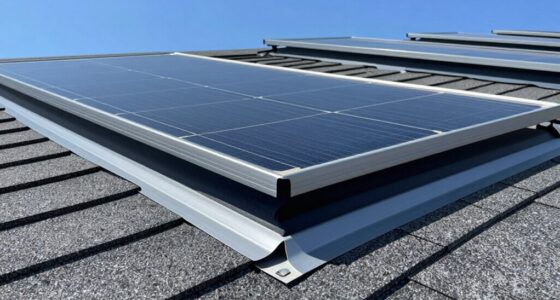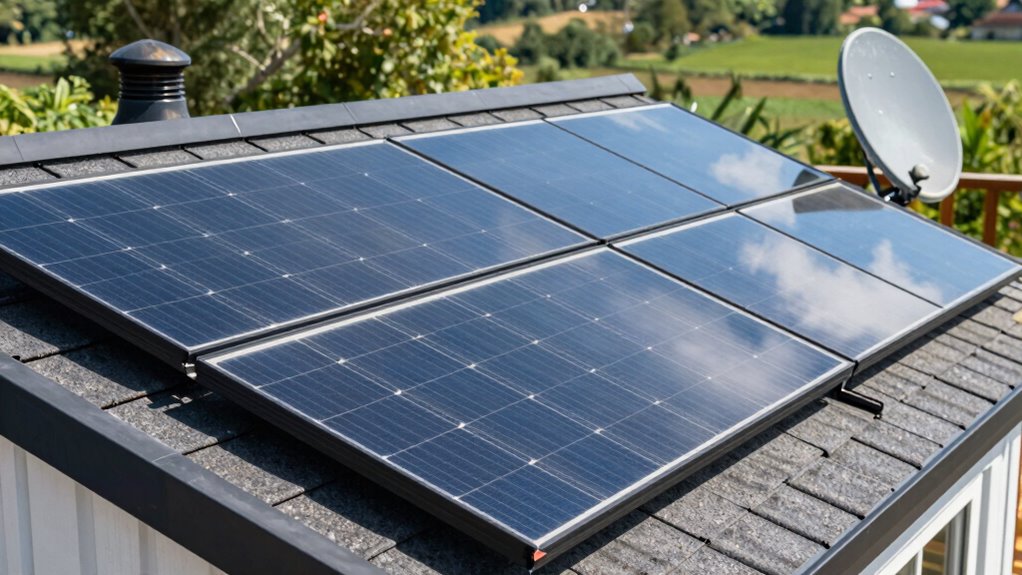
For a rooftop solar kit for a tiny house, I’d start with the Renogy 400W Premium Solar Kit as the best overall option because its 40A MPPT controller suits a more capable system. The ECO-WORTHY 400W kit with batteries and inverter is a standout for buyers who want more of the power system bundled, while the Callsun flexible 400W system may suit roofs that cannot take rigid panels. The main tradeoffs are usable power, roof space and weight, included electronics, and how much installation planning you are willing to take on. A kit’s advertised wattage alone does not tell you whether it can support your appliances or fit your roof. Read on for the full comparison and guidance on matching a kit to your tiny house.

Get compact home essentials delivered free — and shop member deals
- Fast, free delivery on millions of items
- Access to Prime Big Deal Days deals on October 6–7
- Prime Video, Amazon Music and more included
Key Takeaways
400W kits lead this lineup for larger household loads, but they differ: Renogy pairs its panels with a 40A MPPT controller, while several ECO-WORTHY options split the same general wattage across smaller panels or include batteries and an inverter.
Bundled power components reduce shopping, not system planning. The ECO-WORTHY kits with batteries and inverters offer a more integrated starting point, but battery capacity and inverter limits still need to match the appliances you plan to run.
Flexible panels solve a roof-fit problem, not every roof problem. Callsun’s 4 × 100W ETFE panels can suit curved or weight-sensitive surfaces, while rigid panel kits generally offer a different mounting approach and need suitable roof structure.
Small kits are best treated as expandable or limited-load systems. The 100W Renogy and HQST kits, along with the 200W options, are more appropriate for modest use than for powering a tiny house without careful load limits.
Controller type and system voltage separate practical choices. Renogy’s 40A MPPT kit offers a more capable controller than the PWM-based starter kits, while the ECO-WORTHY 200W 12V/24V kit adds voltage flexibility that buyers must configure correctly.
| HQST 400W N-Type Bifacial Solar Panel Set, 2 × 200W |  | Best for High Output in Limited Roof Space | Included quantity: 2 panels | Maximum power: 200W per panel; 400W total | Cell type: N-Type bifacial, 16BB | VIEW ON AMAZON | See Our Full Breakdown |
| ECO-WORTHY 400W 12V Solar Panel Kit with Lithium Batteries and 2000W Inverter | 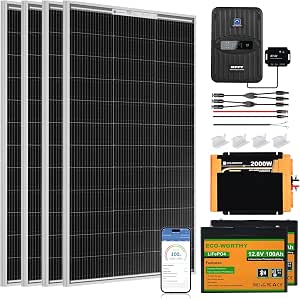 | Best Complete Off-Grid Package | Panel power: 400W total (4 × 100W) | System voltage: 12V | Battery capacity: 2 × 12V 100Ah lithium | VIEW ON AMAZON | See Our Full Breakdown |
| Callsun 400W Flexible Solar Panel System, 4 × 100W ETFE Panels |  | Best for Curved or Weight-Sensitive Roofs | Total power: 400W | Panel configuration: 4 × 100W | Panel efficiency: 23% | VIEW ON AMAZON | See Our Full Breakdown |
| Renogy 100W 12V Solar Panel Starter Kit with 30A PWM Charge Controller |  | Best for Beginners and Gradual Expansion | Panel power: 100W | Output voltage: 12V | Charge controller: 30A PWM | VIEW ON AMAZON | See Our Full Breakdown |
| HQST 100W 12V Solar Panel Kit with Adjustable Tilt Mount Brackets |  | Best Compact Tilt-Mount Starter Kit | Maximum power: 100W | Output voltage: 12V DC | Panel dimensions: 31.8 × 27.5 × 1.18 in | VIEW ON AMAZON | See Our Full Breakdown |
| DOKIO 200W Solar Panel Kit with Two 100W Panels |  | Best for Flexible Panel Placement | Maximum power: 200 W | Panel configuration: Two 100 W panels | Dimensions: 38.2 × 22.2 × 0.98 in | VIEW ON AMAZON | See Our Full Breakdown |
| ECO-WORTHY 400W N-Type Monocrystalline Solar Panel Set, 4 × 100W |  | Best for High Output Without Bundled Electronics | Total power: 400 W | Panel configuration: 4 × 100 W | Cell type: N-type monocrystalline silicon | VIEW ON AMAZON | See Our Full Breakdown |
| ECO-WORTHY 200W 12V Solar Starter Kit with Battery and Inverter |  | Best for a Ready-Made Small Off-Grid System | Maximum power: 200 W | Solar panels: 2 × 100 W | Output voltage: 12.8 V DC | VIEW ON AMAZON | See Our Full Breakdown |
| ECO-WORTHY 200W 12V/24V Monocrystalline Solar Panel Kit with 30A PWM Charge Controller |  | Best Value Complete Panel-and-Controller Kit | Panel power: 200 W total (2 × 100 W) | Output voltage: 12 V DC | System configuration: 12V parallel or 24V series | VIEW ON AMAZON | See Our Full Breakdown |
| Renogy 400W 12V Premium Solar Kit with 40A MPPT Charge Controller |  | Best for a Higher-Capacity System with MPPT | Total power: 400 W | System voltage: 12 V | Panel configuration: 4 × 100 W monocrystalline panels | VIEW ON AMAZON | See Our Full Breakdown |
| rooftop solar kit for tiny house | Charge controller | Output voltage |
|---|---|---|
| HQST 400W N-Type Bifacial Sola | — | — |
| ECO-WORTHY 400W 12V Solar Pane | 40A MPPT | — |
| Callsun 400W Flexible Solar Pa | — | — |
| Renogy 100W 12V Solar Panel St | 30A PWM | 12V |
| HQST 100W 12V Solar Panel Kit | — | 12V DC |
| DOKIO 200W Solar Panel Kit wit | Not included | — |
| ECO-WORTHY 400W N-Type Monocry | — | 21.6 V |
| ECO-WORTHY 200W 12V Solar Star | 30 A PWM | 12.8 V DC |
| ECO-WORTHY 200W 12V/24V Monocr | 30 A PWM | 12 V DC |
| Renogy 400W 12V Premium Solar | 40A MPPT Rover | — |
More Details on Our Top Picks
HQST 400W N-Type Bifacial Solar Panel Set, 2 × 200W
For a tiny house with room for only a small number of roof panels, I’d shortlist the HQST 400W set before a four-panel array. Its two 200W panels provide the same stated total capacity as the Callsун 400W Flexible Solar Panel System with fewer separate panels to mount, while N-Type bifacial cells can make use of reflected light when the installation allows it. Each panel weighs 21.58 lb and measures 30.1 × 47.2 inches, a manageable format for some compact roofs. The tradeoff is that bifacial gains depend on clearance and reflective surfaces, and the stated 260W-per-panel output is an optimal-condition figure, not a routine expectation. Unlike the ECO-WORTHY 400W kit, this is a panel set rather than a complete battery-and-inverter system, so I’d choose it when I already have compatible balance-of-system equipment.
Pros:- Two 200W panels provide 400W total with fewer panels to mount than a four-panel array.
- N-Type bifacial cells may capture reflected light where the mounting setup supports it.
- IP68 waterproofing and stated wind and snow load ratings suit exposed rooftop installations.
- EL testing is intended to identify microcracks and hidden cell defects.
Cons:- Bifacial output gains depend on installation height and the surface beneath the panels.
- The stated 260W per panel requires optimal conditions and should not guide everyday energy estimates.
- Panels alone do not provide a controller, battery, or inverter.
Best for: Tiny-house owners who already have a charge controller and storage system and want 400W from two compact panels.
Not ideal for: Buyers seeking a ready-to-run package with batteries, controller, and inverter, or roof layouts that cannot provide useful reflected light beneath the bifacial panels.
- Included quantity:2 panels
- Maximum power:200W per panel; 400W total
- Cell type:N-Type bifacial, 16BB
- Efficiency:Up to 25.4%
- Dimensions per panel:30.1 × 47.2 × 1.2 in
- Weight per panel:21.58 lb
- Wind resistance:2400 Pa
- Snow load capacity:5400 Pa
- Stated service life:30 years; 87.4% output stated at end of service life
Our verdict“Choose this set if you need 400W from two roof panels and already have the equipment to build out the rest of your system.”
ECO-WORTHY 400W 12V Solar Panel Kit with Lithium Batteries and 2000W Inverter
I’d rank this as the most self-contained choice for a tiny house starting without a solar system: it bundles 400W of panels, 2 × 100Ah lithium batteries, a 40A MPPT controller, and a 2000W pure sine wave inverter. That means fewer major components to source separately than with the HQST 400W panel set, though the included gear also makes this a larger commitment than a panel-only purchase. The two batteries provide 2,400Wh nominal capacity at 12V, before usable-capacity limits and system losses. A key planning snag is inconsistent daily-energy information in the listing, which mentions both 1.6kWh and 400Wh; I would not size essential loads around either claim without checking system details. Four 100W panels also need more roof positions and wiring than HQST’s two-panel set.
Pros:- Includes panels, two lithium batteries, an MPPT controller, and a pure sine wave inverter.
- Battery capacity is 2 × 12V 100Ah, giving a substantial starting storage bank for a small off-grid system.
- The stated battery cycle life exceeds 3,000 deep cycles.
- Bluetooth module and mounting accessories are included.
Cons:- Daily energy claims conflict, listing both 1.6kWh and 400Wh.
- Four panels require more separate roof mounting positions than the HQST 400W two-panel set.
- A 12V system may be less suitable than a higher-voltage design for longer cable runs or future expansion.
Best for: Tiny-house owners building a 12V off-grid system who want panels, battery storage, charge control, and AC power in one package.
Not ideal for: Buyers with an existing battery bank or inverter, or anyone who needs dependable daily-energy figures before sizing the system.
- Panel power:400W total (4 × 100W)
- System voltage:12V
- Battery capacity:2 × 12V 100Ah lithium
- Charge controller:40A MPPT
- Inverter:2000W pure sine wave
- Panel type:Bifacial, 12BB solar cells
- Cell conversion rate:23%
- Battery cycle life:More than 3,000 deep cycles
- Included monitoring:Bluetooth 5.0 module
Our verdict“Pick this package if you want a broad set of core 12V off-grid components together and can verify the energy figures before planning loads.”
Callsun 400W Flexible Solar Panel System, 4 × 100W ETFE Panels
On a tiny house with a curved roof or a strict weight limit, I’d favor the Callsun flexible panels over rigid options such as the HQST 400W N-Type set. Each 100W panel weighs 5.7 lb and has a slim 0.1-inch profile, so four panels add less panel weight and can follow surfaces that rigid modules cannot. That flexibility comes with a different compromise: the set spreads 400W across four long panels, each 43.7 × 24.4 inches, so roof shape and usable area still matter. Series or parallel wiring supports 12V, 24V, or 48V configurations, which gives more setup options than a basic fixed-voltage package. I’d also check the roof’s heat exposure: the stated maximum temperature is 158°F, and the five-year warranty is shorter than the Renogy starter panel’s stated power-output warranty.
Pros:- Flexible construction suits curved RV-style roofs and boat-like surfaces.
- Each panel weighs 5.7 lb and has a slim 0.1-inch profile.
- Series or parallel connections support 12V, 24V, or 48V systems.
- ETFE-coated construction is described as resistant to hail, yellowing, and cracking.
Cons:- Four long panels can be harder to fit on a small roof than two larger rigid panels.
- The stated maximum operating temperature is 158°F, which may constrain hot, poorly ventilated installations.
- The five-year warranty is shorter than the Renogy 100W starter panel’s stated power-output coverage.
Best for: Tiny-house builders with curved or weight-sensitive roof surfaces who need a flexible 400W array and can plan wiring for their system voltage.
Not ideal for: Owners with a flat roof suited to rigid panels, or installations where sustained panel temperatures could exceed the stated 158°F limit.
- Total power:400W
- Panel configuration:4 × 100W
- Panel efficiency:23%
- Maximum voltage:18.61V
- Amperage capacity:5.38A
- Panel dimensions:43.7 × 24.4 × 0.98 in
- Panel weight:5.7 lb
- Connection options:Series or parallel; 12V, 24V, or 48V systems
- Warranty:5 years
Our verdict“Choose Callsun when a tiny-house roof is curved or weight-sensitive and a flexible 400W array matters more than rigid-panel simplicity.”
Renogy 100W 12V Solar Panel Starter Kit with 30A PWM Charge Controller
I see this Renogy kit as a practical first step for a tiny-house owner who wants to learn system sizing before covering the roof with panels. It includes a 100W monocrystalline panel, 30A PWM controller, cables, and Z-brackets, so the core mounting and charging pieces are present. Its stated expansion limit of 400W offers a route to grow, though reaching that level means adding panels and checking the controller and system design as a whole. Compared with the ECO-WORTHY 400W complete kit, this starter set has no batteries or inverter; that keeps the initial setup narrower but leaves more decisions and purchases to the buyer. The 500Wh daily generation figure varies with sunlight, so I’d treat it as an estimate rather than a guaranteed supply for appliances.
Pros:- Includes a panel, 30A PWM controller, cables, and mounting brackets.
- Supports expansion up to 400W.
- Compatible with AGM, Gel, Flooded, and Lithium batteries.
- Stated panel warranty includes 10 years for materials and workmanship and 25 years for power output.
Cons:- At 100W, it is a modest starting array for a tiny house with regular appliance loads.
- Batteries and an inverter are not included.
- Bluetooth monitoring requires a separately added BT-1 module.
Best for: First-time tiny-house solar owners who want a modest 12V starter system, compatible battery choices, and room to expand.
Not ideal for: Buyers who need substantial daily power immediately or want batteries and an inverter included in the same package.
- Panel power:100W
- Output voltage:12V
- Charge controller:30A PWM
- Panel efficiency:22.5%
- Stated average daily generation:500Wh, varies with sunlight
- Maximum system expansion:400W
- Panel dimensions:43.58 × 22.72 × 2.95 in
- Panel weight:14.1 lb
- Compatible battery types:AGM, Gel, Flooded, Lithium
Our verdict“Choose this kit if you want a clearly staged entry into 12V rooftop solar and are prepared to add storage and panels as needs grow.”
HQST 100W 12V Solar Panel Kit with Adjustable Tilt Mount Brackets
The HQST kit earns its place for small roofs where adjustable tilt is more useful than starting with a high panel count. Its 100W monocrystalline panel is paired with 28-inch aluminum brackets, letting an owner angle the panel toward available sunlight rather than fixing it flat. The overall kit measures 34.65 × 29.32 inches, giving it a compact footprint compared with the longer Renogy 100W panel, though the exact roof fit still depends on mounting clearances. Unlike the Renogy starter kit, the supplied information does not list a charge controller, cables, or a battery, so I’d treat this as a panel-and-mount solution rather than a complete beginner system. The brackets are also made for this included panel only, not HQST’s 200W panels, which limits reuse when expanding.
Pros:- Adjustable tilt brackets are included to direct the panel toward sunlight.
- Compact overall kit dimensions suit limited roof areas.
- IP65-rated junction box and connectors are specified.
- Stated wind and snow load ratings support exposed rooftop use.
Cons:- The 100W panel provides limited capacity for a tiny house with several regular electrical loads.
- The supplied details do not list a charge controller, battery, or inverter.
- Included brackets are not compatible with HQST 200W panels.
Best for: Tiny-house owners with one compact roof area who want a 100W panel that can be tilted and already have compatible charging equipment.
Not ideal for: Buyers seeking a complete starter system with a charge controller, or those planning to reuse the brackets with larger HQST panels.
- Maximum power:100W
- Output voltage:12V DC
- Panel dimensions:31.8 × 27.5 × 1.18 in
- Overall kit dimensions:34.65 × 29.32 × 2.36 in
- Cell type:Grade A+ monocrystalline, 9BB
- Maximum conversion efficiency:23%
- Bracket length:28 in
- Wind load:2400 Pa
- Warranty:5 years
Our verdict“Pick this kit for a compact, tilt-adjustable 100W rooftop setup if you already have the charging and storage components.”
DOKIO 200W Solar Panel Kit with Two 100W Panels
For a tiny-house roof with separate usable sections, the two-panel layout offers more placement options than a single rigid panel, while the included Z-brackets give you a starting point for a fixed mount. Its bypass diodes may limit some shading losses, a useful detail if vents or nearby trees cast partial shade. Compared with the ECO-WORTHY 200W 12V Solar Starter Kit, though, DOKIO supplies panels and basic mounting accessories rather than a complete power system: the charge controller is sold separately, as are any battery and inverter. That lets you choose components to match your tiny house, but adds planning and purchase steps. At 24 pounds total, it is lighter than the 400W Renogy kit, though its 200W capacity suits modest loads better than full-time household use.
Pros:- Two panels allow more flexible roof placement than a single panel of similar total output
- Z-brackets, alligator clips, and a 5 m MC4 cable are included
- Bypass diodes can help reduce the effect of partial shading
- Glass and aluminum construction is intended for outdoor installation
Cons:- Charge controller, battery, and inverter must be selected separately
- A 200W array may be limiting for a tiny house with substantial daily electrical loads
Best for: Tiny-house owners who already have a compatible battery and inverter and want two panels they can position separately on the roof
Not ideal for: First-time off-grid buyers who want a ready-to-connect system, since the charge controller and energy storage are not included
- Maximum power:200 W
- Panel configuration:Two 100 W panels
- Dimensions:38.2 × 22.2 × 0.98 in
- Weight:24 lb
- Connector type:MC4
- Included components:Z-brackets, alligator clips, 5 m MC4 cable
- Charge controller:Not included
- Model number:2PC-DSP100M-PJ
Our verdict“Choose DOKIO if you want a modest, adaptable panel set and are comfortable building the rest of the system around it.”
ECO-WORTHY 400W N-Type Monocrystalline Solar Panel Set, 4 × 100W
The appeal here is 400W of N-type panels without tying you to a particular controller, battery, or inverter. That suits tiny-house builders who already know their system voltage and want to choose the electronics separately. The four-panel arrangement can be easier to fit around roof features than one large panel, but it still needs careful layout: each panel measures about 35.6 × 23 inches and weighs 23.8 pounds. Compared with the Renogy 400W 12V Premium Solar Kit, this ECO-WORTHY set offers a stated efficiency of up to 25% and leaves the controller choice to you; Renogy includes a 40A MPPT controller and monitoring accessories. ECO-WORTHY’s IP68 junction boxes, bypass diodes, and MC4 connections support outdoor use, but the set is panels only, and its two-box shipment may arrive in separate deliveries.
Pros:- Four 100W panels provide 400W of stated total capacity
- N-type cells have a stated conversion efficiency of up to 25%
- IP68-rated junction boxes and bypass diodes are specified
- Pre-drilled mounting holes and MC4 connectors simplify panel integration
Cons:- Charge controller, battery, inverter, and mounting hardware are not listed as included
- Four panels require more roof layout and mounting work than a two-panel array
- The panels ship in two boxes that may arrive at different times
Best for: Tiny-house owners with a planned 12V or 24V system who want a 400W panel array and prefer to select their own controller and storage
Not ideal for: Buyers seeking a complete rooftop kit in one package, or anyone without room for four separate panels on the roof
- Total power:400 W
- Panel configuration:4 × 100 W
- Cell type:N-type monocrystalline silicon
- Conversion efficiency:Up to 25%
- Maximum voltage:25.2 V
- Output voltage:21.6 V
- Dimensions per panel:35.63 × 23.03 × 1.18 in
- Weight per panel:23.8 lb
- Connector type:MC4
Our verdict“Pick this set when you want a 400W panel foundation with component-choice flexibility and already have a plan for the rest of the system.”
ECO-WORTHY 200W 12V Solar Starter Kit with Battery and Inverter
Unlike the DOKIO 200W panel set, this package brings together the main parts a new off-grid buyer needs: panels, a lithium battery, inverter, PWM controller, and cables. That reduces component matching work for a tiny house with modest loads, such as lights, device charging, and other small appliances. The listed 1.28kWh storage capacity gives a clearer sense of what can be stored than a panel-only kit, while the claimed daily generation of up to 800Wh depends on sunlight and installation conditions. Its 200W array is less substantial than the 400W Renogy kit, so it is not the pick for heavier or continuous electrical demand. The 30A PWM controller is another tradeoff: the system is bundled for convenience, but buyers seeking a higher-spec controller or roomier solar capacity may prefer a build-your-own setup.
Pros:- Includes two 100W panels, a 100Ah lithium battery, inverter, controller, and cables
- The 1.28kWh storage figure helps buyers gauge the system’s battery capacity
- A bundled design reduces the need to source core components individually
- Designed for off-grid RV use, a close fit for compact mobile living setups
Cons:- The 30A charge controller uses PWM rather than MPPT technology
- A 200W array and 1.28kWh storage may not cover larger household loads
- Daily generation varies with available sunlight and installation conditions
Best for: Tiny-house beginners who want a matched 12V starter system for light daily electrical use and do not want to source each core component separately
Not ideal for: Full-time tiny-house residents with high energy demand, or buyers who want an MPPT controller and more than 200W of panels
- Maximum power:200 W
- Solar panels:2 × 100 W
- Output voltage:12.8 V DC
- Battery:12.8 V 100 Ah lithium
- Inverter:1100 W
- Charge controller:30 A PWM
- Daily power generation:Up to 800 Wh
- Energy storage:1.28 kWh
- Model number:L02M100N-CWMZIUS1000L100-2
Our verdict“Choose this bundle for a simple, modest-load 12V setup, but look to a larger array such as the Renogy 400W kit for higher demand.”
ECO-WORTHY 200W 12V/24V Monocrystalline Solar Panel Kit with 30A PWM Charge Controller
This kit fills the gap between DOKIO’s panel-only package and the battery-and-inverter bundle from ECO-WORTHY: it includes two panels, a 30A PWM controller, brackets, and cables, but leaves storage and inversion to the buyer. The option to wire the panels in parallel for 12V or series for 24V gives a tiny-house builder some flexibility when matching the array to an existing system. Its 31.6-pound listed weight and two-panel footprint call for checking roof capacity and available space before mounting. Compared with the ECO-WORTHY 200W 12V Solar Starter Kit, this one does not include a battery or inverter, so it is less convenient for a first-time setup but better suited to someone who already owns those parts. The tradeoff is the PWM controller, which offers less advanced charging than the MPPT controller in the Renogy 400W kit.
Pros:- Includes panels, 30A controller, Z-brackets, and solar cables
- Supports parallel 12V or series 24V panel configurations
- MC4 connectors and an IP65-rated junction box are specified
- Aluminum-alloy frames are described as corrosion resistant
Cons:- Battery and inverter are not included
- The included controller is PWM rather than MPPT
- A 200W array may be too small for a tiny house with sustained high loads
Best for: Tiny-house owners who already have a battery and inverter and want a 200W panel kit with controller and mounting accessories for a 12V or 24V setup
Not ideal for: Buyers needing an all-in-one system or prioritizing an MPPT controller for their rooftop array
- Panel power:200 W total (2 × 100 W)
- Output voltage:12 V DC
- System configuration:12V parallel or 24V series
- Charge controller:30 A PWM
- Maximum voltage:27.4 V
- Efficiency:Up to 21.5%
- Dimensions:35.2 × 23.1 × 1.3 in
- Weight:31.6 lb
- Warranty:1 year
Our verdict“This is a practical middle ground for buyers who need panels and a controller but already have storage and an inverter.”
Renogy 400W 12V Premium Solar Kit with 40A MPPT Charge Controller
For a tiny house with greater energy needs, Renogy pairs a 400W four-panel array with a 40A MPPT controller, plus brackets, cables, an adaptor kit, and Bluetooth monitoring. That makes it a more complete solar-side package than the ECO-WORTHY 400W N-type panel set, which leaves controller selection to the buyer. MPPT charging and monitoring can appeal to owners who want more control over system operation, though the kit still does not list a battery or inverter, so it is not a full off-grid power system. The four panels also mean more roof area and mounting points than either 200W option in this batch; the listed kit weight is 56.4 pounds. One caution is that the supplied maximum-voltage and maximum-power specifications are described as inconsistent with the 400W kit description, so I would verify system compatibility before purchase.
Pros:- Includes four 100W monocrystalline panels and a 40A MPPT controller
- Bluetooth module supports system monitoring
- Mounting brackets, cables, and an adaptor kit are included
- Panels have a stated five-year materials and workmanship warranty
Cons:- Battery and inverter are not listed as included
- Four panels require substantial roof area and several mounting points
- Listed maximum-voltage and maximum-power specifications are inconsistent with the 400W kit description
Best for: Tiny-house owners planning a larger 12V solar array who want an included MPPT controller and Bluetooth monitoring, and can provide their own battery and inverter
Not ideal for: Buyers with limited roof space, those seeking a complete battery-backed system, or anyone unwilling to verify the conflicting listed electrical specifications
- Total power:400 W
- System voltage:12 V
- Panel configuration:4 × 100 W monocrystalline panels
- Charge controller:40A MPPT Rover
- Panel dimensions:41.8 × 20.9 × 1.38 in
- Item weight:56.4 lb
- Connector type:MC4
- Included components:Bluetooth module, Z-brackets, tray cable, adaptor kit
- Panel warranty:5 years for materials and workmanship
Our verdict“Choose Renogy for a larger panel-and-controller package with monitoring, provided the electrical specifications are confirmed for your system.”
How We Picked
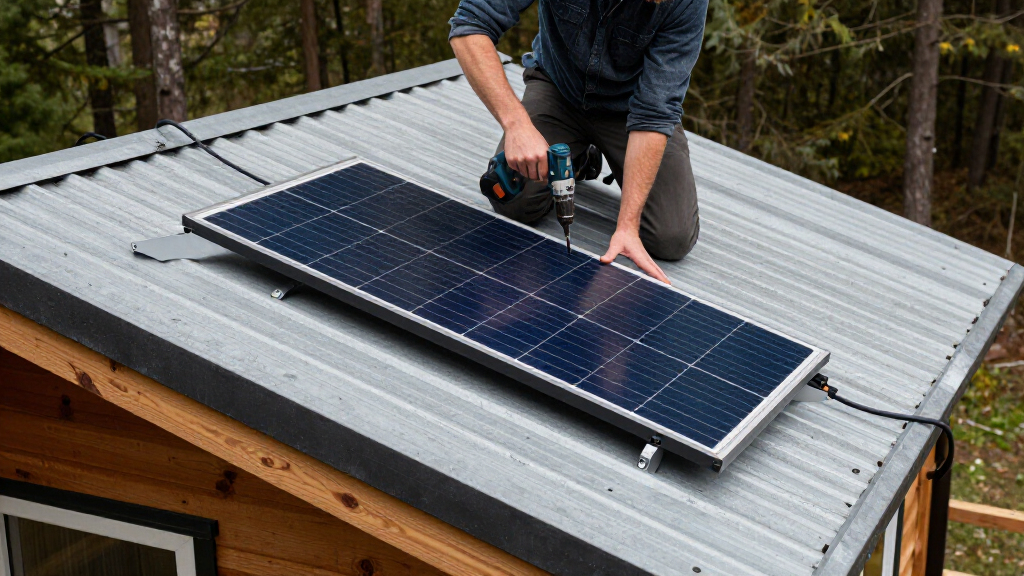
I ranked these kits for tiny-house roof use by comparing their rated panel capacity, included components, mounting fit, and likely system role. A kit with batteries and an inverter can reduce the number of separate purchases, but it does not automatically outrank a panel-focused kit: the included storage and power-conversion limits must fit the buyer’s actual loads. I also weighed controller type, 12V or 24V compatibility, and whether a panel format could address a specific roof constraint.
The ordering favors options that offer a useful balance of usable capacity, system-building flexibility, and clarity for a tiny-house buyer. Higher-wattage kits rank ahead for buyers seeking broader household use, while compact kits remain relevant for low loads, incremental builds, or tight roofs. I treated product names and stated specifications as starting points, not proof of daily energy output; actual production depends on sun, orientation, shading, wiring, and installation. Buyers should confirm current included parts, roof mounting compatibility, and electrical requirements before purchase.
Factors to Consider When Choosing Rooftop Solar Kit For Tiny House
Picking a kit starts with your roof and your power habits, not the panel count on the box. I would use these factors to decide whether a bundled system, a compact starter set, or a larger panel array makes sense for your build.
Size the system from daily energy use
List the appliances you plan to use, their wattage, and how long each runs on a typical day. Add up watt-hours rather than relying on peak wattage alone; a refrigerator cycling through the day and a kettle running briefly create very different energy needs. Leave room for cloudy periods and seasonal changes, since panel output varies with weather and daylight. A 100W or 200W kit may suit charging small devices or supporting limited loads, but it should not be assumed to run a whole tiny house. If you expect to add appliances later, plan the expansion path before buying the first kit. This estimate helps you decide whether a bundled battery is enough or whether storage must be specified separately.
Check roof area, structure, and mounting method
Measure usable roof space after accounting for vents, skylights, antennas, and safe access for maintenance. Rigid panels need a mounting arrangement and a roof structure suited to their size and wind exposure; do not treat a panel’s dimensions as the full clearance needed. Flexible panels can work where rigid modules are awkward, but confirm the roof surface, attachment method, heat conditions, and the panel maker’s mounting instructions. Roof weight matters on a small structure, yet choosing the lightest panel does not remove the need for secure attachment. A layout drawing can reveal that two smaller panels fit around obstructions better than one larger panel. If roof geometry is uncertain, resolve that before selecting a kit by wattage.
Match the battery, inverter, and controller to real loads
Panels produce power, but batteries store it and inverters supply AC appliances; these parts have separate limits. Check battery capacity for overnight and cloudy-day use, and compare inverter continuous output and surge capacity with the appliances that may run at the same time. A kit that includes a battery and inverter saves component matching work, but its bundled capacity may still be too small for your planned routine. Charge controllers also need to match panel voltage, battery chemistry, and system voltage. MPPT controllers can be a stronger fit for larger arrays or changing panel conditions, while a PWM controller may suit a simpler, smaller setup. Before connecting anything, confirm the manufacturer’s wiring guidance and the ratings of every component.
Choose 12V or 24V with expansion in mind
Many small off-grid systems use 12V components, which can be straightforward for modest loads and compatible appliances. As power levels rise, 24V can reduce current for a given load and may make wiring more manageable, but it requires compatible batteries, inverter, controller, and wiring choices. A kit that supports more than one system voltage adds flexibility only if you configure all components for the same voltage. Mixing assumptions—for example, adding a 24V battery to a 12V inverter setup—can damage equipment or prevent the system from operating. Decide whether you expect to expand before buying, since changing system voltage later can involve replacing more than the controller. If you are unsure, have a qualified installer review the design.
Separate starter kits from whole-house expectations
A starter kit can be a sensible first step for a cabin-style tiny house, a limited-load setup, or a system you intend to expand. It is not automatically a complete household power solution just because it includes a controller or inverter. Compare the included parts against a system diagram and note what is missing, such as batteries, mounting hardware, wiring, fuses, or disconnects. Buying components separately can offer a better fit for unusual loads, while a bundle can reduce compatibility guesswork. Either way, check whether the kit’s ratings support the appliances you will actually use at once. Set expectations around backup power and cloudy weather before relying on solar as your only source.
Plan for installation, safety, and upkeep
Roof-mounted equipment must be secured for local wind and weather conditions, and penetrations need appropriate sealing to protect the tiny house. Electrical work involves DC current, battery storage, overcurrent protection, grounding, and safe isolation; follow the product instructions and local electrical rules. A kit label does not confirm that a setup meets building, fire, or utility requirements where you live. Keep panels accessible enough to inspect for loose mounts, debris, and cable wear, while avoiding roof arrangements that make routine checks unsafe. Ask whether the system can be installed without modifying structural members or roofing materials in ways that affect warranties. For a permanent dwelling or unfamiliar wiring, professional review can prevent costly faults.
Frequently Asked Questions
Can a 400W kit power a tiny house by itself?
Not necessarily: 400W describes the panels’ rated output under specified conditions, not the energy they will produce every day. Your results depend on sunlight, roof direction, shade, season, and system losses. You also need a battery sized for the hours when panels are not producing and an inverter suited to your appliances. The ECO-WORTHY bundle with batteries and inverter includes more system components, while the Renogy 400W kit emphasizes panels and a 40A MPPT controller. Compare expected daily energy use with a site-specific production estimate before treating either as a whole-house system.
Should I choose flexible panels for a tiny-house roof?
Flexible panels make sense when roof shape, weight, or installation constraints make rigid modules difficult to use. They are not automatically the better choice for every tiny house: roof material, operating temperature, attachment method, and service access all matter. The Callsun 400W flexible set stands out for its panel format, while the rigid HQST and ECO-WORTHY sets suit buyers who can mount conventional panels. Compare manufacturer mounting instructions and warranty conditions before committing to a roof surface. If the roof is flat and structurally suited to a rack, rigid panels may provide a simpler mounting plan.
Is a kit with a battery and inverter better than a panel-only kit?
A bundle can simplify purchasing because the battery and inverter are included, but its capacity and output may not fit your appliance list. Check usable battery energy, inverter continuous and surge ratings, controller compatibility, and what safety or mounting parts are absent. The ECO-WORTHY 400W and 200W bundles offer an integrated starting point, while panel-focused options leave more freedom to choose storage and conversion equipment. That flexibility is useful if you already own compatible components or need a custom system. Compare the full system design rather than judging by the number of included items.
Do I need an MPPT controller for a tiny-house solar kit?
Not every small system requires MPPT, but controller choice can matter more as array size, panel voltage, and operating conditions become more demanding. The Renogy 400W kit’s 40A MPPT controller gives it a different role from the smaller PWM-based starter kits in this roundup. A PWM setup may be adequate for a modest array when its ratings match the panels and battery. Compare the controller’s input limits, charge current, battery compatibility, and wiring requirements before choosing. Do not swap controller types without checking that the rest of the system remains compatible.
Can I expand a 100W or 200W starter kit later?
Expansion depends on the controller’s limits, the panel wiring design, battery compatibility, and whether new panels have suitable electrical specifications. The 100W Renogy and HQST kits can serve as modest starting points, but adding panels may require a larger controller or changes to wiring and protection. Mixing panels with different ratings can reduce performance or create compatibility issues. Check the maximum solar input voltage and current, supported system voltage, and battery charge limits before buying the initial kit. If substantial growth is likely, planning for the final array now may cost less effort than replacing core components later.
Conclusion
For most buyers seeking a capable rooftop starting point, I’d choose the Renogy 400W Premium Solar Kit as best overall, chiefly for its 40A MPPT controller and larger panel capacity. My best value pick is the ECO-WORTHY 200W 12V/24V kit for buyers who want a modest panel array with voltage flexibility, provided they are comfortable selecting the right system configuration. For a more complete bundle, the ECO-WORTHY 400W kit with batteries and inverter is my best premium-style choice among these options, though buyers should verify that its storage and inverter suit their loads. Beginners with small power needs can start with the Renogy 100W starter kit; those with a curved or weight-sensitive roof should compare it with the Callsun flexible system. If your needs are limited to basic loads, consider a 100W or 200W kit; for broader use, size the battery and inverter around your actual appliances before ordering.
Halloween Picks
halloween
As an affiliate, we earn on qualifying purchases.