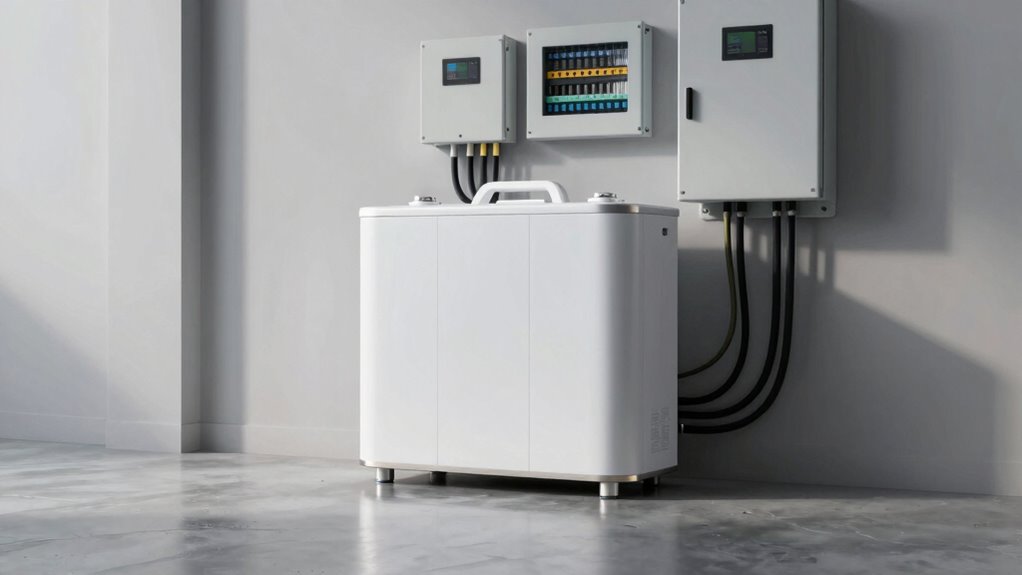

Before choosing a whole-home battery backup, you need to assess your energy needs, household size, and which appliances you’ll want to power during outages. Make certain the system’s capacity matches your usage and that it’s compatible with your existing electrical setup. Consider installation space, ease of maintenance, and system lifespan to guarantee long-term value. Being aware of these factors helps you select the right system, and there’s more to explore if you keep going.

Get compact home essentials delivered free — and shop member deals
- Fast, free delivery on millions of items
- Access to Prime Big Deal Days deals on October 6–7
- Prime Video, Amazon Music and more included
Key Takeaways
- Assess household energy needs and select a capacity that can reliably power essential appliances during outages.
- Ensure system compatibility with your existing electrical setup and consider necessary upgrades.
- Choose a location that is safe, protected from weather, and close to the main electrical panel for optimal efficiency.
- Consider the battery system’s lifespan, warranty, and maintenance requirements for long-term reliability.
- Work with professionals for proper installation, placement, and system sizing to maximize safety and performance.
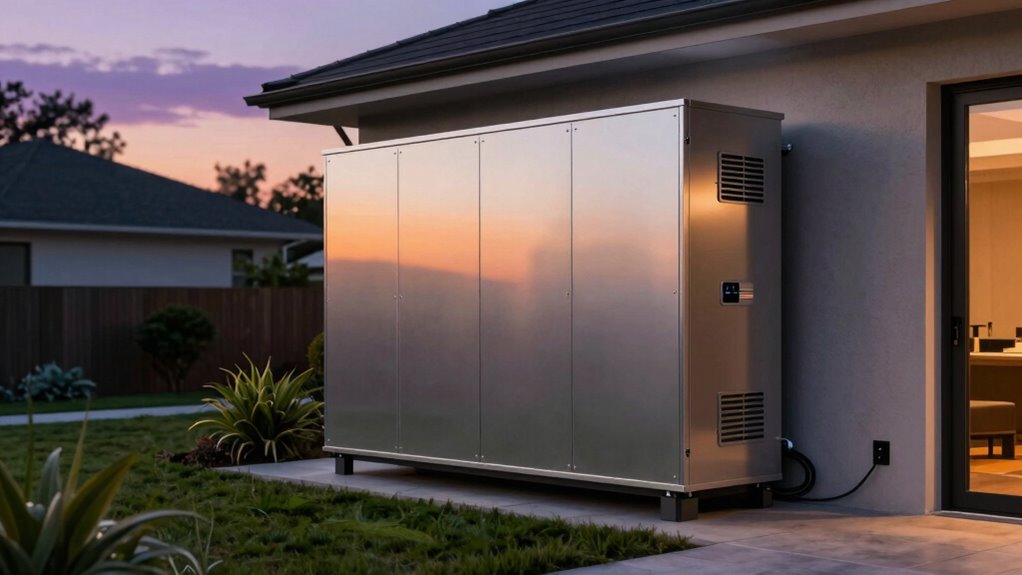
During power outages, whole-home battery backup systems guarantee your entire house stays powered without interruption. This technology provides a reliable energy source, ensuring your essential appliances and devices keep running during blackouts. Before jumping into a purchase, it’s important to understand how energy storage works in these systems. Fundamentally, they store excess energy—often from solar panels or the grid—so you can draw from it when the power goes out. It’s a smart way to increase your home’s resilience and reduce dependence on the utility grid. But, to make the most of a whole-home backup, you need to contemplate how much energy storage capacity you require. This depends on your household size, energy consumption habits, and which appliances you want to keep powered during outages. Larger capacity batteries allow you to run more appliances for longer periods, but they come with higher costs and installation complexity.
Speaking of installation, there are several considerations to keep in mind. First, your home’s electrical system needs to be compatible with the battery backup. This might require upgrades or modifications, especially if your existing wiring is outdated. You’ll also need to evaluate available space for the system itself. Some batteries are compact, while others require a dedicated, ventilated enclosure. Location is critical too; you want your battery system in a safe, accessible spot that’s protected from extreme weather and potential hazards. Additionally, the proximity to your main electrical panel affects performance and installation ease. A professional installer can assess your home’s structure and advise on the best placement and configuration to maximize efficiency and safety. Understanding energy storage capacity is essential for ensuring your backup system meets your household’s needs effectively. Proper sizing can also help prevent overcharging or underutilization of the system, which can impact performance and lifespan. Knowing the system’s lifespan and warranty** can further influence your long-term investment decisions. It’s also beneficial to consider the battery technology used, as advancements continue to improve efficiency and safety features. Moreover, knowing how your system handles system maintenance** can help you plan for any necessary upkeep or servicing over its lifespan.
whole home battery backup system
As an affiliate, we earn on qualifying purchases.
As an affiliate, we earn on qualifying purchases.
Frequently Asked Questions
How Long Can a Whole-Home Battery Backup Provide Power?
A whole-home battery backup can typically provide power for 4 to 12 hours, depending on your battery storage capacity and energy usage. If you want longer backup times, consider adding more batteries or optimizing your power management system. Keep in mind, efficient power management helps conserve energy, extending how long your battery backup can sustain essential appliances during outages. Always match your storage capacity with your household’s energy needs.
What Is the Typical Lifespan of These Batteries?
Battery backup batteries typically last around 5 to 15 years, depending on usage and maintenance. You can maximize lifespan by practicing proper battery recycling and monitoring storage capacity. Regularly inspecting and maintaining your system guarantees you’re getting the most out of your investment. Keep in mind, environmental factors and charging habits also influence longevity. With proper care, your batteries can provide reliable power, protecting your home through storms and outages.
Are There Any Government Incentives for Installing a Home Battery?
Yes, there are government incentives and tax credits available when you install a home battery. These incentives can substantially reduce your upfront costs, making it more affordable to upgrade your energy system. Check your state and federal programs, as they often offer rebates or tax credits for renewable energy projects. By taking advantage of these incentives, you can maximize your investment and support sustainable energy initiatives.
How Does Climate Affect Battery Performance and Longevity?
Climate impact greatly affects your battery’s performance and longevity. Extreme temperatures, whether hot or cold, accelerate battery degradation, reducing lifespan and efficiency. High heat can cause overheating, while cold weather hampers chemical reactions inside the battery, diminishing capacity. To maximize your whole-home battery backup, guarantee proper installation in a climate-controlled environment or use insulation and cooling systems. Regular maintenance helps mitigate climate-related effects, extending your battery’s overall performance and durability.
Can a Whole-Home Battery Backup Be Integrated With Solar Panels?
Like a knight of old, a whole-home battery backup can indeed be integrated with solar panels. Your main concern is system compatibility, ensuring your battery’s voltage and capacity match your solar setup. A larger battery capacity means more stored energy for cloudy days, while proper integration maximizes efficiency, giving you peace of mind during outages. Always verify that your equipment works seamlessly together for peak performance.
Conclusion
Before you decide on a whole-home battery backup, remember that it’s not a one-size-fits-all solution. Do your research, consider your energy needs, and weigh the costs against the benefits. It’s essential to select a system that fits your home and lifestyle, rather than rushing into a decision you might regret. Keep in mind, patience pays off—taking the time to make an informed choice ensures you won’t be caught off guard when it’s needed most.
Fall Picks
fall essentials
As an affiliate, we earn on qualifying purchases.