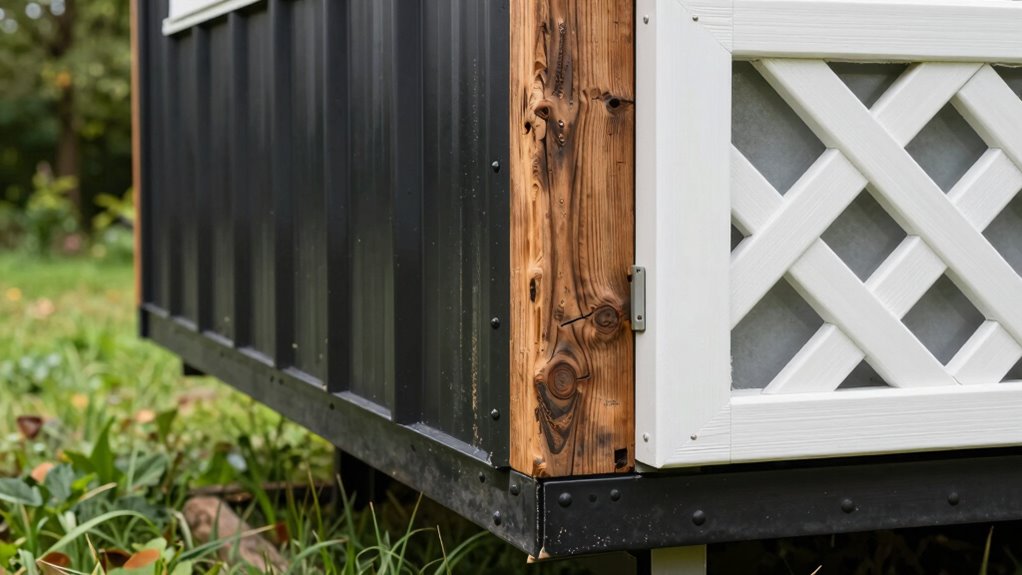

For DIY tiny house exterior skirting, you can choose from materials like vinyl for easy maintenance, metal for durability, or reclaimed wood for rustic charm. Proper installation improves insulation, boosts energy efficiency, and protects against pests and weather. Consider adding vents or access panels for easier upkeep. Ensuring the right fit and secure anchoring keeps it weather-resistant. Keep exploring to discover detailed tips that make installation smoother and more effective.

Get compact home essentials delivered free with Prime
- Fast, free delivery on millions of items
- Prime Video, Amazon Music and more included
- Member-only deals all year
Key Takeaways
- Various materials like vinyl, metal, and reclaimed wood offer different aesthetics, durability, and installation requirements for DIY skirting.
- Proper measurement and secure anchoring are essential for a stable, weather-resistant skirting setup.
- Incorporate vents or removable panels for easy maintenance and access to solar wiring or utilities.
- Ensure proper sealing and leveling to prevent pests, moisture intrusion, and improve insulation.
- Consider environmental factors and sustainable options to extend longevity and enhance energy efficiency.

If you’re looking to enhance your tiny house’s appearance and functionality, installing exterior skirting is a practical step you can take yourself. Skirting not only improves the aesthetic appeal but also helps with insulation and protecting your home from pests and weather. When choosing your skirting options, think about the materials that best suit your climate, budget, and personal style. You might consider options like vinyl, metal, or even reclaimed wood, each offering different levels of durability and ease of installation. Vinyl skirting is popular because it’s lightweight, low-maintenance, and comes in various colors, making it easy to match your tiny house’s exterior. Metal skirting, such as aluminum or steel, provides a more rugged look and excellent weather resistance, though it may require more effort to install. Reclaimed wood gives a rustic charm but needs proper sealing to withstand the elements.
As you plan your skirting installation, it’s crucial to think about how it will impact your solar panel setup. Proper skirting can facilitate better airflow around your tiny house, which can help keep your solar panels cooler and operating efficiently. It’s also an opportunity to incorporate interior insulation techniques that enhance your home’s energy efficiency. For example, installing rigid foam board insulation behind the skirting panels can create a buffer zone that minimizes heat loss during winter and keeps your tiny house cooler in summer. This approach helps you maximize the benefits of your solar panels by maintaining ideal operating conditions and reducing energy costs. Additionally, understanding the importance of weather resistance in your materials can significantly extend the lifespan of your skirting. Including proper ventilation in your design can further prevent moisture buildup and mold growth underneath your tiny house. Recognizing the significance of sustainable practices in backyard design can also contribute to making your project more environmentally friendly.
When installing your skirting, make sure to measure carefully and choose a system that allows easy access for maintenance or future upgrades. Some skirting options come with removable panels or vents, making it simpler to perform routine checks or adjust your solar panel setup. Additionally, ensure the skirting is securely anchored to withstand wind and weather. Proper installation techniques, such as leveling the base and sealing gaps, prevent pests and moisture from entering underneath your tiny house. If you’re savvy with DIY projects, you can even customize your skirting with built-in features like small access panels or integrated cable management for your solar wiring. Considering collaboration with other tiny house enthusiasts or professionals can provide valuable insights and tips for your project.
vinyl skirting panels for tiny house
As an affiliate, we earn on qualifying purchases.
As an affiliate, we earn on qualifying purchases.
Frequently Asked Questions
How Much Does Tiny House Exterior Skirting Typically Cost?
You can expect to spend between $300 and $1,500 on tiny house exterior skirting, depending on your chosen material and installation. For durable skirting options like metal or concrete, costs tend to be higher, but they offer better longevity and resistance to weather. If you prioritize aesthetic options like decorative lattice or vinyl, you’ll find more affordable choices. Remember, investing in durable skirting enhances your tiny house’s overall durability and visual appeal.
Can Skirting Be Installed on Uneven Terrain?
You can definitely install skirting on uneven terrain—you just need to adjust the skirting height to match the ground. Focus on choosing durable materials like vinyl or metal that can handle shifting surfaces. Think of it as bringing order to chaos; a flexible approach guarantees your skirting stays secure and looks good, no matter how bumpy the ground. Properly adjusted skirting will keep your tiny house protected and visually appealing.
What Are the Best Materials for Insulation Behind Skirting?
The best materials for insulation behind skirting include foam board, fiberglass batts, and spray foam, as they provide excellent thermal resistance. For installation techniques, guarantee the insulation fits snugly without gaps, and use vapor barriers when necessary. Secure the insulation properly to prevent shifting or gaps that can reduce efficiency. Proper installation maximizes energy savings and protects your tiny house from moisture and temperature fluctuations.
How Often Should Skirting Be Maintenance-Checked or Replaced?
You should check your skirting at least twice a year, like clockwork, to catch tiny issues before they turn into giant problems. Skirting maintenance is essential to prevent pest invasions or water damage, and replacement might be needed every 5 to 10 years depending on the material and weather conditions. Stay vigilant, and don’t wait until your skirting looks like it’s been through a tornado—regular upkeep keeps your tiny house safe and sound.
Are There Any Building Code Restrictions for Skirting?
Yes, building codes can restrict skirting choices. You need to check with local building permits to confirm your skirting meets regulations, especially regarding ventilation requirements. Some areas require open or vented skirting to prevent moisture buildup and pests, while others may have specific material restrictions. Always verify local codes before installing skirting to avoid fines or needing to redo work later.
Conclusion
Choosing the right exterior skirting for your tiny house is a essential step in ensuring both durability and aesthetic appeal. Whether you opt for traditional materials or something more unconventional, remember that your choice reflects your unique style and needs. As you undertake this project, channel your inner pioneer—think of it as a modern-day homesteader preparing for the journey ahead. With careful planning, your tiny house will stand firm and charming, ready to withstand the test of time and weather.
Halloween Picks
halloween
As an affiliate, we earn on qualifying purchases.