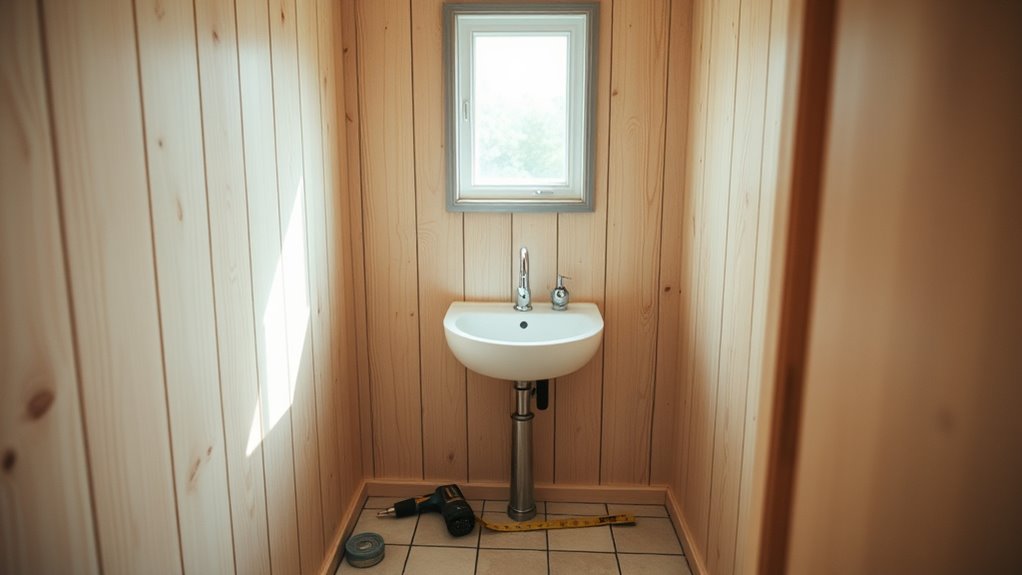

To build a tiny house bathroom, start by planning a compact layout that positions fixtures close to existing plumbing. Choose space-saving, durable fixtures and install efficient ventilation like exhaust fans, possibly adding windows for natural airflow. Use flexible piping and access panels for easy maintenance. Optimize storage with recessed shelves and waterproof finishes. Pay attention to material durability and simplicity to make certain a functional, clutter-free space. Keep exploring for detailed steps and tips to create a seamless bathroom fit for tiny living.
Key Takeaways
- Plan the bathroom layout to position fixtures near existing plumbing to simplify installation.
- Select space-efficient fixtures like corner sinks and compact toilets to maximize limited space.
- Design a ventilation system with quiet, energy-efficient exhaust fans and natural airflow options.
- Incorporate waterproof, durable materials and smart storage solutions to optimize space and functionality.
- Use flexible piping and include access panels for easier maintenance and future repairs.

Building a Tiny House Bathroom
Creating a functional tiny house bathroom may seem challenging due to limited space, but with careful planning and smart design choices, you can maximize every inch. The first step is selecting the right plumbing fixtures. Since space is at a premium, opt for compact, space-saving options like a corner sink, a small toilet, and a shower stall that uses sliding doors or a curbless design to save room. These fixtures should be durable and easy to maintain, ensuring they work efficiently in a tiny setting. When choosing fixtures, consider multi-functional ones, such as a vanity with built-in storage or a combined sink and countertop unit, which help reduce clutter and conserve space.
Optimize tiny house bathrooms with space-saving fixtures like corner sinks, compact toilets, and sliding-door showers.
Next, focus on your ventilation system. Proper airflow is essential to prevent moisture buildup, which can lead to mold and damage. Installing an efficient ventilation system, like a small exhaust fan, can make a significant difference. Position the vent near the shower or bathtub to effectively remove humidity and odors. To maximize efficiency, choose a quiet, energy-efficient fan that runs automatically when the bathroom is in use. You might also consider adding a window if possible, as natural ventilation helps keep the space fresh. Proper ventilation not only improves air quality but also prolongs the life of your fixtures and finishes by reducing moisture-related issues. A well-designed ventilation system is especially important in compact spaces like tiny houses to prevent humidity problems.
When planning the layout, consider the plumbing connections carefully. Position fixtures close to existing plumbing lines to minimize the complexity and cost of installation. Use flexible piping where needed to accommodate tight spaces and ensure ease of maintenance. Keep in mind that access panels are helpful for future repairs, especially in tight spots. Be precise in your measurements and layout to avoid costly mistakes later on.
Finally, don’t forget to incorporate smart storage solutions around your plumbing fixtures, such as shelves or recessed niches, to keep toiletries organized without sacrificing space. Use waterproof materials and finishes to protect your fixtures and walls from water damage. Keep the design simple and functional, prioritizing accessibility and ease of use. Small details, like installing a mirror above the sink or adding hooks for towels, can make a big difference in usability.
Top picks for "step build tiny"
Open Amazon search results for this keyword.
As an affiliate, we earn on qualifying purchases.
Frequently Asked Questions
What Are the Best Space-Saving Bathroom Fixtures for Tiny Houses?
You should choose compact fixtures like a small sink, toilet, and shower designed for tight spaces. Multi-functional furniture, such as a combination sink and storage unit, helps maximize every inch. Opt for fold-down or wall-mounted options to free up space when not in use. These space-saving fixtures and multi-functional furniture pieces make your tiny house bathroom efficient, comfortable, and easy to maintain without sacrificing essential features.
How Do I Ensure Proper Ventilation in a Tiny House Bathroom?
Ensure proper ventilation in your tiny house bathroom by installing a high-quality exhaust fan that efficiently removes moisture and odors. Regularly use the fan during and after showers to control moisture levels, preventing mold and mildew. Keep the bathroom door slightly open when not in use to promote airflow. Proper moisture control maintains a fresh, healthy space, making your tiny house bathroom comfortable, safe, and enjoyable every day.
What Permit Requirements Are Needed for Tiny House Bathroom Construction?
You need to check local building codes and zoning regulations before building your tiny house bathroom. These rules vary by area and often require permits for plumbing, electrical work, and structural changes. Visit your city or county’s building department online or in person to understand the specific requirements. Securing the necessary permits guarantees your tiny house bathroom construction adheres to legal standards and avoids potential fines or delays.
How Can I Waterproof and Prevent Mold in a Tiny Bathroom?
To waterproof your tiny bathroom and prevent mold, you should install moisture barriers behind walls and floors, ensuring no water seeps in. Use mold-resistant materials like mildew-resistant drywall, tiles, and paint to keep mold growth at bay. Ventilate properly with an exhaust fan, and regularly inspect for leaks or dampness. These steps will help maintain a dry, healthy space and extend your bathroom’s lifespan.
What Are Affordable DIY Options for Bathroom Plumbing in Tiny Houses?
Like piecing together a puzzle, affordable DIY plumbing options fit perfectly for your tiny house. You can use cost-effective solutions like PEX piping, which is flexible and easy to install, or repurpose existing fixtures to save money. Learning basic DIY plumbing techniques, such as connecting fittings and sealing joints, empowers you to handle repairs and installations yourself, making your tiny bathroom both functional and budget-friendly without sacrificing quality.
Conclusion
As you wrap up your tiny house bathroom project, remember that small spaces teach us that less truly is more. Building with intention mirrors the idea that simplicity often leads to greater fulfillment. Just like a well-designed tiny bathroom can feel expansive, simplifying your life can bring clarity and peace. Embrace this journey, knowing that sometimes, the tiniest spaces hold the biggest lessons about living intentionally and appreciating what truly matters.