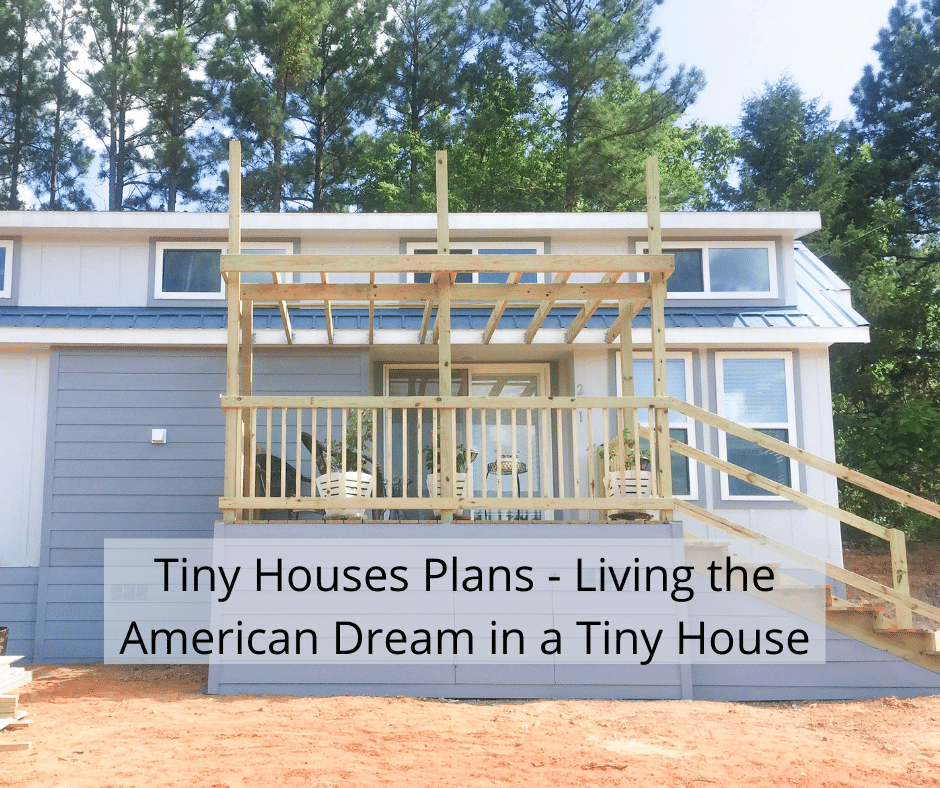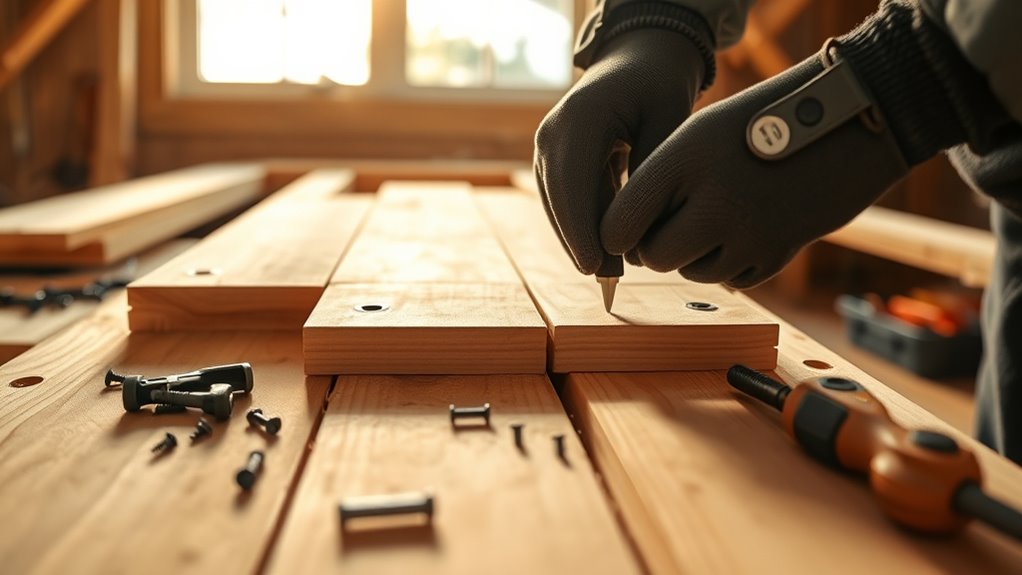

To build a tiny loft, start by evaluating your space, measuring ceiling height, and planning the layout to guarantee safety and functionality. Choose durable materials, and verify the structure can support weight. Install guardrails, a sturdy ladder or stairs, and proper lighting for safety. Maximize space with built-in storage and multi-functional furniture. Carefully check all measurements and safety features. Keep exploring to discover detailed steps that will help you create a secure, efficient loft tailored to your needs.
Key Takeaways
- Assess available space, ceiling height, and layout to determine the optimal loft placement and ensure compliance with building codes.
- Design efficient storage solutions and multi-functional furniture to maximize limited space beneath the loft.
- Use durable materials, install guardrails, and secure access ladders or stairs for safety and structural support.
- Incorporate proper lighting, ventilation, and fire safety measures to ensure a safe, functional environment.
- Regularly inspect and reinforce safety features, and verify stability before use to maintain long-term safety and stability.

Have you ever wondered how to maximize space in a small home? Building a tiny loft is an excellent way to add functional square footage without sacrificing comfort. To do it successfully, you need to carefully plan your approach, especially focusing on storage solutions and safety considerations. First, assess your available space and determine where the loft can fit best. Measure the ceiling height, floor area, and any obstructions like beams or vents. This helps ensure your design is practical and that the loft won’t hinder movement or violate building codes.
When considering storage solutions, think vertically. A loft naturally creates extra space beneath it, so you can use this area for storage, a workspace, or a cozy sitting nook. Incorporate built-in shelves, drawers, or under-loft cabinets to keep clutter at bay. Choose multi-functional furniture pieces—like beds with drawers or fold-away desks—that maximize every inch. This way, you’re making smart use of limited space while maintaining a clean, organized look. Keep in mind that good storage solutions should be easily accessible, so plan for safe, stable access points like a sturdy ladder or stairs, not just a makeshift climb.
Safety is paramount when building a tiny loft. You’ll want to ensure your structure can support the weight of occupants and furniture. Use high-quality, durable materials, and follow local building codes carefully. Install guardrails or balustrades around the perimeter of the loft to prevent accidental falls, especially if you’re designing it for sleeping or daily use. The guardrails should be high enough and sturdy enough to withstand pressure. Additionally, ensure the access ladder or stairs are secure, slip-resistant, and easy to climb. Proper lighting is another safety feature; install enough illumination to prevent trips or falls when using the loft at night. Incorporating merchant services can also streamline your project budget and payments, reducing hassle and potential delays.
Before starting construction, consult with a professional if you’re unsure about structural integrity or safety standards. Not only will this give you peace of mind, but it also ensures your loft is built to last. Remember to account for ventilation and fire safety, installing smoke alarms nearby and ensuring there’s enough airflow. During construction, double-check all measurements and connections, making sure everything is level and tightly secured. After building, test the stability and safety features thoroughly before using the loft regularly.
Frequently Asked Questions
What Permits Are Required for Building a Tiny Loft?
You’ll need to get building permits that comply with local building codes and zoning laws before constructing your tiny loft. Check with your city or county planning department to understand specific requirements, such as permits for structural work, electrical, and plumbing. Make sure your project aligns with zoning laws regarding height, setbacks, and land use. Securing these permits beforehand prevents legal issues and ensures your tiny loft is safe and compliant.
How Much Does a Tiny Loft Construction Typically Cost?
Imagine your dream space as a canvas awaiting your touch. A tiny loft typically costs between $10,000 and $30,000, depending on your material choices and design. Your cost estimation hinges on selecting quality materials that align with your vision and budget. By choosing durable, affordable options, you craft a cozy retreat that reflects your style without overspending—transforming your vision into reality, one thoughtful decision at a time.
Can I Build a Tiny Loft in a Rented Space?
Yes, you can build a tiny loft in a rented space, but you need permission from your landlord first. Focus on DIY furniture and loft decor that’s easy to install and remove without damage. Use lightweight materials and portable solutions to maximize space and style. This way, you can create a cozy, functional loft area that reflects your personality without risking your rental agreement.
What Safety Features Are Essential for a Tiny Loft?
To keep your cozy loft safe, you should install essential features like a reliable fire escape and functional smoke detectors. These elements act as your safety net, ensuring quick exits during emergencies and early detection of smoke or fire. Regularly check smoke detectors for proper operation, and make certain your fire escape is clear and accessible. Prioritizing these safety features helps you enjoy your space with peace of mind.
How Do I Maximize Space in a Small Loft Area?
You can maximize space in your small loft by using clever storage solutions like built-in shelves and under-bed drawers. Incorporate multi-functional furniture, such as a sofa bed or fold-out desk, to save space and add versatility. Keep the area organized and decluttered, and choose vertical storage options to make the most of limited square footage. These strategies help your loft feel larger and more functional.
Conclusion
Now that you’ve built your tiny loft, you’ve truly knocked it out of the park. It’s a compact space that packs a punch and shows your creativity and effort. Remember, every nail and board played a part in turning your vision into reality. With patience and persistence, you’ve proven that small spaces can make a big impact. Keep nurturing your skills—you’re well on your way to mastering even bigger projects. The sky’s the limit!