
Imagine harnessing the sun’s power without ever installing a panel on your roof. Community solar makes this possible, offering a way for you to benefit from solar energy even if you rent, have shading issues, or simply don’t want the hassle of maintenance. It’s a practical alternative that expands access to clean energy, but how exactly does it work—and what could it mean for your energy bills? The answer might surprise you.
Key Takeaways
- Community solar allows participation in solar energy without installing panels on your roof by purchasing or leasing shares of a shared solar farm.
- Participants receive utility credits for the energy produced, reducing their electricity bills without the need for rooftop setup.
- No expertise or large yard is required; signing up is simple through subscriptions or project share purchases.
- Project financing, incentives, and rebates lower costs, making community solar accessible and affordable for diverse households.
- It democratizes access to renewable energy, enabling renters and shaded-property owners to benefit from solar power easily.
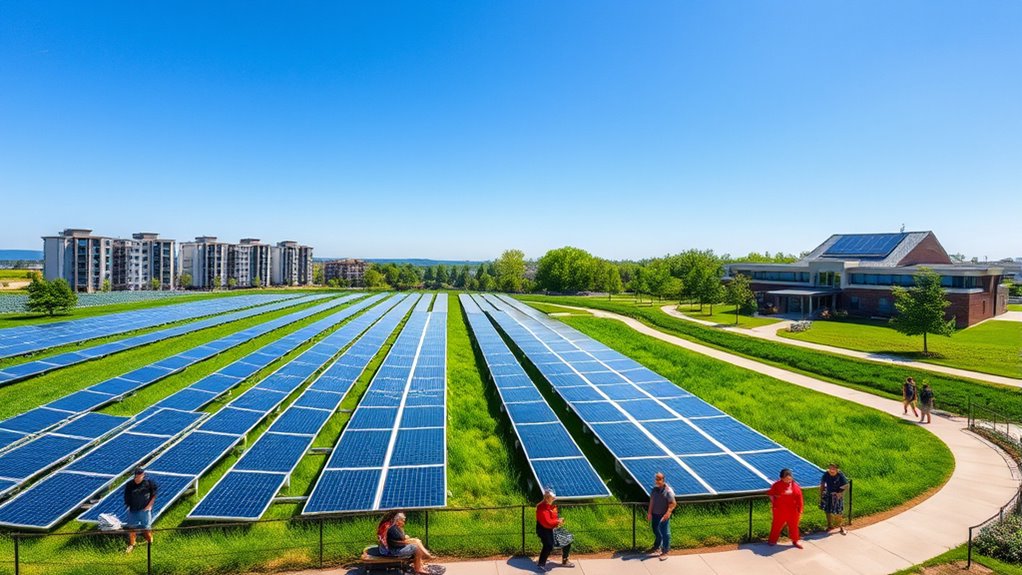
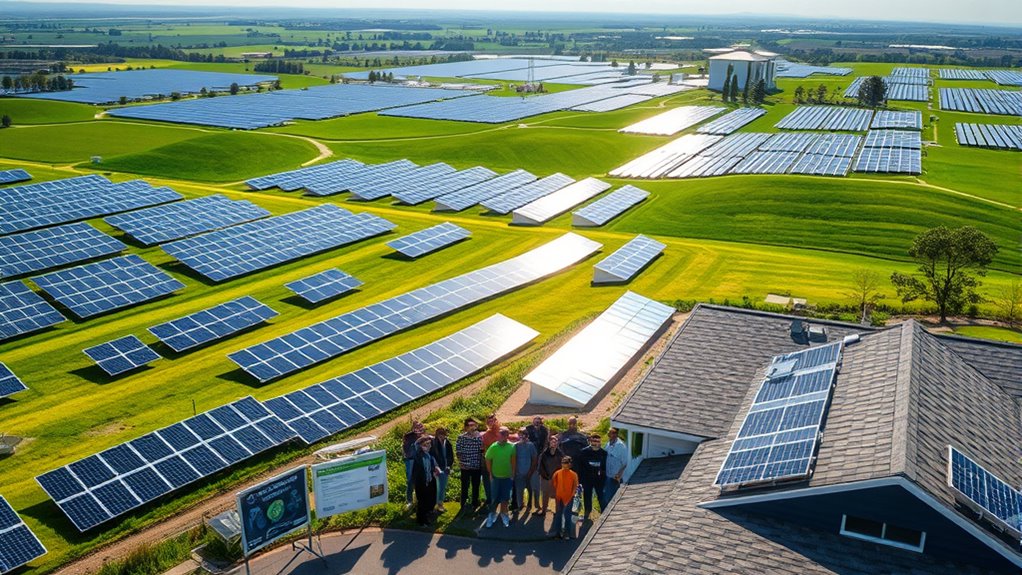
Have you ever wondered how communities can harness the sun’s power together? Community solar makes it possible, even if you don’t own a rooftop or have space for panels. Instead of installing panels on your home, you buy or lease a share of a larger solar project located nearby. This way, you get to enjoy the benefits of solar energy without the hassle of maintenance or installation. It’s a smart solution for renters, homeowners with shaded roofs, or anyone looking to support renewable energy without a big upfront commitment.
One of the key advantages of community solar is the accessibility it offers. You don’t need to be a solar expert or have a large yard; you just sign up for a subscription or purchase a portion of the project. Your share produces clean energy, which offsets your electricity bill. Plus, many utility companies and states offer solar incentives that further make participation appealing. These incentives can reduce costs, speed up project development, and make your investment more affordable. They’re designed to encourage broader adoption of renewable energy and help communities transition to cleaner power sources.
Community solar offers easy access to clean energy without needing a large yard or technical expertise.
Project financing plays a vital role in bringing these solar farms to life. Developers secure funding through various channels, including loans, grants, and investor capital. This financial backing enables them to cover the costs of building and maintaining the solar array. As a participant, you benefit from this financing because it helps lower the overall project costs, making solar energy more affordable for everyone involved. Many programs also offer tax credits or rebates, which can be passed on to subscribers or used to further reduce costs. This combination of incentives and smart project financing helps make community solar projects economically viable and attractive for communities and individuals alike.
Once the project is operational, you simply subscribe or buy a portion of the solar farm, and your share produces energy that feeds into the grid. Your utility company then credits your account with the equivalent amount of energy produced. This setup means you can save money on your electricity bill while supporting renewable energy efforts in your community. It’s an easy, low-risk way to participate in clean energy initiatives and make a tangible difference without installing panels on your own roof.
In essence, community solar democratizes access to solar power. Thanks to solar incentives and effective project financing, more people can join the clean energy movement. You get to benefit from the sun’s power, reduce your carbon footprint, and contribute to a sustainable future—all without the need for rooftop panels or extensive technical knowledge. It’s a win-win situation that makes renewable energy more inclusive and achievable for everyone. Additionally, understanding best hot rollers for long hair can be helpful for those wanting to style their hair after a day in the sun or a visit to a community event.
Top picks for "community solar explain"
Open Amazon search results for this keyword.
As an affiliate, we earn on qualifying purchases.
Conclusion
Now that you know how community solar works, you’re opening a door to a brighter, greener future. Imagine your energy dollars planting seeds in a vast solar garden, blooming into clean power that lights up your life and the world around you. You don’t need a rooftop to join this solar revolution—just a willingness to embrace change. Together, we can turn sunlight into a shared treasure, fueling sustainability one breeze at a time.